


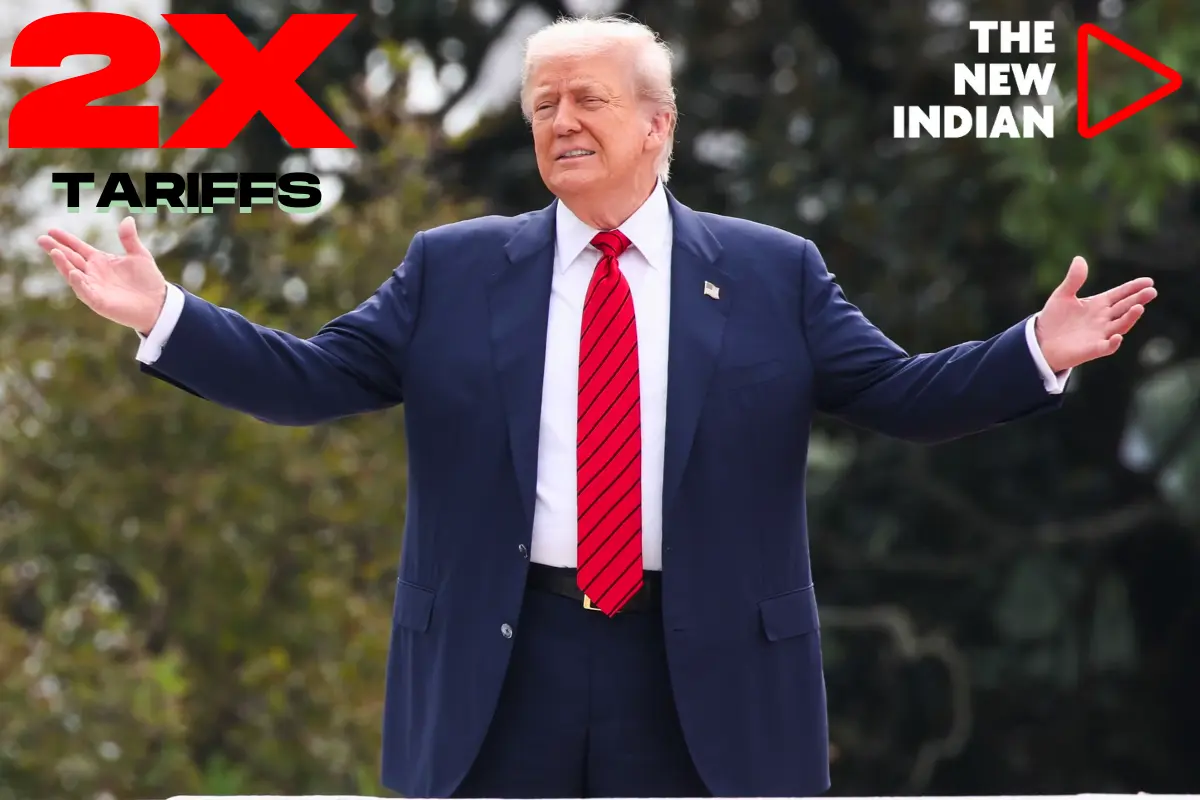






NEW DELHI: In a major escalation of U.S.–India trade tensions, U.S. President Donald J. Trump signed an executive order on August 6, imposing an additional 25% duty on Indian imports—bringing the total U.S. import tax on Indian goods to 50%.

This action is a direct response to India’s continued purchase of Russian oil, which Trump declared a threat to U.S. national security and foreign policy under existing emergency trade laws.
The executive order invokes authority under U.S. statutes including the International Emergency Economic Powers Act (IEEPA) and the National Emergencies Act, as well as section 301 of the Trade Act of 1974.
Effective 21 days after the order, goods entered for consumption in the U.S. will be subject to the new tariff, unless already en route and entered before September 17, 2025.
Why This Matters
- Preexisting 25% Tariff: On July 30, 2025, Trump had already announced a 25% “reciprocal tariff” on Indian goods to begin August 1
- Targeting Russian Oil Trade: The additional levy applies specifically because India directly or indirectly imports Russian crude and petroleum products, which the U.S. argues fuels Russia’s war in Ukraine
- Stacking with Other Tariffs: The 25% surcharge is additive to existing duties and may coexist with other trade restrictions, except when superseded by section 232 tariffs
India’s Response
India has rejected the move, calling the additional tariffs “unjustified and unreasonable.” Officials reaffirmed India’s right to maintain energy security through affordable Russian imports and confirmed that the country will not abandon its strategic energy choices
Major export sectors, like textiles, pharmaceuticals, jewellery, electronics, and auto components, are expected to bear the brunt of the hit to bilateral trade flows
Economic and Strategic Impact
| Impact Area | Implications |
| Trade Disruption | Affects roughly $64 billion in annual Indian exports to the U.S. |
| Market Reaction | Indian equity indices dipped slightly, with investor sentiment softening |
| Sectoral Vulnerability | Labor-intensive industries face high risks, especially apparel and gems |
| Geopolitical Fallout | Trade standoff complicates FDI ties and regional strategic alignment, including ties with Russia |
What Happens Next?
Trump’s executive order marks a decisive escalation in U.S.–India trade relations.
Citing India’s continued Russian oil buying, the U.S. has significantly raised tariffs, signaling a tougher posture under national emergency statutes. India’s refusal to retreat underscores a broader economic and strategic friction; one that risks reshaping alliances and trade norms in 2025.
In the order, Trump explicitly stated:
In the order, Trump determined that India was “directly or indirectly importing Russian Federation oil,” and justified the new tariffs as a necessary step to address what he called an “unusual and extraordinary threat” stemming from Russia’s actions in Ukraine.
Quoting directly from the Executive Order, Trump declared:
“Articles of India imported into the customs territory of the United States shall be subject to an additional ad valorem rate of duty of 25 percent. This rate of duty shall be effective with respect to goods entered for consumption, or withdrawn from warehouse for consumption, on or after 12:01 a.m. eastern daylight time 21 days after the date of this order, except for goods already in transit.”
The order further stated that this additional tariff would apply “in addition to any other duties, fees, taxes, exactions, and charges applicable to such imports”, unless exempted under existing laws like the Trade Expansion Act of 1962.

The measure is set to take effect on September 17, 2025, giving a 21‑day window before implementation.
