


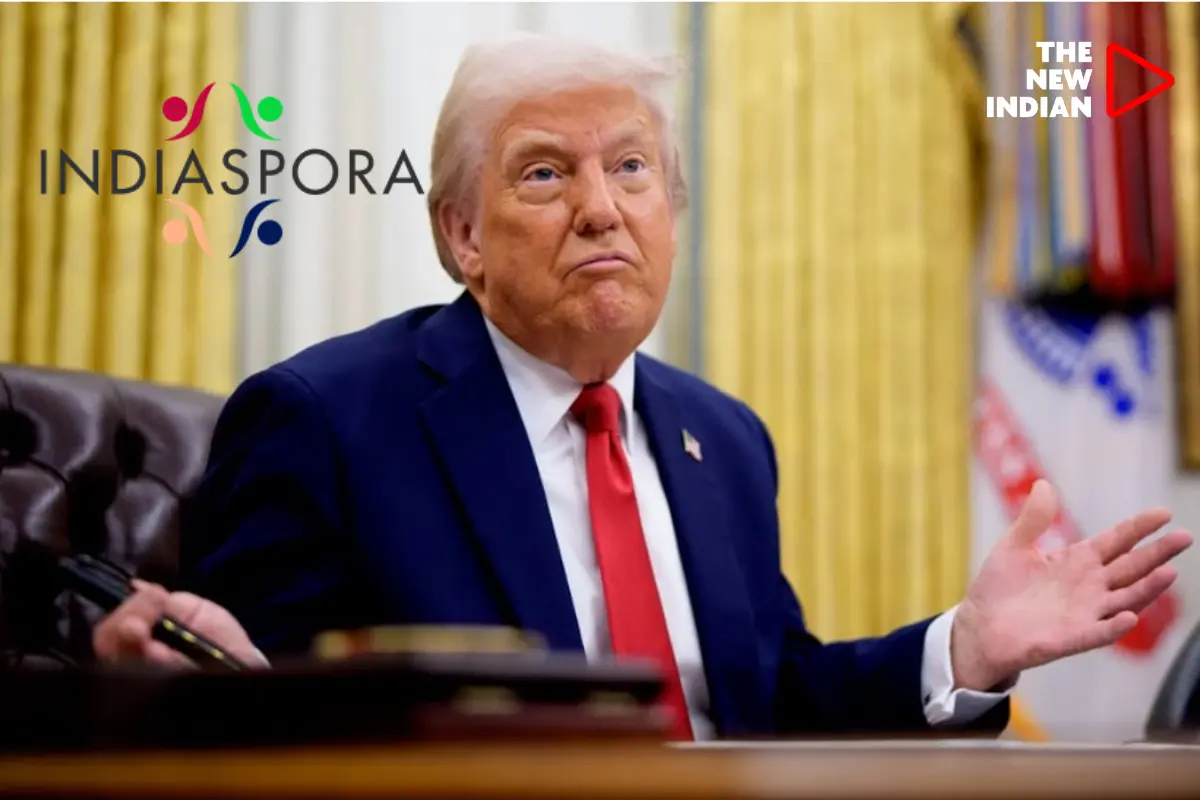






NEW DELHI: U.S. President Donald Trump’s decision to impose a punitive 25% import duty on Indian goods, effectively doubling tariffs to 50%, has triggered strong criticism from Indian-American community leaders, who called it a betrayal of the foundational ties between the two democracies.

In a powerful statement issued by Indiaspora, a nonprofit representing influential members of the global Indian diaspora, the organization slammed Trump’s move as shortsighted and damaging to decades of people-to-people diplomacy.
“We believe the U.S.-India relationship is not just important—it is essential,” the group declared, underscoring how over 5 million Indian Americans have built “a living bridge” between the two countries through contributions to the economy, culture, and civic life.
Indiaspora emphasized that while politicians may come and go, the relationship between India and the U.S. is “durable, underpinned by people-to-people ties.”
“This economic partnership should stand as a cornerstone for stability, innovation, and progress in the 21st century,” the statement read, warning against populist disruptions that threaten hard-won trust.
The tariff escalation, announced by Trump on August 6, is ostensibly a response to India’s continued energy trade with Russia. However, diaspora leaders argue that such unilateralism risks unraveling a deeper strategic alliance and alienating one of America’s most loyal and productive immigrant communities.
“We take great pride in our deep bonds with both the United States—our homeland—and India—our country of origin,” Indiaspora said, calling out the president’s actions as out of step with the values of the Indian-American community.
“The current setback… will be temporary,” they added, expressing hope that “ongoing discussions, when concluded, will reflect the aspirations of both nations and the global Indian diaspora that believes in them.”
Trump’s decision comes amid mounting pressure from his base for a tougher trade stance, but experts warn that alienating New Delhi—one of Washington’s key strategic partners in the Indo-Pacific—is a grave misstep.
“The diaspora has helped cultivate vital connections across business, technology, academia, philanthropy, and the arts,” Indiaspora noted, pointing out that Trump’s tariffs risk severing ties carefully nurtured over generations.
With growing Indian-American political engagement and voting power—especially in battleground states—Trump’s approach may cost him electorally, analysts say.
As Indiaspora concluded:
“We remain optimistic… this relationship is enduring, robust, and broad-based.”

But the warning is clear: any leader who undermines U.S.–India ties may find themselves on the wrong side of history—and of the diaspora that helped shape it.
