


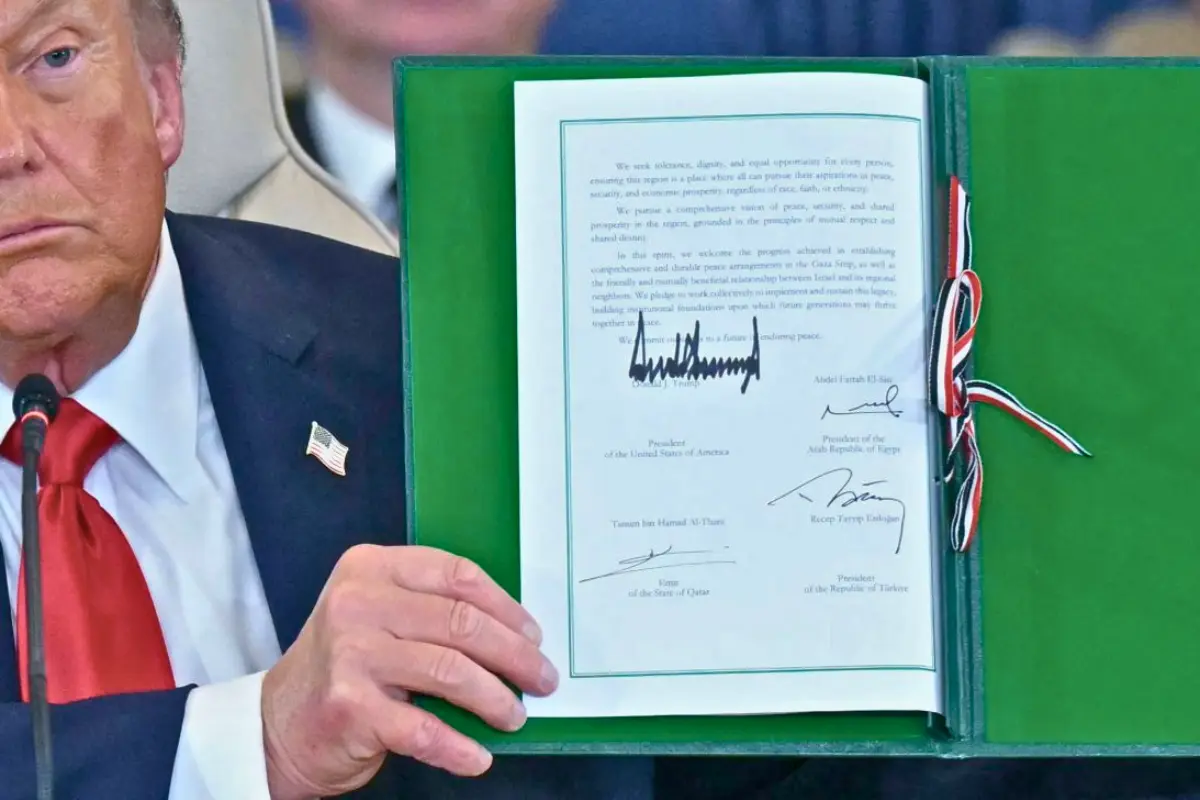


NEW DELHI: A fragile ceasefire between Israel and Hamas continues to hold following the release of the last living Israeli hostages and the transfer of the bodies of deceased captives, brokered with the assistance of President Donald Trump.

The truce, agreed upon in Cairo last week, marked a rare diplomatic breakthrough amid months of intense conflict.
The International Committee of the Red Cross (ICRC) confirmed that it facilitated the transfer, ensuring that hostages were returned safely and that the remains of four deceased captives were handed over to Israeli authorities.
Humanitarian agencies have reported that the situation in Gaza remains critical, with limited access to food, medicine, and essential services.
Israel has reduced the flow of humanitarian aid, citing incomplete compliance by Hamas with terms of the agreement.
Gaza officials report that Hamas has reinforced its control over local administration, deploying armed units to maintain order and reportedly punishing suspected collaborators.
Trump emphasized that Hamas must disarm voluntarily or face forcible enforcement by the United States and its allies. “This ceasefire is a historic chance for peace, but compliance is essential,” he said. Analysts note that disarming Hamas will be complex due to entrenched tunnels, weapon caches, and decentralized command structures.
International observers attending the Cairo talks hailed the ceasefire as a step toward stability but cautioned that long-term success will require sustained oversight, monitoring of arms, and coordinated humanitarian aid distribution. Egyptian President Abdel Fattah el-Sisi described the agreement as a “critical opportunity” to avoid further bloodshed.

While the ceasefire offers temporary respite from violence, experts warn that its durability depends on both Israel and Hamas honoring commitments, as well as continued international pressure to maintain peace.

