


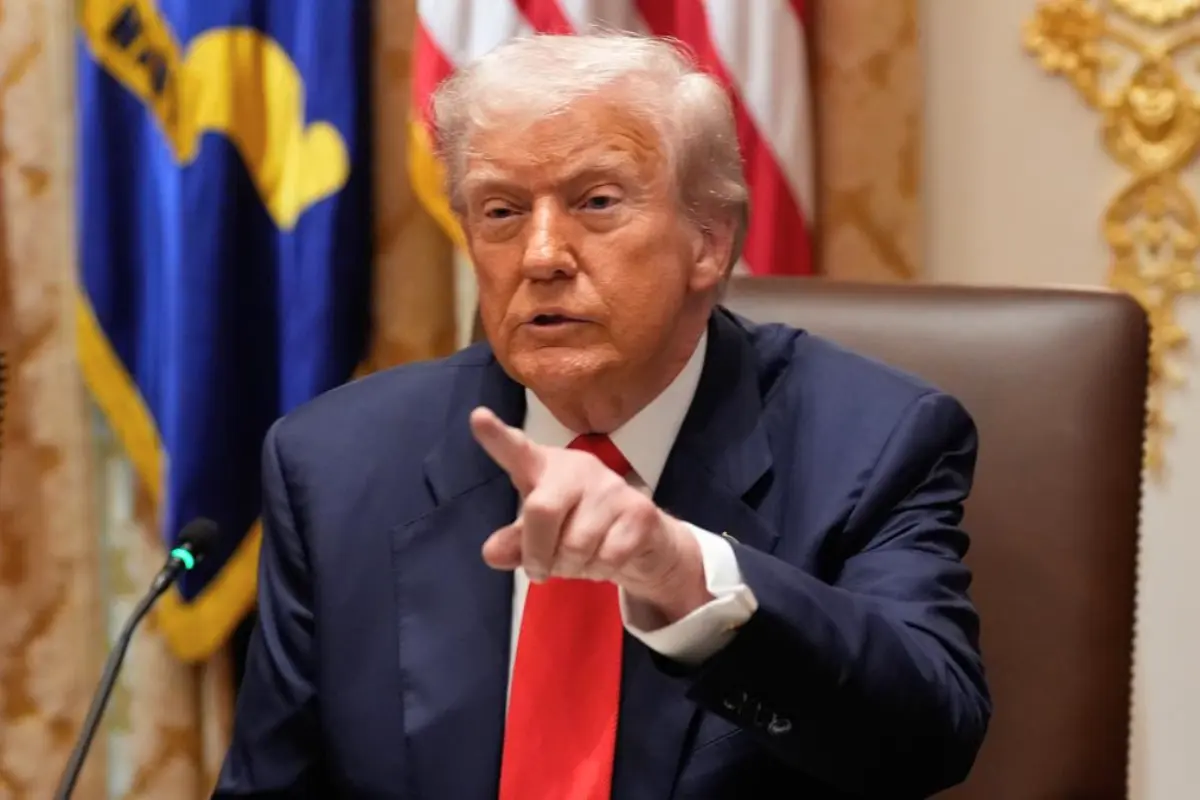






New Delhi: President Donald Trump has issued a stark warning to Hamas, declaring that the militant group must surrender its weapons voluntarily or face forcible disarmament by the United States and its allies.

The statement came just days after Trump brokered a fragile ceasefire between Israel and Hamas that halted months of fighting in Gaza.
Speaking aboard Air Force One en route to Tel Aviv on Monday, Trump told reporters, “Hamas must disarm or be disarmed. We will not allow any group to threaten Israel, America, or peace in the Middle East again.” The president’s comments marked his most direct threat yet since announcing what he called a “historic end to the Gaza war.”
Trump’s ultimatum followed private talks with Israeli Prime Minister Benjamin Netanyahu and Egyptian President Abdel Fattah el-Sisi, during which both leaders endorsed the U.S.-led disarmament initiative.
The plan, part of Trump’s wider “Twenty-Point Gaza Peace Deal,” calls for Hamas to dismantle its military wing, surrender all remaining weapons to an international oversight body, and allow the deployment of multinational peacekeepers inside Gaza.
The ceasefire, reached last week after marathon negotiations in Cairo, has largely held so far. Hamas has handed over the bodies of four deceased hostages and released the last group of surviving Israeli captives in its custody. Israel, in return, has freed dozens of Palestinian detainees. The International Committee of the Red Cross confirmed on Tuesday that it had facilitated the exchange and transferred the hostages’ remains to Israeli authorities.
But the situation on the ground remains tense. Top International Media reported that Israel has sharply reduced humanitarian aid to Gaza, accusing Hamas of failing to meet key conditions of the agreement. Meanwhile, Hamas officials in Gaza City have begun reasserting control over local governance, deploying armed units to maintain order and reportedly executing several suspected collaborators.
Trump’s warning signals the next, more volatile phase of his Middle East strategy — a mix of diplomacy, pressure, and personal showmanship that has drawn both praise and skepticism. While Israeli officials welcomed his tough stance, several European and Arab diplomats privately expressed concerns that the language of “forcible disarmament” could reignite conflict rather than cement peace.
The Council on Foreign Relations noted that enforcing disarmament in Gaza would be “extremely complex,” given Hamas’s deeply entrenched tunnel network, its secretive command structure, and the presence of rival factions. Experts warn that any attempt at forced disarmament without full Hamas cooperation could collapse the fragile truce and draw regional powers, including Iran, into renewed confrontation.
For Trump, the Gaza ceasefire has become a centerpiece of his foreign policy legacy as he campaigns for reelection. The White House has promoted the agreement as proof of his ability to “end endless wars” and restore stability in a region long defined by intractable conflict. “The war is over,” Trump told reporters as he arrived in Israel. “Do you understand that? The war is over.”

Despite the optimism from Washington, officials from both Israel and Egypt caution that the peace remains fragile. “This is a beginning, not an end,” President Sisi said at the Cairo summit. “If Hamas fails to comply, this window of peace will close very fast.”