


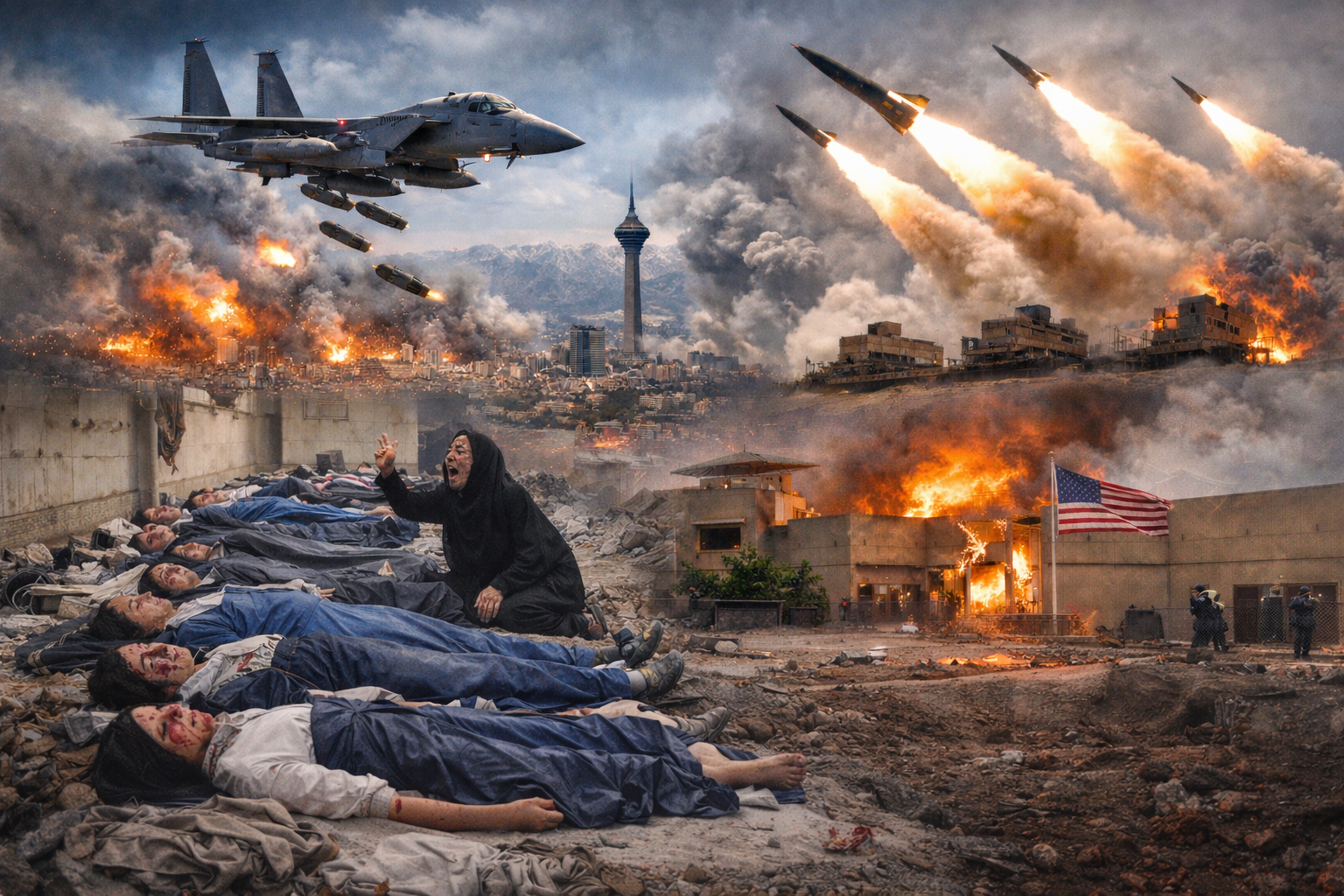






New Delhi: US President Donald Trump on Thursday said in a social media post that Israel carried out a strike on Iran’s key gas infrastructure without prior US involvement, and asserted that Iran retaliated by targeting energy facilities in the Gulf a day earlier, as the war between Israel and Iran escalated sharply.

Writing on Truth Social, Trump said Israel had struck Iran’s South Pars gas field — the world’s largest natural gas reserve — describing the attack as limited in scope and emphasizing that “the United States knew nothing about this particular attack.”
He added that Qatar was not involved and suggested Iran’s response was based on a misunderstanding of responsibility for the strike. Trump claimed Tehran “unjustifiably and unfairly” attacked a Qatari liquefied natural gas facility following the incident.
The March 18 strike on South Pars marked a significant escalation in the conflict, expanding the battlefield to critical energy assets. The Israeli attack damaged pipelines and halted output at two refineries, cutting roughly 12% of Iran’s gas production and forcing Tehran to suspend gas exports to Iraq, according to official and industry-linked reports.
Iran responded within hours, launching missile attacks across the region, including strikes on energy facilities in Qatar’s Ras Laffan industrial city, according to Qatari authorities and multiple media reports.
Qatar condemned the attacks and said the missile strike caused fires and “extensive” damage to its gas infrastructure, a key node in global energy supply.
In his post, Trump warned Iran against further escalation, saying no additional Israeli strikes on the South Pars field would occur unless Iran continued targeting what he described as “a very innocent” Qatar. He added that the United States could respond with overwhelming force if such attacks continued.
Iranian officials, meanwhile, condemned the Israeli strike as a major escalation. Iranian President Masoud Pezeshkian warned of “uncontrollable consequences” and signaled broader retaliation against regional energy infrastructure.
The exchange is part of a wider conflict that intensified in March following earlier US and Israeli military actions. On March 13, US forces struck over 90 Iranian military targets on Kharg Island, a key oil export hub, though energy infrastructure was not targeted at that time.
Israel carried out one of the most significant waves of targeted assassinations against Iran’s leadership since the war began in late February. Israeli officials have said they killed Iran’s intelligence minister Esmail Khatib, along with senior figures including Ali Larijani, head of the Supreme National Security Council, and Gholamreza Soleimani, commander of the Basij paramilitary force. Iran has confirmed Larijani’s death, along with those of close aides and family members in the same strike.
The killings were part of a broader campaign that has eliminated a significant portion of Iran’s military and security leadership. Since the start of the war, apart from Iran’s supreme leader Ayatollah Khamenei, multiple top officials — including Defense Minister Aziz Nasirzadeh, IRGC commander Mohammad Pakpour, and several intelligence chiefs — have been reported killed in Israeli strikes.
While Iran has consistently acknowledged its losses, Israel has not publicly detailed either its operations or its casualties and damages.
Iran has responded with missile and drone barrages across Israel and the Gulf. Strikes hit Israeli cities including Tel Aviv and Ramat Gan. Gulf countries have also been drawn into the conflict. Iranian missiles struck or were intercepted over Qatar, the United Arab Emirates, Kuwait and Saudi Arabia, causing fires, infrastructure damage and injuries.
Qatar said fires broke out in the Ras Laffan industrial area, home to one of the world’s largest liquefied natural gas facilities, though authorities reported limited casualties in some incidents.
The cumulative toll of the war has risen sharply. Iranian military casualties are estimated in the thousands, with some assessments putting the number of killed personnel above 4,800 by mid-March. Civilian deaths in Iran number in the hundreds to over a thousand, while Israeli and regional casualties remain lower but ongoing.
Beyond Iran, Israeli operations in Lebanon have reportedly killed more than 900 people and displaced around one million, according to regional reports.
The conflict has also struck critical infrastructure. Israeli airstrikes have hit fuel depots, refineries and military-industrial sites across Iran, while Iranian retaliation has targeted energy and logistical hubs across the Gulf.
The economic impact has been immediate and global. Oil prices have surged above $100 a barrel, with some estimates nearing $110, amid fears of prolonged disruption.
Shipping through the Strait of Hormuz — which carries roughly 20% of the world’s oil — has been severely disrupted by Iranian threats and military activity, raising concerns about supply shortages in Asia and Europe.
Damage to gas infrastructure in Iran and Qatar has further rattled global LNG markets, with supply chains already strained and major importers bracing for shortages.
Despite Trump’s assertion that the United States was not involved in the South Pars strike, the broader conflict has increasingly drawn in US forces alongside Israel, with Washington conducting strikes on Iranian military targets and warning of further action if escalation continues.

As of March 19, neither Israel nor Iran has indicated any willingness to de-escalate, with both sides continuing strikes on military, leadership and now economic targets — raising fears of a prolonged regional war with global consequences.