


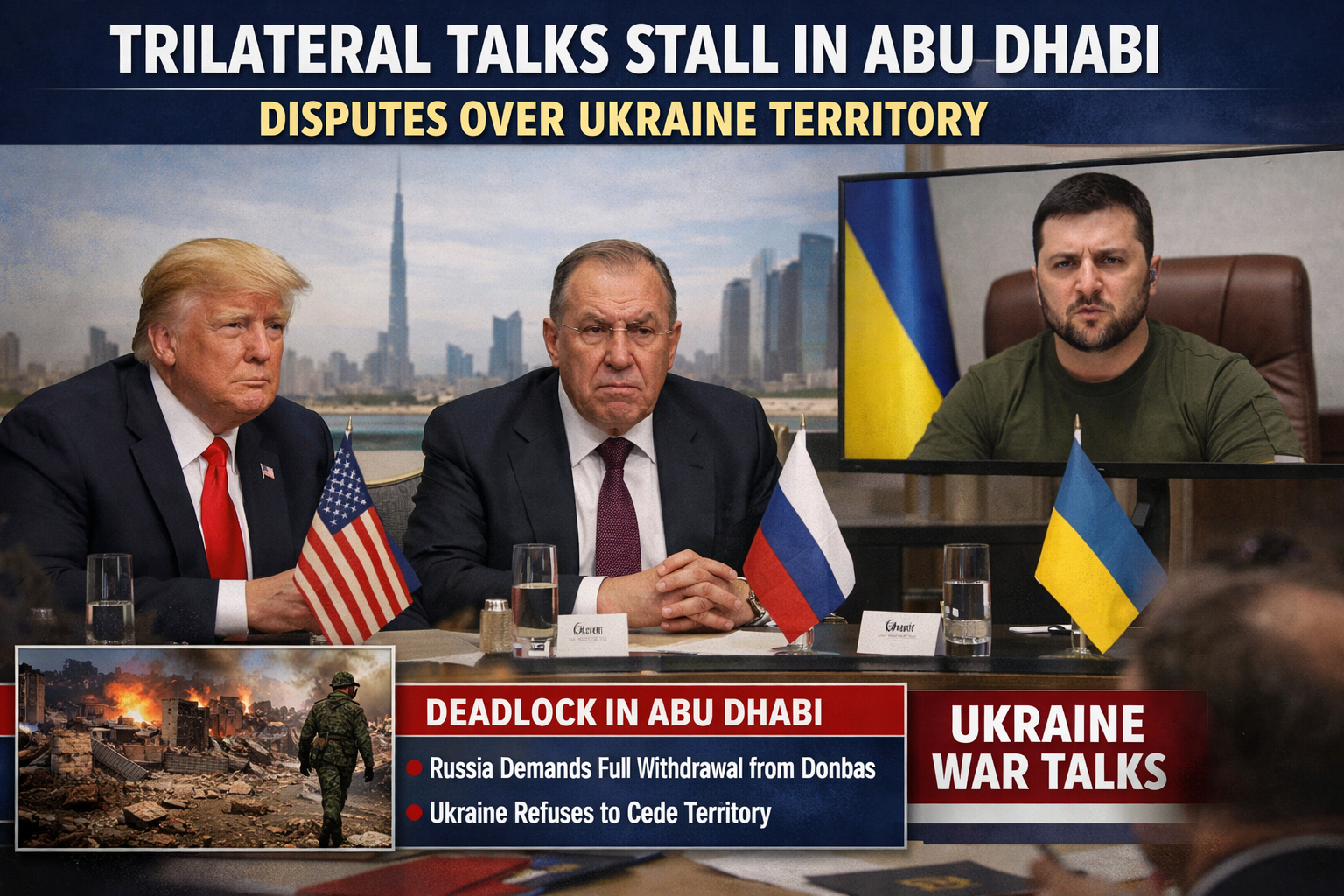






New Delhi: The first trilateral peace negotiations between Ukraine, Russia, and the United States concluded their initial session without a breakthrough, as deep divisions over occupied territories in eastern Ukraine overshadowed discussions.

The talks, held in the United Arab Emirates on January 23 and set to continue over the weekend, mark a significant diplomatic push by U.S. President Donald Trump to end the nearly four-year war, but officials from all sides expressed cautious pessimism.
Ukrainian President Volodymyr Zelenskyy, addressing the media remotely, emphasized the centrality of land issues. “It’s all about the land,” Zelenskyy stated, referring to the Donbas region where Russian forces control significant portions. He added that it is “still too early to draw conclusions” from the meetings, which could explore postwar control of the area, but stressed Ukraine’s refusal to cede territory outright.
Kyiv has proposed alternatives, such as demilitarized zones, while the U.S. suggested creating a free economic zone in parts of Donbas to foster stability.
Russian officials, however, maintained a hardline stance. Kremlin spokesperson Dmitry Peskov reiterated that Ukraine’s full withdrawal from Donbas—encompassing Luhansk and Donetsk oblasts—is a non-negotiable condition for settlement. He described public details of the so-called “Anchorage formula,” allegedly agreed upon in prior U.S.-Russia talks in Alaska, as “inadvisable,” but insisted it forms the basis for resolving territorial disputes.
Russian Presidential Aide Yuriy Ushakov echoed this, stating there is “no hope” for a long-term deal without addressing territory per this formula. Russian Foreign Minister Sergei Lavrov, in earlier comments, affirmed Russia’s openness to talks but dismissed ceasefires short of a comprehensive agreement as “not serious.”
The U.S. delegation, including envoys linked to Trump’s administration, has been instrumental in facilitating the dialogue. Trump, who met Zelenskyy at Davos earlier this week, has prioritized a swift resolution, revising an initial 28-point plan to a 20-point framework that incorporates Ukrainian and European input.
White House officials described the talks as a test of commitment, with proposals including an “energy ceasefire” where Russia halts strikes on Ukrainian infrastructure in exchange for Kyiv refraining from targeting Russian oil facilities.
Despite the negotiations, violence persists. Russian airstrikes overnight into January 24 hit Ukrainian cities, including Kharkiv, damaging a maternity hospital and wounding at least 11.

As delegations reconvene, the path to peace remains fraught. With winter exacerbating humanitarian crises, the international community watches closely, hoping Trump’s mediation yields progress before further bloodshed.