








New Delhi: The Supreme Court on Saturday declined to interfere with the Election Commission of India’s decision on deployment of counting personnel for the West Bengal Assembly election results scheduled on May 4, refusing relief to the Trinamool Congress (TMC), which had challenged the exclusion of state government employees from key counting roles.

A special bench of Justices P.S. Narasimha and Joymalya Bagchi disposed of the plea after recording the Election Commission’s assurance that its April 13 circular would be implemented “in letter and spirit”, and said no further directions were necessary.
The TMC had moved the apex court after the Calcutta High Court dismissed its challenge to a communication issued by the West Bengal election authorities concerning counting arrangements. The party argued that restricting counting supervisors and assistants to Central government and Central PSU personnel would compromise transparency and unfairly exclude state employees.
According to the Election Commission’s position before the court, apprehensions raised by the petitioner were “completely misplaced” and the counting process would be conducted strictly in accordance with the applicable circulars and rules.
Counting for all 294 Assembly constituencies is scheduled to begin at 8 a.m. on May 4 under multi-layered security arrangements across the state. Strong rooms storing Electronic Voting Machines (EVMs) and VVPAT units remained under guard as political parties stationed agents outside several counting centres.
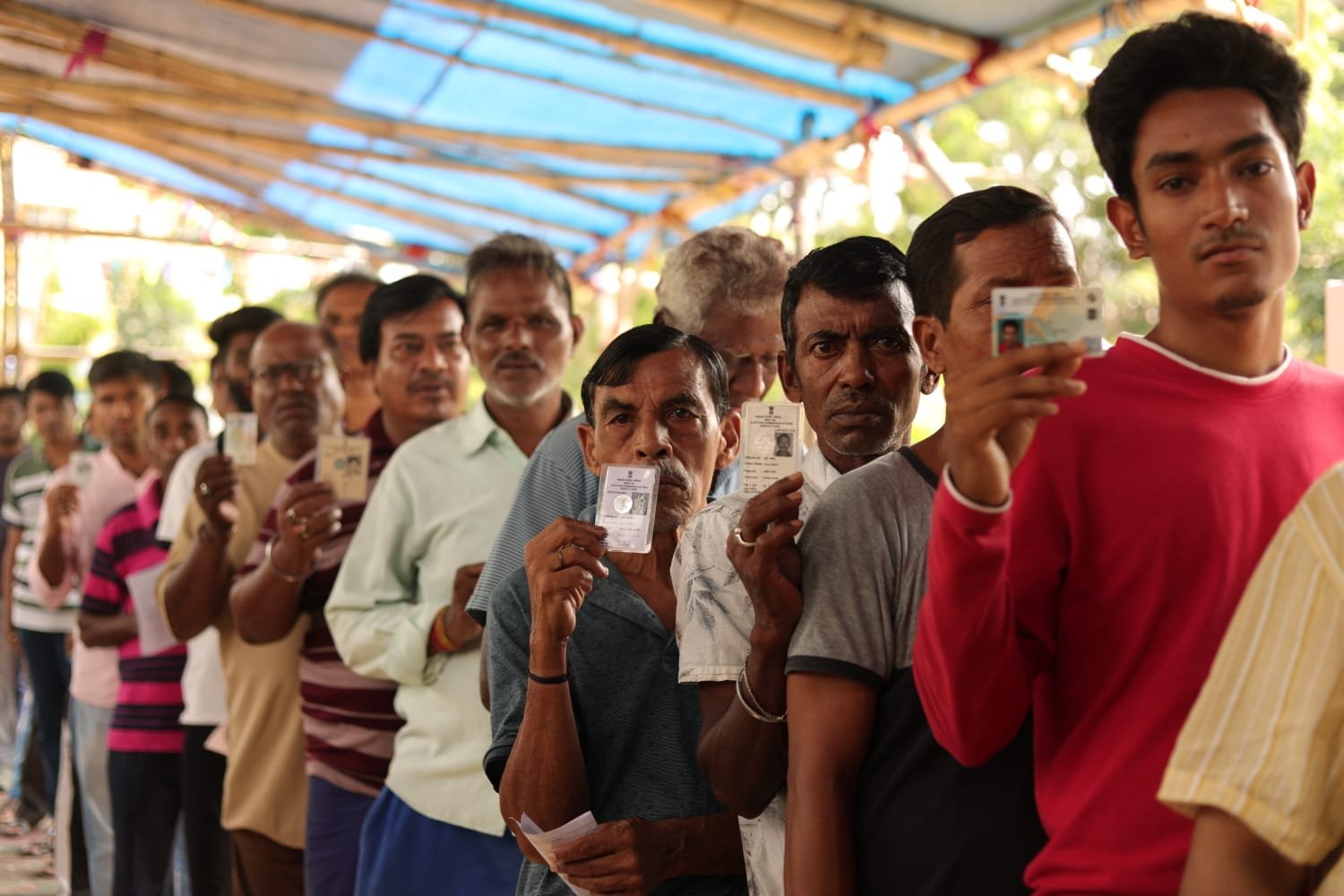
On Saturday, on the Election Commission’s orders 15 polling stations in South 24 Parganas district went for a re-poll following complaints related to alleged EVM tampering, obstruction of polling agents and irregularities during the second phase of voting held on April 29.
The repolling began from 7 a.m. and will end at 6 p.m. The order covered 11 polling stations in Magrahat Paschim Assembly constituency and four polling stations in Diamond Harbour Assembly constituency.
Election officials said fresh polling teams, reserve EVMs and central armed police personnel were deployed for the repoll exercise. Standard protocols for sealing, mock poll procedures, videography and agent presence were to be followed at all affected stations.
The repoll order followed representations from contesting parties and local complaints alleging that voting in certain booths had been disrupted or compromised. The Election Commission did not publicly attribute blame to any party while announcing the fresh poll, stating only that it had acted after examining reports and complaints received from the field.
The affected constituencies are politically significant because Diamond Harbour is a high-profile seat in South Bengal, while Magrahat Paschim has seen closely fought contests in previous elections. Turnout figures from the repoll booths are expected to be separately tabulated before being merged into final constituency totals on counting day.
With repolling underway, security was tightened around the 15 stations, approach roads and adjoining areas. Officials said only voters whose names appeared on the electoral rolls of the identified polling stations would be permitted to vote. Polling agents of recognised parties were allowed subject to valid authorisation and identification.
The repoll exercise means final constituency results in the two seats will depend on votes cast on Saturday replacing the earlier polling data from the affected stations. Under Election Commission procedure, votes recorded in the original poll at booths where repoll is ordered are not counted.

Saturday’s twin developments — the Supreme Court declining to alter counting staff arrangements and the Commission proceeding with repolling in 15 booths — set the stage for a closely watched result day in West Bengal on May 4, when the outcome of one of India’s most politically charged state elections will be known.