


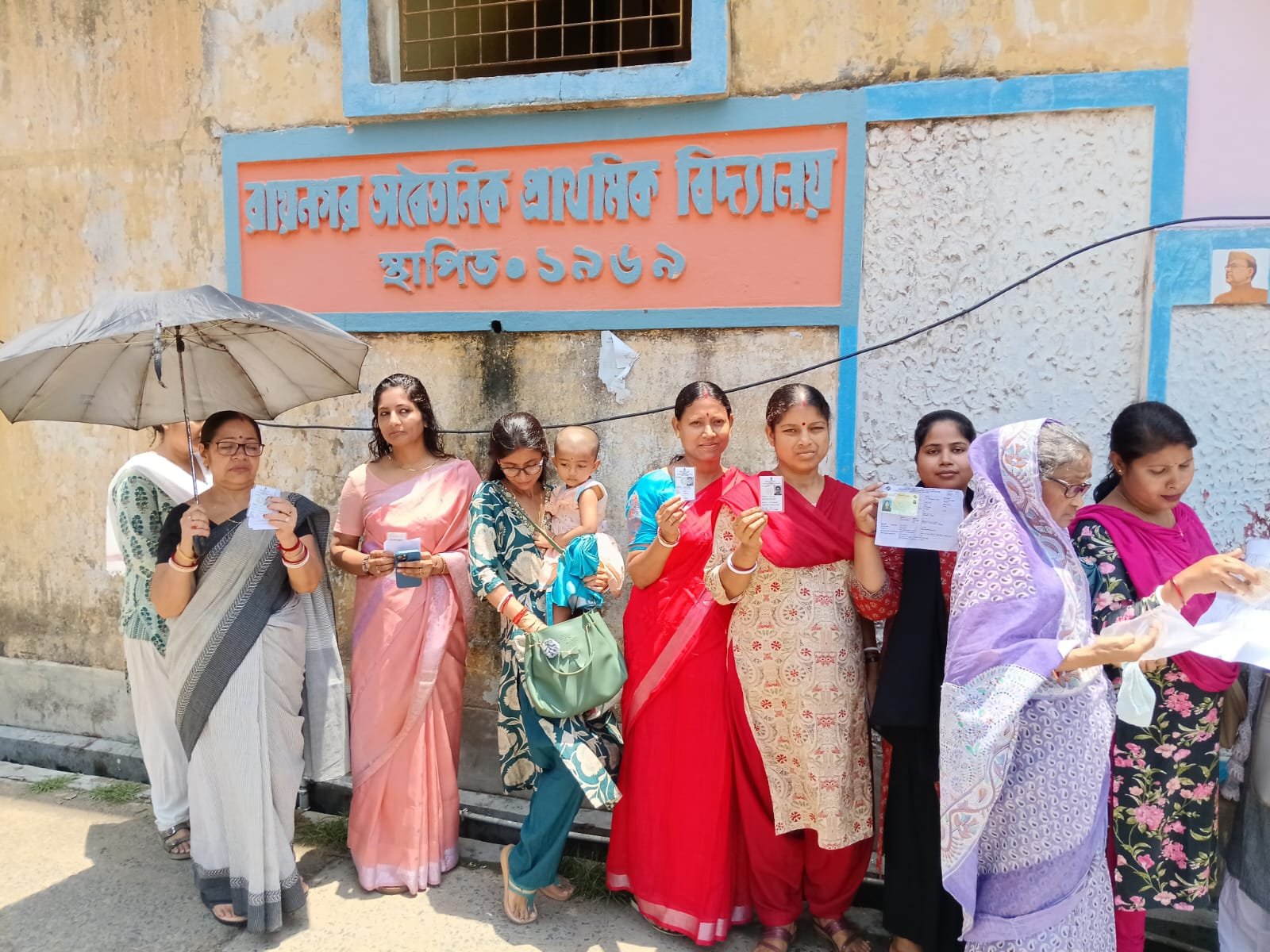






New Delhi: Counting of votes for the 2026 Assembly elections in West Bengal, Tamil Nadu, Kerala, Assam, and Puducherry began Monday morning amid high security and intense political anticipation.

The Election Commission of India (ECI) kicked off the process at 8 AM with postal ballots, followed by EVM counts at 8:30 AM across counting centres. Early trends emerging by mid-morning are already reshaping the political landscape in these diverse battlegrounds, with over 824 seats at stake.
In West Bengal, the high-stakes contest between the Trinamool Congress (TMC) and the BJP has dominated national attention. With 294 seats and a majority mark of 148, early trends show the BJP-led alliance surging ahead, crossing the halfway mark in several projections. Suvendu Adhikari is reported to be in a tight contest with Mamata Banerjee in the symbolic Bhabanipur constituency.
TMC, which has ruled the state for over a decade, faces significant anti-incumbency, while the BJP has mounted a strong challenge. Repolling has been ordered in Falta constituency due to reported irregularities, delaying its results. High voter turnout nearing 91% in phases signals deep public engagement.
Tamil Nadu’s 234-seat assembly (majority 118) presents a triangular fight. The ruling DMK, led by MK Stalin, is showing resilience in early counts despite challenges from actor Vijay’s newly prominent Tamilaga Vettri Kazhagam (TVK) and the AIADMK alliance. Trends indicate DMK+ leading in several seats, with TVK making notable inroads, particularly in urban pockets. The contest reflects evolving Dravidian politics, with issues like welfare schemes and regional pride taking centre stage. Voter turnout exceeded 85%.
In Kerala, the traditional UDF-LDF rivalry is playing out with 140 seats (majority 71). Early leads favour the UDF significantly over the incumbent LDF led by Pinarayi Vijayan, with the NDA also picking up ground. This shift could mark a potential change after years of Left rule, driven by concerns over governance and economic issues. Counting in smaller states like Kerala is expected to clarify by afternoon.
Assam’s BJP-led government under Himanta Biswa Sarma appears headed for a comfortable win in the 126-seat house (majority 64). Early trends show the NDA consolidating its position with leads in a majority of constituencies, building on its previous performance. The Congress alliance trails, indicating continued dominance of the saffron camp in the Northeast state.
Puducherry, with just 30 seats (majority 16), is seeing the NDA, including the AINRC, maintaining an edge in early counts. The UT often mirrors broader national trends and could see continuity for the ruling alliance.
ECI officials have emphasised transparency, with round-by-round updates on the official portal and mandatory VVPAT verifications. Multi-layered security, including central forces, has been deployed to ensure smooth proceedings. The results are a crucial litmus test for national parties ahead of future Lok Sabha polls, reflecting regional aspirations and national undercurrents like welfare, development, and identity politics.
Markets are watching closely, with early trends influencing investor sentiment. Final results are expected by evening in most states, though full clarity in larger ones like West Bengal and Tamil Nadu may stretch into late night. Political reactions are pouring in, with leaders hailing early leads and others promising to analyse setbacks.

As counting progresses, the day underscores the vibrancy of Indian democracy. From the paddy fields of Assam to the bustling streets of Chennai and Kolkata, millions await governance that aligns with their hopes. Live updates continue across major networks and the ECI website, keeping the nation glued to the unfolding verdict.