








Author: Bhaavna Arora

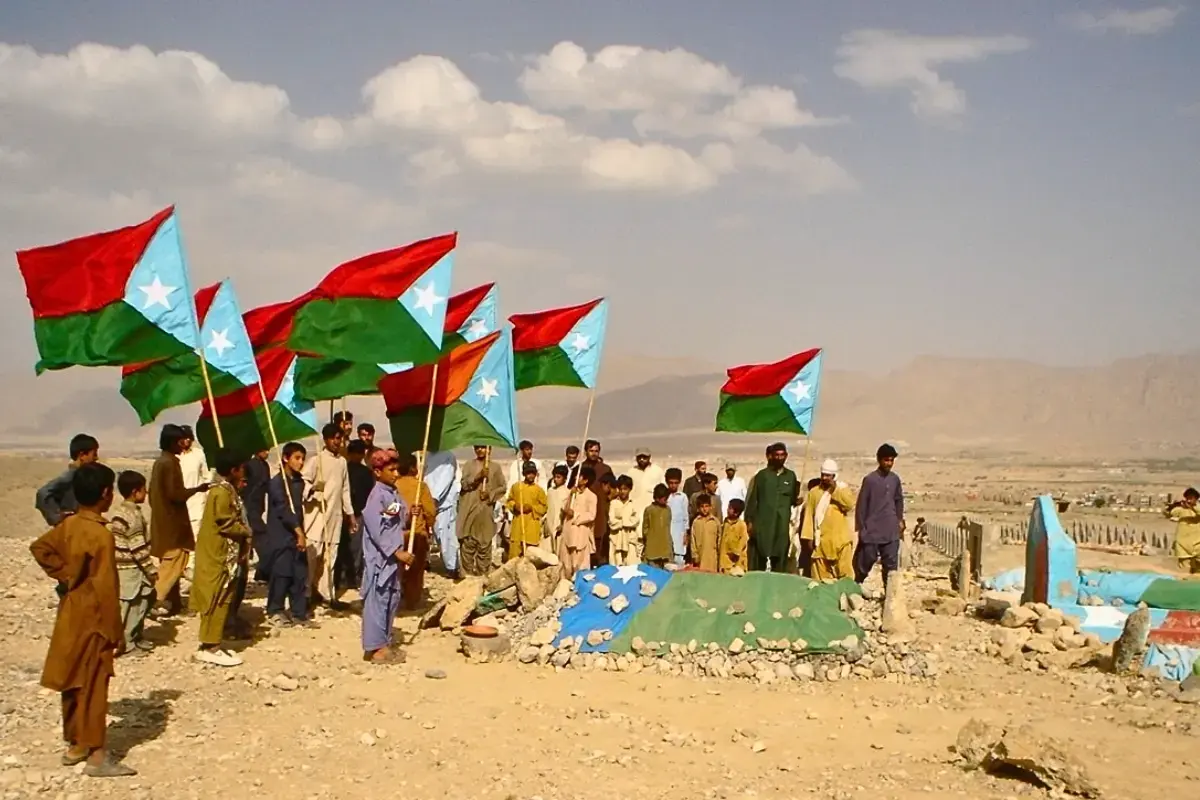
For decades, Balochistan has been a graveyard of silenced voices. Beneath the rugged hills and resource-rich soil lies a brutal story of disappearances, mass graves, and a people fighting for the simple dignity of being heard.
Pakistan routinely thunders about human rights in Kashmir at the United Nations, but it has perfected a machinery of repression within its own borders—particularly in Balochistan, the country’s largest yet most neglected province.
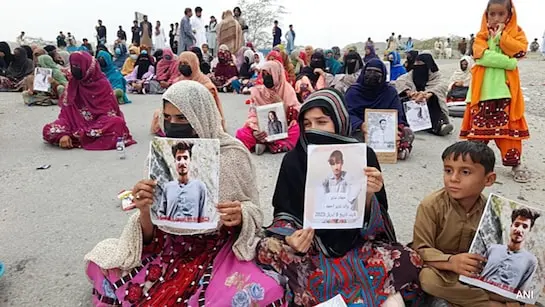
The pattern is chillingly consistent: people are abducted by security forces, denied custody, and weeks or months later, their mutilated bodies appear dumped on roadsides or in mass graves. Families that protest are baton-charged, women-led marches are crushed, and those who survive live in fear of the next knock on the door.
ALSO READ: ISI’s Endgame: Destabilizing India Through Drugs and Disillusionment
These are not allegations whispered in the dark—they are documented realities, reported by Amnesty International, Human Rights Watch, international media, and even acknowledged in Pakistan’s own Commission of Inquiry on Enforced Disappearances (COIED).
A Long History of Betrayal
Balochistan’s alienation began in 1948 when Pakistan annexed the Khanate of Kalat against the wishes of many Baloch leaders. The resentment simmered for decades, erupting into multiple insurgencies. But it was the killing of veteran leader Nawab Akbar Bugti in August 2006—during a Pakistan Army operation—that re-ignited the fiercest cycle of violence.
Since then, the state’s counterinsurgency has relied less on dialogue and more on a “kill-and-dump” policy that the United Nations Working Group on Enforced Disappearances (WGEID) has repeatedly flagged.
Kill and Dump: The Human Cost
On 1 April 2011, Pakistani newspapers reported a horrifying figure: 121 bullet-riddled bodies had been recovered across Balochistan in just eight months. Most were young men, activists, and students, abducted earlier by security agencies. The message was clear—speak up, and you vanish.

One of the most emblematic cases is that of Jalil Reki, Information Secretary of the Baloch Republican Party. Abducted on 13 February 2009, his tortured body was found on 24 November 2011 in Shiraz Mand, near Turbat. Similarly, Sangat Sana, a student leader of the Baloch Students Organization (Azad), disappeared in December 2009; his body was recovered two years later, showing signs of extreme torture. These names are not anomalies; they represent hundreds of families searching for justice outside press clubs with photographs of sons who never came home.
The horror escalated on 25 January 2014, when villagers near Totak in Khuzdar district stumbled upon unmarked mass graves containing more than 100 bodies. Amnesty International immediately called for an independent, impartial investigation, but none was ever credibly carried out. To this day, the Totak graves remain a haunting symbol of Balochistan’s unacknowledged genocide.
Suppression of Peaceful Protest
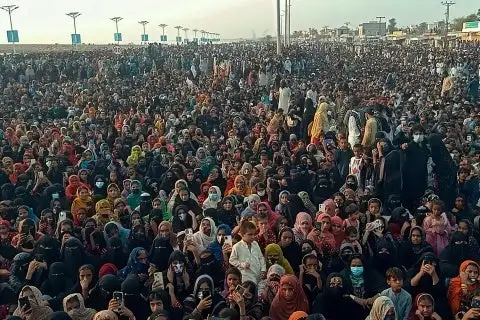
The repression has not been limited to clandestine abductions. In December 2023, thousands of Baloch women and youth marched from Turbat to Islamabad, demanding the release of their missing relatives. The state responded with batons, water cannons, and mass arrests. Reports confirmed that nearly 290 protesters were detained, though later released under pressure. Among them were women like Dr. Mahrang Baloch and Sammi Deen Baloch, who have become the faces of Baloch resistance.
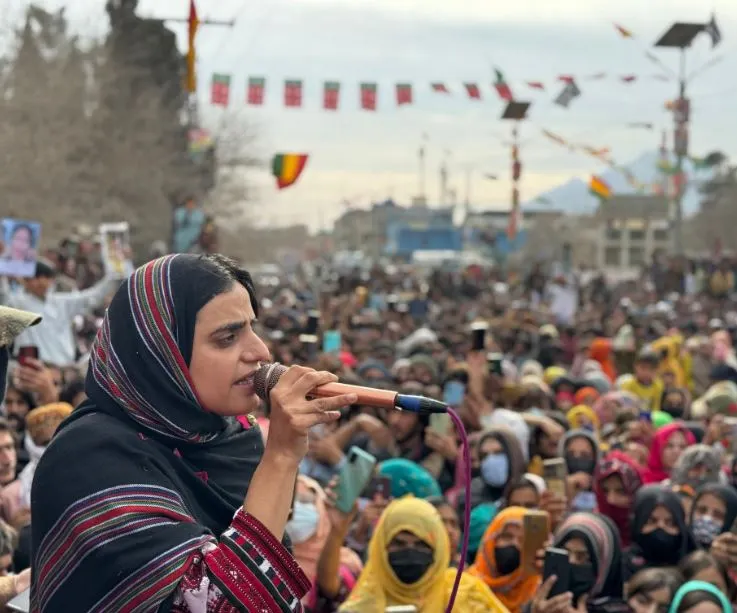
The cycle repeated in July 2024. As Baloch activists traveled towards Gwadar for the “Baloch Raji Muchi” gathering, paramilitary forces opened fire near Mastung, injuring at least 14 people. The following day, in Gwadar itself, the crackdown turned deadlier—rights groups reported three deaths and hundreds of arrests. Amnesty International issued an urgent statement urging Pakistan to end its “repeated punitive crackdowns” on Baloch protests, but the violence continued.
By January 2025, the situation had worsened. The Baloch Yakjehti Committee documented 88 new enforced disappearances in a single month, with the highest concentration—43 cases—in Makran alone. This wave coincided with the arrests of frontline defenders, including Dr. Mahrang Baloch herself in March 2025, prompting UN experts to intervene and demand her release.
What the UN Knows—and Has Ignored
The United Nations is not unaware. The WGEID visited Pakistan in September 2012, producing a landmark report in 2013 that urged the government to criminalize enforced disappearances, investigate mass graves, and grant families access to justice. A 2016 follow-up found that little progress had been made. Since then, annual WGEID reports continue to cite cases from Balochistan, while press statements in March and April 2025 condemned Pakistan’s “unrelenting use of enforced disappearances.”
Yet these words have not translated into action. Pakistan still refuses to ratify the International Convention for the Protection of All Persons from Enforced Disappearance (ICPPED). Its military and intelligence agencies remain beyond civilian accountability. And the mass graves of Khuzdar still await a proper forensic investigation.
Why Balochistan Matters Now
The world cannot afford to treat Balochistan as an internal affair. This is not simply a matter of provincial discontent—it is a human rights crisis unfolding in real time. The numbers are stark: 10,078 disappearance cases recorded by COIED since 2011, of which 2,752 are from Balochistan. Independent activists insist the true number is far higher. Each case represents not just a missing body but a broken family, a community silenced, and a people pushed further to the margins.
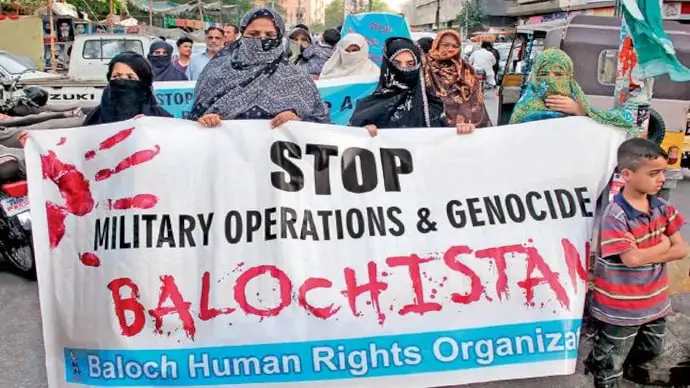
If the United Nations can pass resolutions on Syria, Myanmar, and Ukraine, why not Balochistan? The Totak graves of 2014 are as grave a crime against humanity as any seen in the past decade. The long marches of 2023 and 2024 show that Balochistan’s women are willing to risk everything to demand justice. The least the world can do is listen.
The Road Ahead
At the next Human Rights Council session, the international community must demand that Pakistan:
• Criminalize enforced disappearance in line with ICPPED.
• Invite the WGEID for an unrestricted follow-up visit with access to Balochistan.
• Establish an independent commission of inquiry into the Totak mass graves and all “kill-and-dump” cases since 2006.
• Guarantee non-retaliation for Baloch families engaging with UN mechanisms.
• Publish a real-time detainee registry, accessible to courts and relatives.

Until these steps are taken, Pakistan’s rhetoric about human rights abroad will remain an exercise in hypocrisy. The people of Balochistan are not asking for sympathy—they are demanding justice. And justice, after decades of silence, is long overdue.