


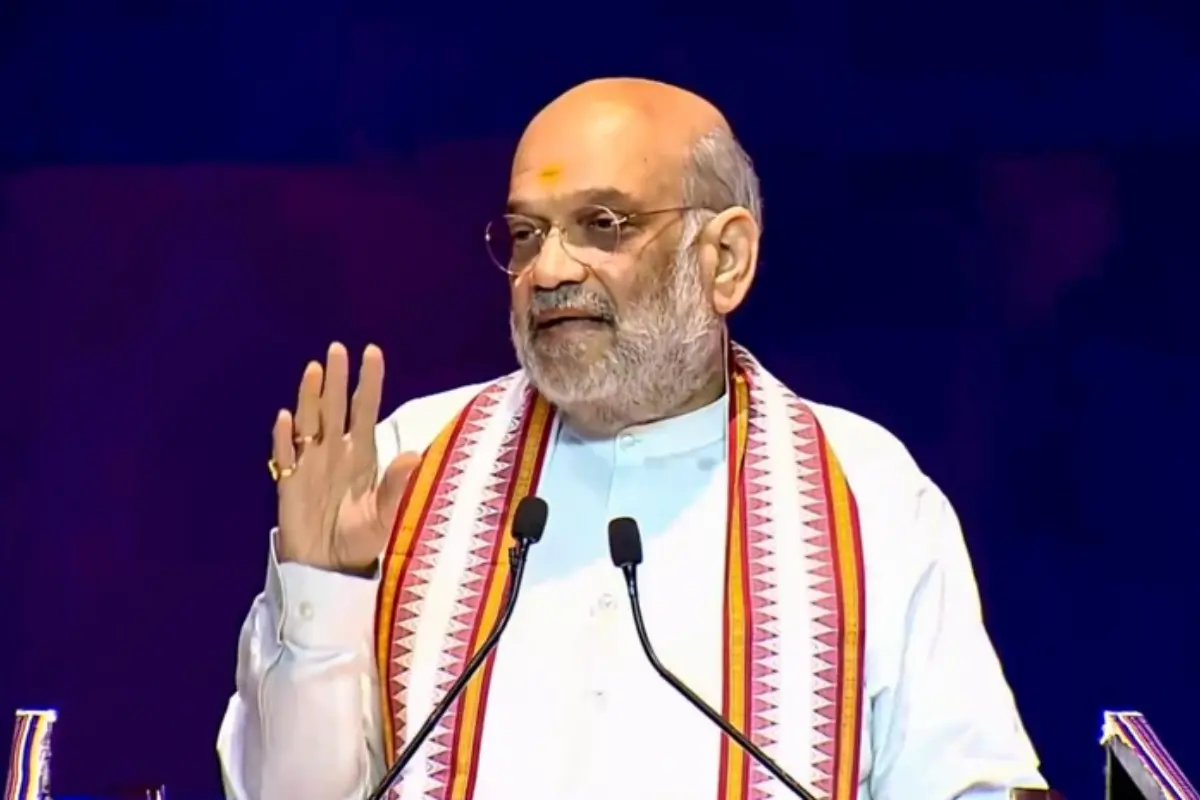






NEW DELHI: Union Home Minister Amit Shah on Thursday hailed a major breakthrough in the government’s campaign against left-wing extremism after 258 Naxalites surrendered across Chhattisgarh and Maharashtra over the last two days.

“A landmark day in our battle against Naxalism. Today, 170 Naxalites have surrendered in Chhattisgarh. Yesterday 27 had laid down their arms in the state. In Maharashtra, 61 returned to the mainstream, yesterday. In total, 258 battle-hardened left-wing extremists have abjured violence in the last two days,” Shah said in a post quoted by the Ministry of Home Affairs. “I applaud their decision to renounce violence, reposing their trust in the Constitution of India. It attests to the fact that Naxalism is breathing its last due to the relentless efforts of the PM @NarendraModi led government to end the menace.”
Shah reiterated the government’s dual approach of offering surrender and rehabilitation to those willing to give up arms while warning that “those who continue to wield the gun will meet the wrath of our forces.” He added an appeal to remaining cadres to surrender and set a target: “We are committed to uprooting Naxalism before 31st March 2026.”
Officials and media reports said 170 cadres surrendered in Chhattisgarh on Thursday, while 27 had surrendered in the state a day earlier; Maharashtra recorded 61 surrenders on Wednesday. Multiple national outlets and state officials confirmed the figures.
State reactions and operations
Maharashtra Chief Minister Devendra Fadnavis described recent surrenders — including the handover of a senior commander and 61 cadres in Gadchiroli — as a turning point in the fight against the Maoist network in the Red Corridor. State and central security agencies have credited a combination of targeted operations, intelligence work and surrender-rehabilitation packages for the wave of defections.
Official context and past data
The Home Ministry and the Press Information Bureau have regularly publicised surrender and neutralisation tallies as part of the government’s “zero-tolerance” policy on left-wing extremism. Recent Ministry of Home Affairs releases note hundreds of surrenders and several high-profile neutralisations and arrests since 2024 as authorities intensify operations and outreach in affected districts.
What happens to surrendered cadres
Sources say surrendered members typically undergo debriefing, weapons handover and rehabilitation processes that vary by state — including financial assistance, skill training and local reintegration measures. Authorities argue that such packages, combined with security pressure, are necessary to break militant structures and restore normalcy in conflict-affected regions. Independent observers stress that rehabilitation must be accompanied by development and local reconciliation to be durable.

With the Home Minister publicly setting a deadline of March 31, 2026 for uprooting Naxalism, the government is likely to continue a mix of security operations, surrender incentives and development outreach. Analysts say sustaining the gains will require coordinated work by Centre and state governments on policing, prosecution, rehabilitation and socio-economic interventions in the tribal and forested areas long affected by the insurgency.