


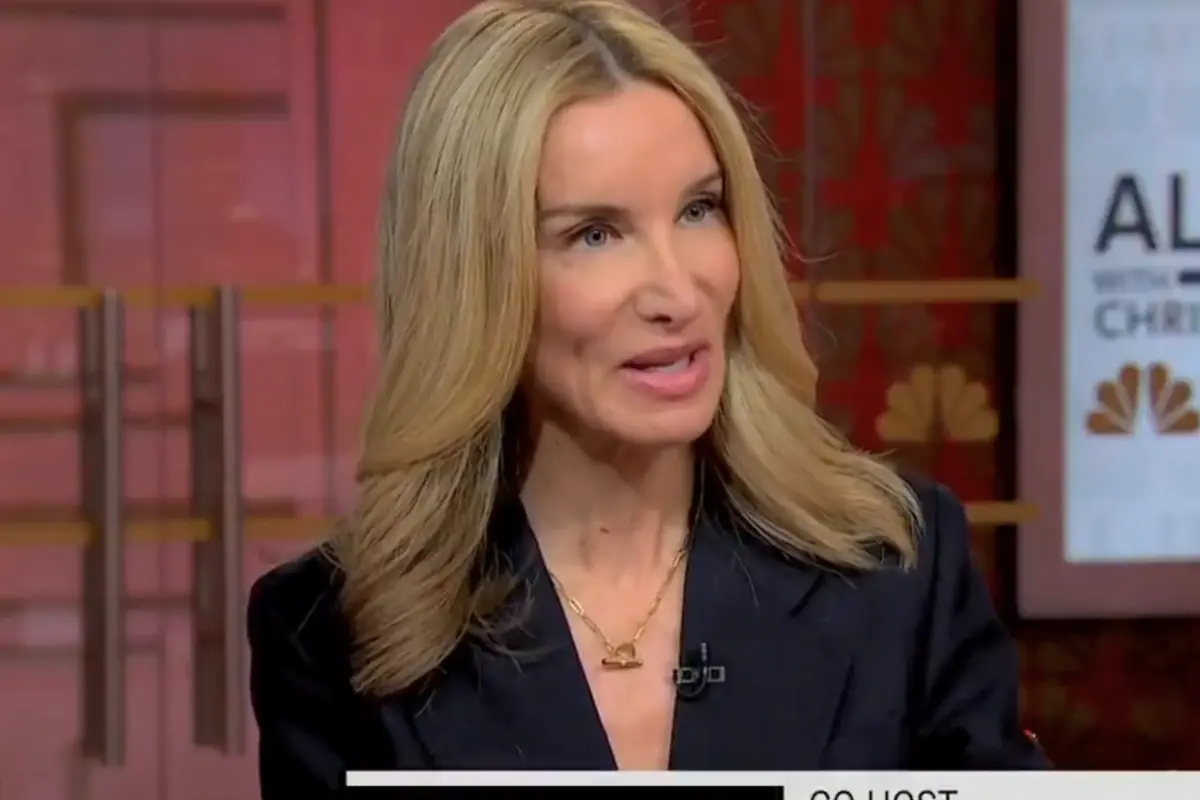






NEW DELHI: A recent segment on MSNBC sparked sharp criticism after guest commentator Jennifer Welch accused U.S. Vice President J.D. Vance of failing to defend his wife, who is of Indian descent, and their mixed-race children — remarks many viewed as inflammatory and divisive.

During the broadcast, Welch stated:
“J.D. Vance is married to a woman of Indian descent. He has mixed race children. So to all of the MAGA voters out there, if this man will not defend his wife and will not defend his kids, do you think he gives a crap about you?”
Disgusting commentary from Jennifer Welch on MSNBC.
“JD Vance is married to a woman of Indian descent. He has mixed race children. So to all of the MAGA voters out there, if this man will not defend his wife and will not defend his kids, do you think he gives a crap about you?” pic.twitter.com/YyA3QZyAXY
— Thomas Hern (@ThomasMHern) October 16, 2025
Her comments immediately drew attention from political observers, viewers, and social media users, some condemning the tone and implications of her statement.
Reactions and Criticism
Public figures across the political spectrum expressed dismay over the commentary. Michael LaRosa, a Washington-based commentator, called it “truly vile stuff, and yet (sadly) completely expected and now tolerated on MSNBC.”
Social media amplified the backlash. One post summarizing the segment labeled it “disgusting commentary from Jennifer Welch on MSNBC.”
Critics argued that Welch’s remarks employed identity politics to sow division, and questioned whether the framing was productive for constructive discourse. Some defended the notion of vigorous debate, but insisted it must remain respectful and avoid personal attacks or insinuations tied to race or family.
J.D. Vance, His Family, and Public Profile
J.D. Vance is married to Usha Vance (née Usha Chilukuri), an Indian American lawyer and immigrant-heritage professional. The couple has three children.
Political commentators have previously noted that Usha Vance has faced racially tinged commentary and white supremacist harassment, targeted because of her Indian heritage. In interviews, J.D. Vance has defended his wife publicly.
Welch’s remarks come in a broader environment of contentious political debates over identity, loyalty, and the responsibilities of public figures to their families and constituents.
Broader Implications
The segment spotlights a deeper tension in political discourse: how much a public official’s personal life should be invoked in evaluating their public duty, and the line between criticism of policy versus criticism of identity or family.
While some view Welch’s statement as a pointed rhetorical device aimed at energizing her side’s base, others see it as damaging to civil dialogue — conflating questions of personal loyalty with public service.

It remains to be seen whether MSNBC or Jennifer Welch will issue a clarification or apology. The episode may renew focus on the responsibilities of news networks and commentators in moderating tone, framing, and fairness in political debate.