


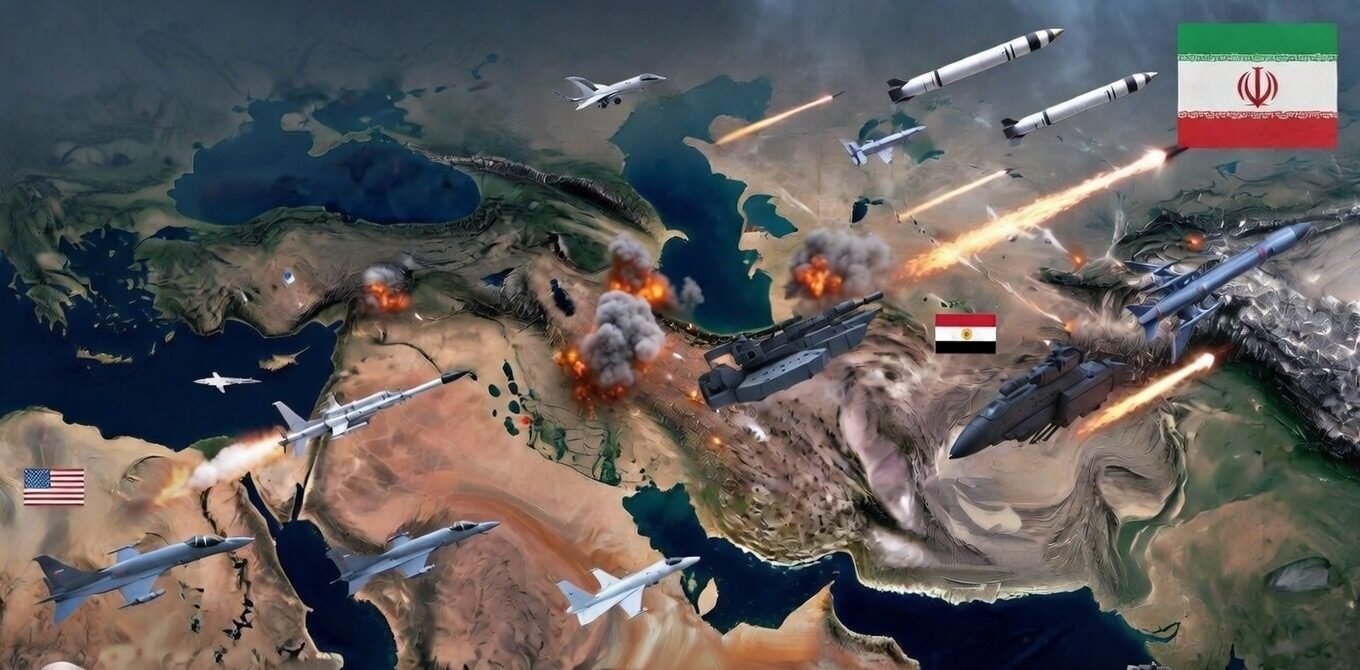






New Delhi: The joint US-Israeli air strikes against Iran has persisted into its third day, with both sides engaging fiercely amid rising casualties and regional disruptions.

The unilateral attack, initiated by the US and Israel on February 28, claims to neutralize Iran’s nuclear and missile capabilities even as diplomatic efforts had been ongoing. Iranian state media confirmed the death of Supreme Leader Ayatollah Ali Khamenei on Sunday, prompting a 40-day mourning period and vows of continued resistance. US Central Command (CENTCOM) reported over 1,000 targets struck, including naval vessels, missile sites, and IRGC command centers.
US President Donald Trump stated in a video on Sunday that the strikes are “massive and ongoing” to eliminate threats from the “Iranian regime,” adding they will continue “as long as necessary to achieve peace throughout the Middle East and the world.” He confirmed the sinking of nine Iranian ships and the elimination of 48 leaders.
Israeli Prime Minister Benjamin Netanyahu emphasized the need to prevent Iran from acquiring nuclear weapons, stating the regime “must not be allowed to threaten all of humanity.” The IDF reported killing senior IRGC figures, including Commander Major General Mohammad Pakpour, and conducted additional strikes overnight.
Iran’s Foreign Ministry denounced the assaults as a “gross violation of territorial integrity,” with officials affirming, “The armed forces will respond with authority.” Foreign Minister Abbas Araghchi described the war as “unprovoked and illegitimate,” vowing Iran’s forces would “teach the aggressors the lesson they deserve.”
Iran’s retaliation, dubbed “Operation Truthful Promise 4,” has targeted Israel and US facilities in the Gulf, launching over 370 missiles and 830 drones since February 28. These strikes have caused verified damage and casualties. In Israel, a missile hit a synagogue in Beit Shemesh, killing at least nine and injuring up to 450, according to Israeli officials and the ambulance service. A separate strike in central Tel Aviv killed one and injured over 100.
In the Gulf, attacks on US bases included explosions at the 5th Fleet headquarters in Bahrain and Al Udeid in Qatar. CENTCOM confirmed three US service members killed and five seriously wounded in Kuwait. Trump noted, “There will likely be more” US casualties. In Bahrain, one person was killed. Across UAE, Kuwait, Qatar, Bahrain, and Oman, at least four were killed, with UAE reporting three dead and 58 injured. Kuwait intercepted attacks but reported over 30 injured, mostly foreign nationals. Infrastructure damage included Dubai’s airport and luxury areas like Palm Jumeirah. Hezbollah’s rocket exchanges with Israel added to border tensions.
Conversely, US-Israeli strikes have inflicted heavy losses in Iran. The Iranian Red Crescent reported 201 killed and 747 injured as of Sunday, including over 100 children at a southern girls’ school. Damage included Tehran’s Gandhi Hospital and Niloofar Square, with at least 20 killed there.
Iran’s closure of the Strait of Hormuz has disrupted 20% of global oil trade, pushing Brent crude to $74 per barrel. Airspace closures continue, impacting flights.
Russia’s Foreign Ministry called the strikes “unprovoked aggression.” China’s ministry urged respecting Iran’s sovereignty and ceasing hostilities. A UK-France-Germany statement condemned Iran’s attacks, calling for restraint. The UN Security Council convened an emergency session. Risks of wider proxy involvement, with no immediate resolution in sight, remain.