


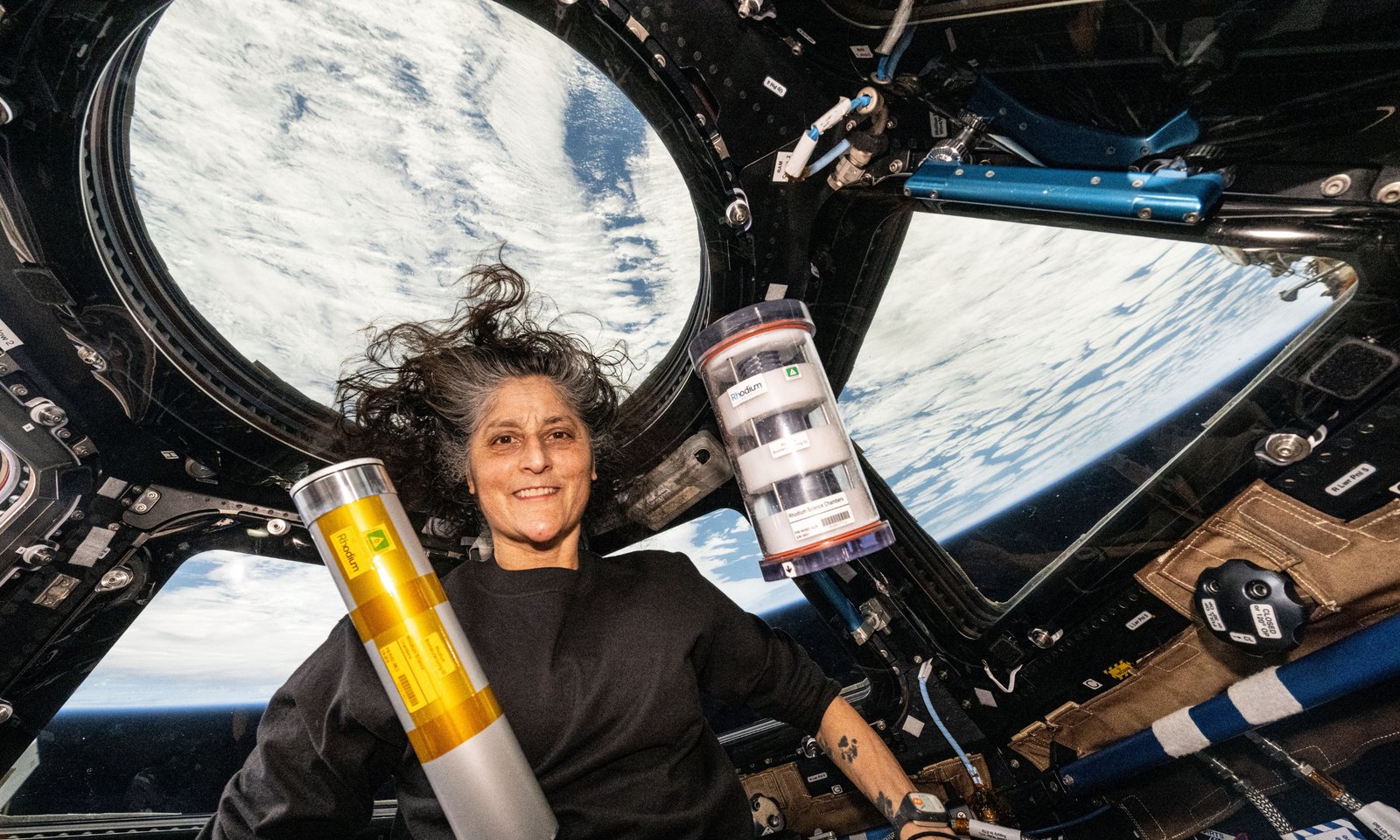






New Delhi: NASA astronaut Sunita Williams has described her unexpected nine-month stay aboard the International Space Station (ISS) as a testament to preparation, teamwork, and institutional resilience rather than crisis.

Speaking during a recent visit to India, where she engaged with students, policymakers, and industry figures in New Delhi and Kozhikode, Williams downplayed the drama surrounding her prolonged mission. What was intended as an eight-day test flight aboard Boeing’s Starliner spacecraft in June 2024 stretched significantly due to propulsion issues and helium leaks identified during docking.
“We knew from the start it was going to be longer than eight days,” Williams said. “It was the first mission of a spacecraft, and we knew there was going to be something we would learn.”
Engineers on the ground and the astronauts coordinated swiftly to restore sufficient control for safe docking. The subsequent decision to gather more data and prioritise safety over a hurried return exemplified what Williams sees as a core strength of the US space programme: deliberate, evidence-based decision-making rather than haste.
The most challenging aspect, she noted, was not physical hardship but the emotional strain on mission control teams. “It was probably more of an emotional rollercoaster for that control team, because they were so well trained… and some of the hardware problems were beyond their control,” Williams said.
Her experience highlights NASA’s long-term investment in people. Astronauts undergo years of training not only on spacecraft systems but also to understand the broader organisational capabilities supporting them.
Williams praised the ISS as a mature scientific platform after more than two decades in orbit, encompassing everything from maintenance and spacewalks to experiments on producing food and medicine in space. It has also paved the way for commercial ventures in low Earth orbit.
“That just spurs on the next generation of STEM students, because they have lots of opportunities to work at different places,” she said.
Looking forward, lessons from the ISS are informing the Lunar Gateway station, planned to orbit the Moon with greater modularity and autonomous capabilities.
For Williams, the future depends on human qualities: curiosity, questioning, and readiness for uncharted missions. Even her flight suit, she noted, symbolises not just astronauts but the thousands in training, control, and operations.
The extended mission, though unplanned, underscored the US space programme’s adaptability and quiet competence – qualities that continue to sustain its leadership in exploration.

This article is based on reporting by SPAN magazine, a publication of the US Embassy in New Delhi. SPAN has been bridging cultural and informational ties between the United States and India since 1960, delivering content in English, Hindi, and Urdu on topics ranging from science, technology, education, and culture to bilateral relations.