Nawazuddin Siddiqui

Actor Nawazuddin Siddiqui Challenges Rich vs Poor Stereotypes in Films

Nawazuddin Siddiqui criticizes Indian cinema for perpetuating stereotypes based on appearance and social class. He points out the industry’s tendency to falsely portray wealth and poverty, contrasting it with the reality of India.

View More Actor Nawazuddin Siddiqui Challenges Rich vs Poor Stereotypes in Films

Javed Ali on ‘Kun Faya Kun’: The Song’s Enduring Power and Spiritual Journey

Javed Ali shared his profound connection to the Sufi track “Kun Faya Kun,” describing its power to create moments of silence and transcendence during live performances. He credits A.R. Rahman’s spiritual vision for the song’s enduring appeal, which, according to Ali, elevates both performer and audience.

View More Javed Ali on ‘Kun Faya Kun’: The Song’s Enduring Power and Spiritual Journey
Aamir Khan talks about Sensuality

Aamir Khan reveals his guru in life

In an exclusive interview with The New Indian, Aamir Khan reveals that his greatest guru in life has been his mother, Zeenat Hussain. Speaking candidly about the emotional and creative influences that shaped him, the Bollywood icon also credited Indian cinema legends like Amitabh Bachchan and Waheeda Rehman as his mentors. The interview was conducted in Mumbai during the promotions of Sitare Zameen Par.

View More Aamir Khan reveals his guru in life

Durgesh Kumar on ‘Binod’: How His Dialogues Became Viral Sensations

Actor Durgesh Kumar, known as Binod from “Panchayat,” discussed his character’s viral impact. His dialogues, like “Dekh raha hai Binod” and “Alua Meeting,” are now common in everyday speech and even corporate settings, often used in memes. He appreciates how the lines have become part of people’s daily lives.

View More Durgesh Kumar on ‘Binod’: How His Dialogues Became Viral Sensations

“Curd Is Important for Me”: Aamir Khan About His Eating Habits

In a candid conversation with The New Indian’s Executive Editor Rohan Dua, Bollywood star Aamir Khan shared his evolving food journey — from turning vegan for six months to finally giving in to his love for curd. Known for his disciplined transformations in Ghajini and Dangal, Aamir’s reflections show a balanced take on health, comfort, and personal choice.

View More “Curd Is Important for Me”: Aamir Khan About His Eating Habits

Kangana Ranaut: I Was Called Gawar Due To Village Honesty| On Emergency, Diljit, Sadhguru| Rohan Dua

In an insightful interview with The New Indian’s Executive Editor, Rohan Dua, Kangana Ranaut opens up about her personal and professional life, sharing details about…

View More Kangana Ranaut: I Was Called Gawar Due To Village Honesty| On Emergency, Diljit, Sadhguru| Rohan Dua

Like it poached Bedi, Shazia & Gen V K, BJP bets on ex AAP minister Gehlot

NEW DELHI: BJP on Saturday didn’t waste time in announcing former AAP minister Kailash Gahlot, who joined the party last month, to be fielded from…

View More Like it poached Bedi, Shazia & Gen V K, BJP bets on ex AAP minister Gehlot

We used clap sound in “Kuch Toh Hua Hai” in Kal Ho Naa Ho: Shankar Mahadevan

NEW DELHI: Shankar Mahadevan, one of India’s most celebrated music composers, shared fascinating anecdotes from his illustrious career in an interview with The New Indian’s…

View More We used clap sound in “Kuch Toh Hua Hai” in Kal Ho Naa Ho: Shankar Mahadevan

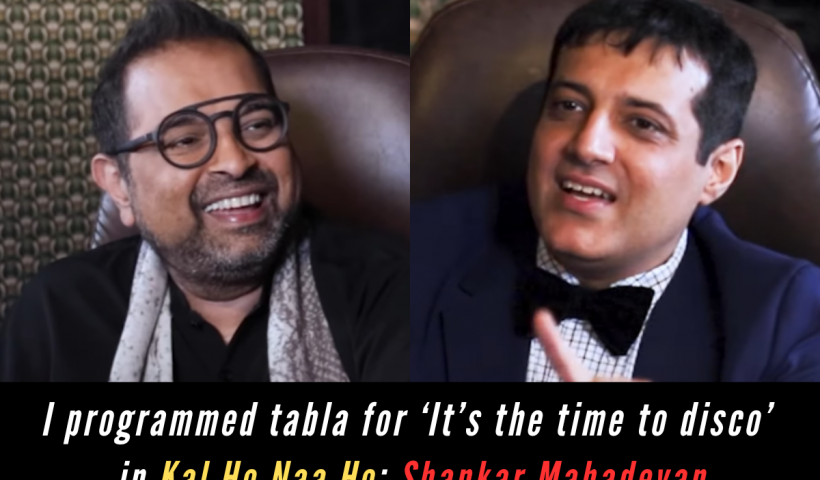
I programmed tabla for ‘It’s the time to disco’ in Kal Ho Naa Ho: Shankar Mahadevan

NEW DELHI: Renowned musician Shankar Mahadevan, in an exclusive interview with The New Indian’s executive editor Rohan Dua, shared fascinating insights into his illustrious career.…

View More I programmed tabla for ‘It’s the time to disco’ in Kal Ho Naa Ho: Shankar Mahadevan

We made Dil Chahta Hai’s “Koi Kahe” in a Maruti Zen: Shankar Mahadevan reflects on iconic songs

NEW DELHI: Shankar Mahadevan recently shared fascinating anecdotes about his legendary career during an interview with The New Indian’s Rohan Dua. The conversation explored his…

View More We made Dil Chahta Hai’s “Koi Kahe” in a Maruti Zen: Shankar Mahadevan reflects on iconic songs