


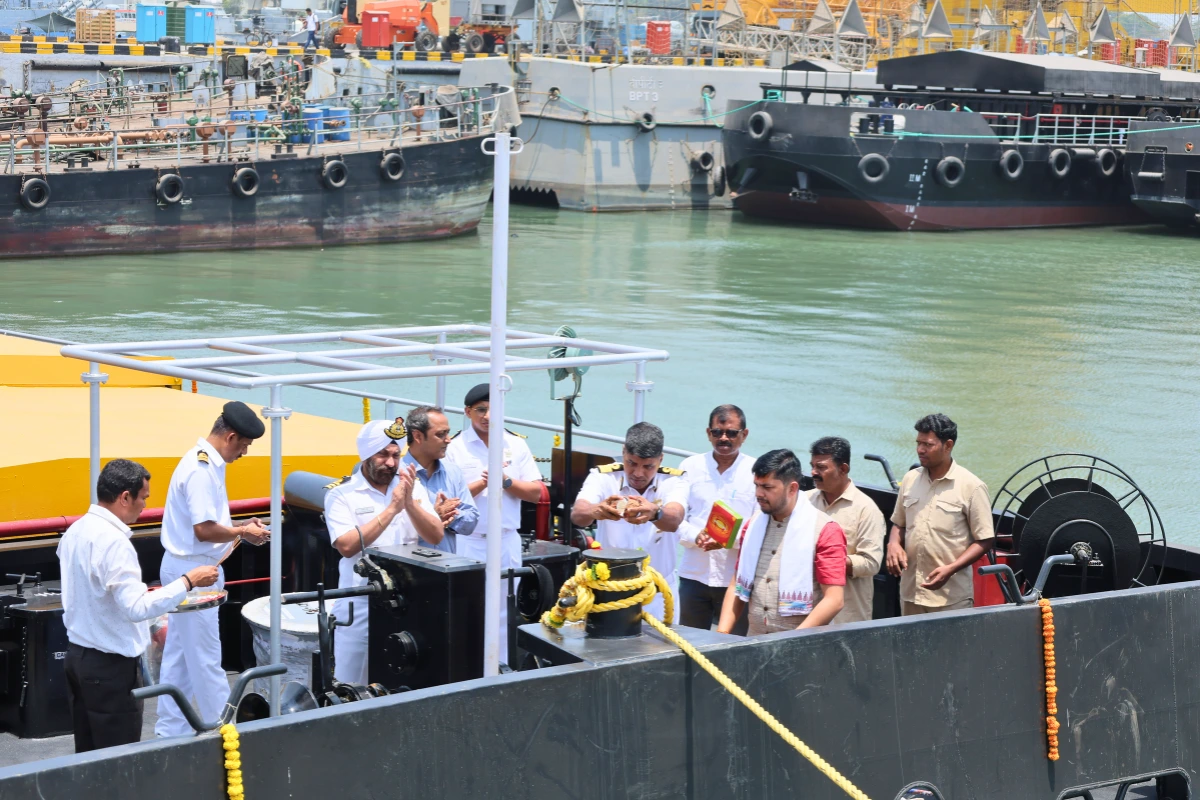






NEW DELHI: The Indian Navy formally inducted the 10th Ammunition Cum Torpedo Cum Missile (ACTCM) Barge, LSAM 24 (Yard 134), during a ceremonial event at the Naval Dockyard in Mumbai on April 22.

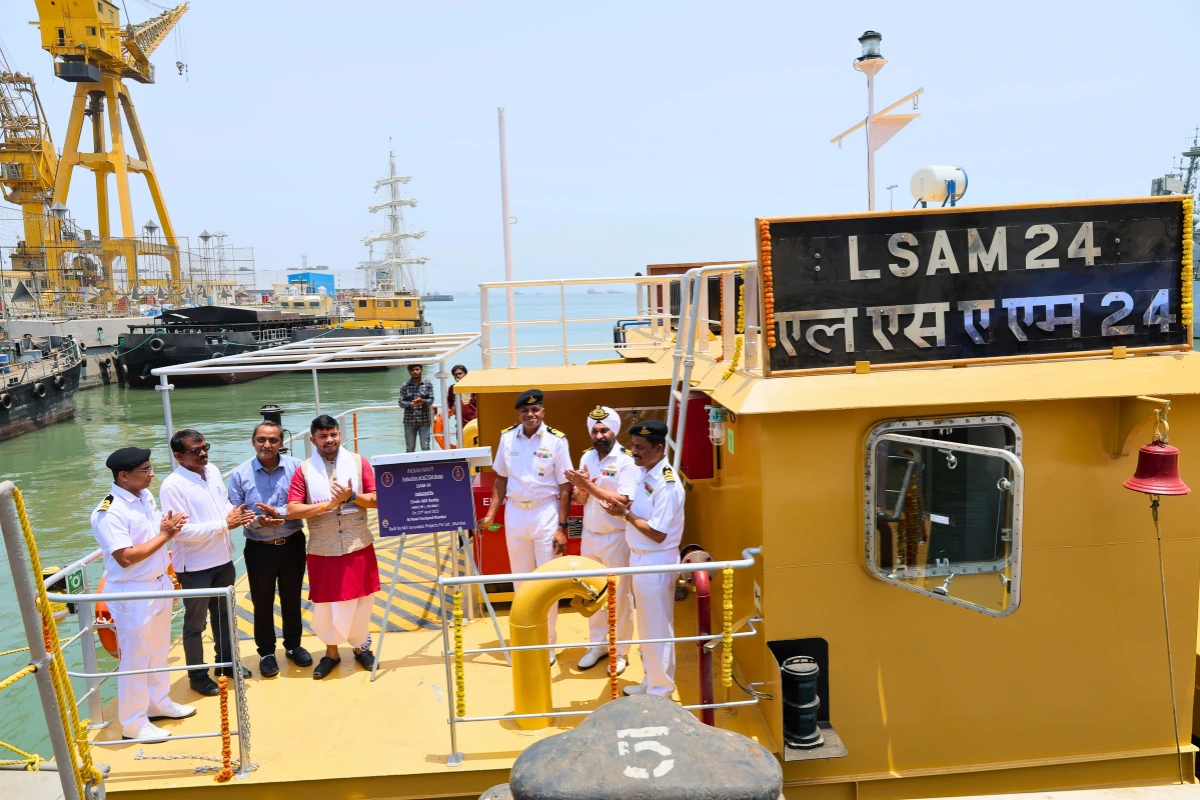
The ceremony was presided over by Commodore AKK Reddy, Assistant General Manager (Production), Naval Dockyard (Mumbai), who hailed the induction as a step forward in bolstering the Navy’s operational readiness.
What Are ACTCM Barges and Why Are They Important?
ACTCM Barges are essential auxiliary vessels used by the Indian Navy for the transportation, embarkation, and disembarkation of critical cargo including ammunition, torpedoes, and missile systems.
They play a vital role in supporting combat platforms not only at jetties but also in outer harbor areas where direct loading is otherwise unfeasible.
These barges are particularly crucial for forward logistics operations, where the Navy needs rapid and secure transfer of arms and supplies to its ships and submarines, enabling combat readiness without needing to return to base ports.
The Background: A Contract Rooted in “Aatmanirbhar Bharat”
The ACTCM project began on March 5, 2021, when the Indian Navy signed a contract with M/s Suryadipta Projects Pvt Ltd, a Thane-based MSME shipyard. Under the deal, 11 ACTCM Barges were to be constructed and delivered.
The shipyard partnered with an Indian naval design firm to design the vessels indigenously and conducted model testing at the Naval Science and Technological Laboratory (NSTL), Visakhapatnam.
This testing ensured the vessels’ seaworthiness and compliance with naval standards. All barges are built according to the Indian Register of Shipping (IRS) rules, reinforcing the Navy’s push towards quality and standardization in indigenous manufacturing.
The eleventh and final barge under the current contract is expected soon. Moreover, based on the shipyard’s proven capabilities, the Navy has awarded another contract to the same firm for four Sullage Barges—used for waste collection and disposal—further reinforcing trust in domestic vendors.
With expanding maritime challenges (IOR), India’s blue-water navy requires fast, flexible logistics support.
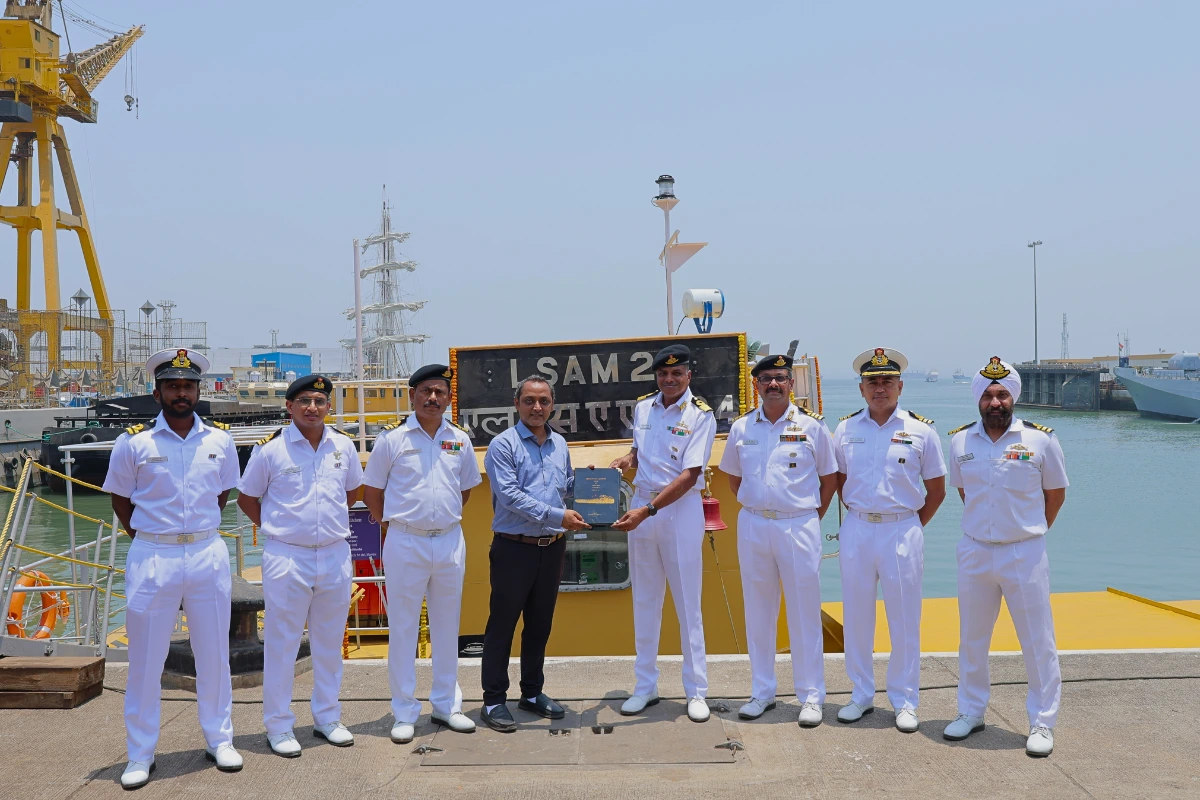
The ACTCM Barges enable the Navy to operate efficiently even in remote or combat zones, by minimizing the time warships spend at base ports for rearming and resupplying. These barges can operate near the fleet, ensuring timely delivery of weapons and critical stores.
This becomes even more relevant as India strengthens its presence in the Indo-Pacific region, countering increasing naval assertiveness by rival powers.
The Indian Navy is increasingly investing in auxiliary vessels and support systems to match its expanding blue-water ambitions. Projects like ACTCM reflect a strategic shift not only in capability building but also in leveraging the Indian MSME sector to fulfill defense needs.

With maritime threats evolving and coastal security gaining priority, these developments serve both tactical and economic objectives—reducing foreign dependency and enhancing industrial capacity at home.