








As bits of information, including videos, dribbled in on 7 May, one realised that some IAF planes seemed to have been hit. Amid the booms and blasts of incoming missiles and air defence responses in Jammu over the next couple of nights, and in the Kashmir Valley mainly on 8–9 night, some of us feared damage. The next day, one specifically heard, for example, of damage at the Udhampur air base.

In support of a combined national effort, however, we were circumspect about reporting or even talking about it. In fact, common people across Jammu and Kashmir deserve kudos for holding back, although many had information, photos and videos. We stood together as a nation.
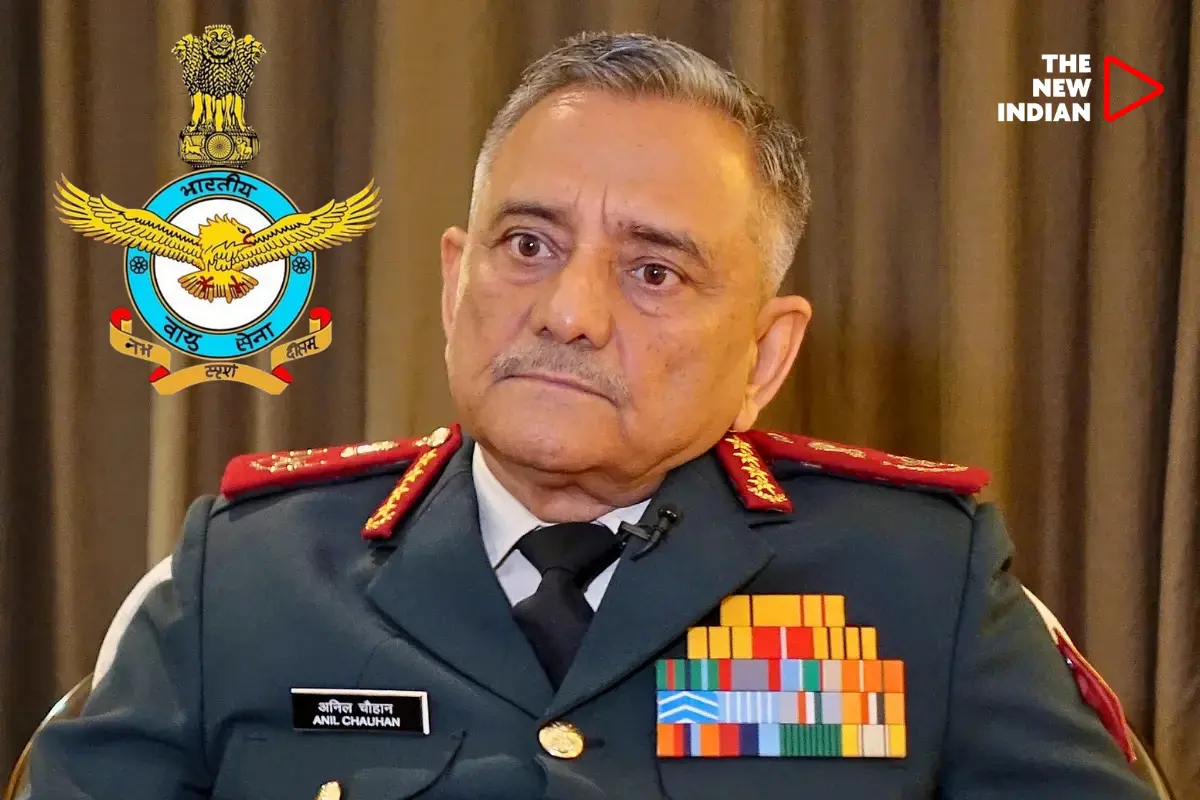
Over the past few days, however, a BJP MLA from the area has spoken publicly of damage at the Udhampur air base. The brightest face of the BJP, Subramaniam Swamy, announced that five IAF aircraft were downed. And no less than Chief of Defence Services Anil Chauhan acknowledged that aircraft did go down.
He did so abroad, to foreign media.
Was there intel on Chinese, Turkish roles?
These revelations reversed how the nation had stood firmly mute. That’s acceptable. Perhaps it was time to acknowledge facts.
However, my main concern is that the CDS blamed the loss of aircraft on a tactical mistake—as if some Wing Commander charted the wrong course that night, or some pilot turned left instead of right. This is unfair.
For, as was already obvious on 7 May, reversals more likely resulted from lack of intelligence (of both sorts) and flawed strategic understanding and planning.
From what one can make out, the plain fact is that the Spectra suite of the IAF’s Mirage aircraft failed to deflect or evade the stealth and range of the Chinese PL-15 missiles fired from the PAF’s J-10s that night. We must soberly consider whether the focus on including Anil Ambani on the Mirage deal took precedence over ensuring that the aircraft’s specs were truly up to the mark.
The Spectra suite’s library of potential threats apparently needs to be updated as new potential threats become known. What there is of an Indian intelligence set-up was evidently surprised that Pakistan used original Chinese jets and missiles that night, and not export versions. If that’s true, they must be held accountable. The PL-15, designed for the PLA—and the PAF too, it seems—has a longer range and better stealth than the export version. That’s what the IAF found itself up against that night.
Now, military circles are hearing that Pakistani pilots were in the cockpit when the J-35 stealth fighter was recently tested—over Gilgit-Baltistan, which is juridically Indian territory. This aircraft is the latest fifth-generation jet, with total stealth and immense range. It appears that even its most advanced version is being developed as much for the PAF as for the PLAAF.
Even if they couldn’t get specific information about what was afoot, should our intelligence czars have at least applied their minds to the logic of China’s announcements that it stood solidly with ‘iron brother’ Pakistan? It turned out that night—and over the next two nights—that India was fighting China and Turkey by proxy, which some of us have predicted.
One wonders if RAW did not know, or did not tell the air force, about how sophisticated, stealthy, and prompt the Chinese air defence integrated systems, including the home version J-10 jets, could be.
Surely there should have been intelligence inputs in the days following the Pahalgam bloodbath that those jets were ready to act as soon as Indian jets took to the skies.
It seems that Chinese satellites were watching India keenly. Experts hold that those satellites were integrated with Chinese aircraft and missiles in Pakistan, and so, instantly activated air defence responses as soon as Indian jets took off. IAF pilots deserve kudos for successfully hitting their targets before those stealth-based responders got to some of them.
Strategic blunder
Apart from an intelligence failure, and the possible effects of corruption, was the framing of the entire operation that first night a huge mistake?
The plan evidently was that Indian aircraft would hit terrorist training centres in Pakistan and return to their bases without the Pakistani armed forces getting involved. External Affairs Minister S. Jaishankar even stated that the Pakistan government was told of this plan and informed that India would not attack military targets.
Apparently, those with their collective hand at the tiller of this nation’s strategic choices decided that that would be enough. Pakistan would not only fall in line with the framing of the targets as non-military but also accept them as legitimate targets. It would allow them to be struck, and then sit quiet.
So stuck in that rut were the planners that this idea was reiterated at the press conference the next afternoon at which the operation was announced. This announcement was about 12 hours after Pakistani aircraft and air defence had already targeted Indian aircraft and apparently brought down some. A military conflict had already taken place, leaving plumes of dark smoke in Indian territory, but the official view remained stuck in a time-warp, not to mention mind-warp.
The irony is that the other side proudly announced that the Pakistan air chief switched battle orders mid-flight that night. Instead of ‘deter,’ he ordered his pilots to bring down Indian planes. But the orders and the framing on this side evidently remained stuck in a rut.
The government should come clean about whether the air force and India’s air defences had been cleared on that first night to respond in kind if Pakistan hit out at Indian planes. After all, they proved lethally effective three nights later, and so were surely capable of dominating their opponent as long as they had intelligence and freedom to operate.
One can argue that the initial prohibition regarding military targets was a responsible, mature approach based on a strong desire not to escalate. Nothing wrong with that. But not to have a back-up plan in place in case Pakistan did not accept the argument given and did respond militarily wasn’t just a flawed tactic. It was a shoddy plan, based on a misunderstanding of the strategic situation—as bad as Montgomery’s Market Garden plan.
Fractured lens
One has to wonder if those who planned it see things through a fractured lens. For, these very persons—including the CDS—insist on blaming whatever happens in Kashmir on a ‘proxy war by Pakistan’—remaining insistently blinkered to the putative role of countries like China, Turkey, the UK, and other Western powers in what’s happened in Kashmir since 1876.
For an un-fractured mind, the logic is quite simple: if indeed terrorism in Jammu and Kashmir is pure and simple a proxy war by Pakistan, then terrorist groups are an integral part of Pakistan’s war machine—adjuncts of its armed forces. (This was evident in the participation of uniformed officers in the funerals of those killed.)
Mercenaries of various sorts have been adjuncts of armies throughout history. So, it should have been obvious that the rest of Pakistan’s war machine could respond if those training camps were attacked. Calling them non-military targets was just semantics. In any case, those hubs stood on Pakistani soil, and so strikes on them could be viewed as violating sovereignty.
And yet, those who planned the strikes seemed to believe that all they had to do was let the Pakistani state know that this was not a military attack, only deterrent strikes at terrorist training hubs. They seemed to think that would be enough for Pakistani aircraft to remain in their hangars, and its air defences to not respond. To believe this while also believing that terrorism is Pakistan’s proxy war is contradictory—not very smart.
Global chorus backed Pakistan
Anyone who knows that many countries are involved to ensure that Kashmir remains in conflict, and that they are determined to keep India weak, would in any case have expected Chinese and Turkish weapons, aircraft, and air defence to be deeply embedded in Pakistan’s war machine—and to come into action the instant India struck targets within Pakistan.
That is exactly what happened.
Those who understand the strategic opposition to India, are able to see Pakistan as a catspaw of powers involved in great games, and know the longstanding plan to turn Kashmir into a military base, should also have expected that the Western media would scoff at India’s explanations.
Indeed, a global chorus rang out, accusing India of having attacked Pakistan, ignoring the argument about terrorist training hubs, and the Pahalgam bloodbath. The refrain of that chorus was that Pakistan had legitimately defended itself, bringing down two, or three, or five (according to different versions) IAF aircraft.
This chorus rang through chanceries as well as news rooms and studios across the world. It became the story of what happened that week, before it was joined by Trump’s trumped-up ‘I prevented nuclear war’ story. That chorus may not have been audible above the awful noise of India’s TV channels, but it was clearly heard elsewhere.
Terrible planning
It would have been honourable for those in charge of the military, intelligence, and strategic policy planning to have owned responsibility for flawed understanding and planning. If intelligence failed, those at the top should have been sacked.
After all, the political leadership, which is normally responsible for setting strategic parameters, had already publicly washed its hands off responsibility by announcing that the chiefs had been given full freedom to plan and undertake retaliatory operations after the Pahalgam bloodbath.
Several retired officers have said that SEAD or DEAD ops to suppress or destroy the enemy’s air defence should have been undertaken before the strikes that night. That appears to be basic military common sense.
The nation ought now to be told whether anything was done to suppress enemy air defence (SEAD) before the strikes on the night of 6 May.
Top brass role
The CDS is meant to coordinate between the three chiefs, especially in areas of jointmanship, which ought to include air defence. He should have seen the strategic blunder involved in believing that Pakistan would not see strikes against those training hubs as targeting its valued tactical assets.
He should at the very least have recommended a back-up plan. Indeed, the top brass owed it to the men and machines under their command, and to the nation, to stand firm on such things even if political leaders or security czars wanted to bind their wings.
If they sent IAF pilots up with instructions to treat terror training hubs as different from Pakistan’s military assets, and only strike the former, the top brass and their security chiefs made those aircraft sitting ducks, unable to hit back against lethal attacks from sophisticated Chinese integrated systems, Chinese aircraft, and Turkish drones.
It is an ancient truism that one can start a war but not determine how it progresses. To presume that the other side will not see one’s strikes as war, just because one says that one’s targets are not part of the other side’s military, is naive at the least. If there was no back-up plan for the possibility that attack planes may be countered, it amounts to ridiculously flawed planning—at the least.
The Air Force showed magnificently that it could smash military targets and emerge unscathed when it operated without its wings tied behind its back on the night of 9–10 May. Those who decided to tie those wings down three nights before should take responsibility for their poor planning.
At the least, they should not pretend that some operations officers or pilots made a ‘tactical mistake’ when it was the strategic understanding of those in charge of national security that was inadequate, and when intelligence czars remained oblivious to the array of opposing forces (China, Turkey, etc.).

You let India down on 6 May. You let yourself down now by vaguely blaming some ‘tactical mistake.’