


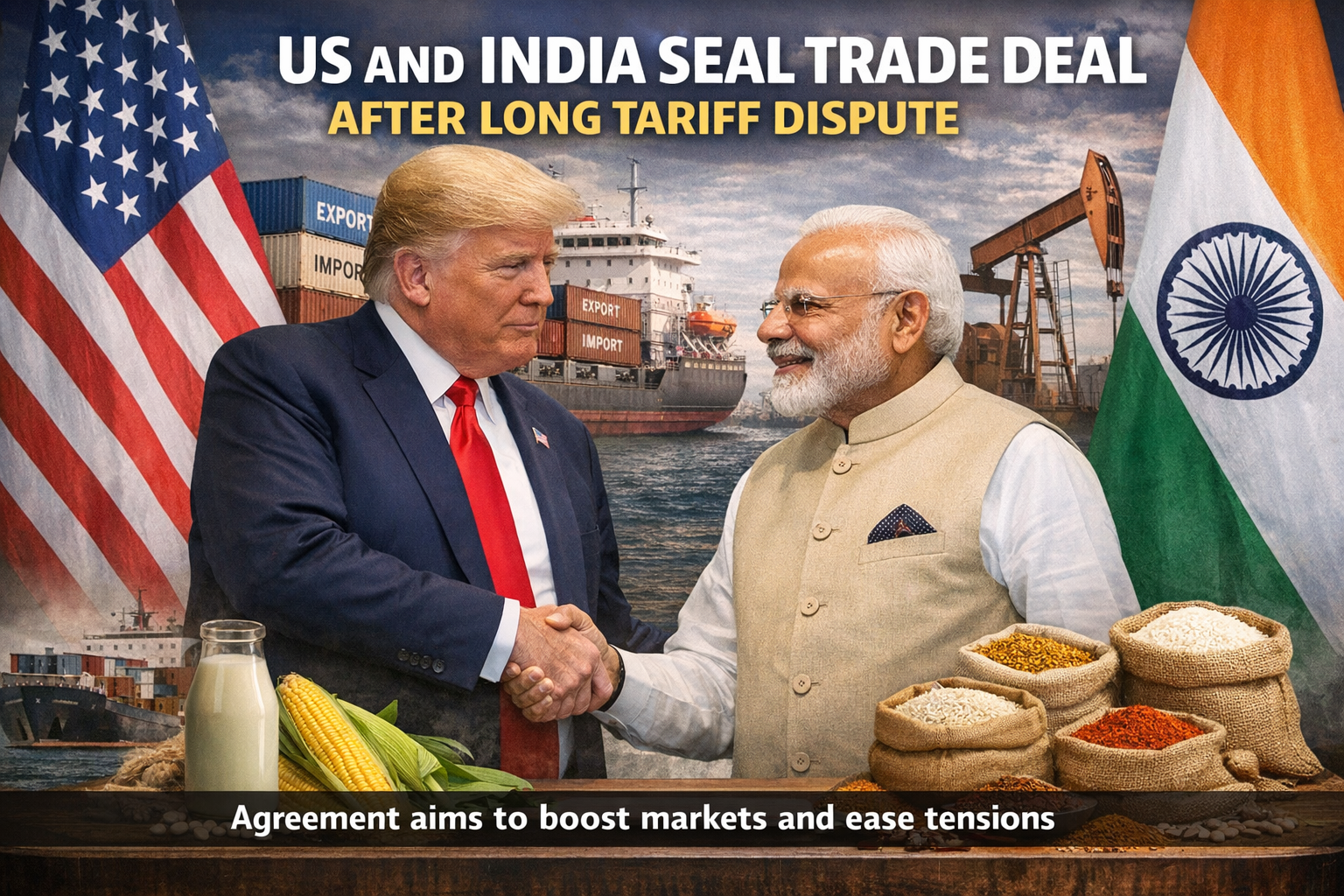






New Delhi: The interim trade framework unveiled by the United States and India on Friday has arrived at a moment of particular economic and strategic consequence for New Delhi.

India is entering a phase that demands large-scale capital, technology and market access simultaneously — for infrastructure expansion, job creation and higher-value manufacturing — at a time when global trade is fragmenting and protectionism is rising. In that context, restoring predictability in India’s most consequential economic relationship is not optional. It is urgent.
This is what gives the deal its weight. It comes not at a moment of surplus leverage, but at a moment of transition. India is scaling up highways, ports, railways, defence production, digital infrastructure and clean energy, while attempting to absorb millions into the workforce each year. None of this is possible without sustained access to external capital and advanced technology. Among India’s major partners, only the United States can provide both at the scale and speed required.
That reality has shaped India’s economic strategy since it liberalised in 1991, dismantling its Soviet-style model and integrating with the US-led global economy. Liberalisation did more than open markets; it embedded India in American systems of capital, technology and demand. Over time, India’s exports to the US shifted decisively up the value chain — from low-value goods to software services, pharmaceuticals, engineering products and electronics. By 2024–25, bilateral goods trade had reached about $180bn, up from roughly $6bn in the early 1990s, making the US India’s largest export market, accounting for around 18% of total merchandise exports.
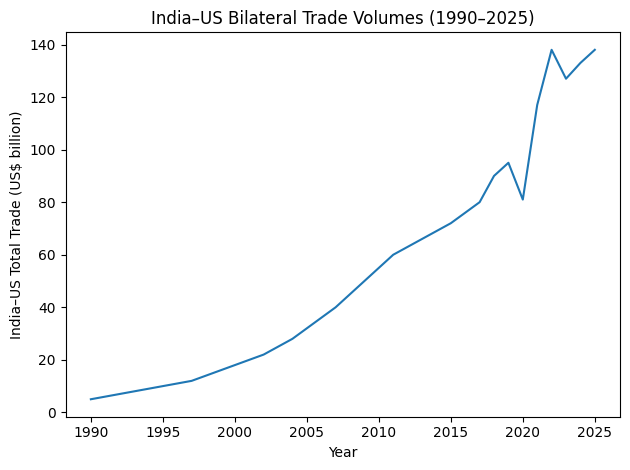
This structural dependence explains why the tariff escalation of 2025 mattered so much. When the Trump administration raised effective tariffs on certain Indian exports to around 50%, citing trade imbalances and India’s energy purchases, it struck at sectors that employ millions and anchor India’s manufacturing ambitions. For India, the risk was not just lost exports, but disrupted investment decisions at a time when global firms were reassessing supply chains.
Yet the timing also created opportunity. Rather than retaliate, the Modi government absorbed the shock and accelerated diversification. Since September 2025, India has concluded or advanced trade agreements with the European Union, the UK and other partners, expanding market access for sectors most exposed to US tariffs. Official figures place India–EU merchandise trade at around $135bn, and the EU agreement covers the majority of tariff lines across goods and services.
This diversification was not an attempt to replace the US market — something India neither seeks nor can achieve — but to alter the balance of dependence. Export data released by India’s commerce ministry showed resilience despite higher US tariffs, signalling that India could withstand pressure without being forced into unilateral concessions. That resilience reshaped the context in which talks with Washington resumed.
The interim trade framework, announced publicly by President Donald Trump and confirmed by Prime Minister Narendra Modi, must be read against this backdrop. The reset of US tariffs on Indian goods to 18% restores predictability for exporters in textiles, chemicals, engineering and other labour-intensive sectors. For India, this matters less for immediate revenue gains than for investment certainty at a moment when scale, planning and long-term contracts are critical.
The agreement also reflects a deeper logic of US–India trade. Imports from the US are not merely transactional; they support India’s domestic capacity. Commitments to expand purchases of American energy, aircraft and high-technology goods align with India’s infrastructure build-out, aviation growth and manufacturing upgrades. These are inputs that raise productivity rather than displace domestic industry.
This contrasts sharply with India’s relationship with China. Beijing cannot play a comparable role in India’s growth. It sees India as a strategic rival in Asia and has neither the incentive nor the openness to provide advanced technology or long-term capital at scale. Even during periods of high trade volumes, Chinese imports have tended to crowd out domestic manufacturing rather than upgrade it.
Energy policy illustrates this difference clearly. Before the Ukraine war, India imported negligible quantities of Russian oil and gas. Official data shows India relied overwhelmingly on the Middle East because it was economically optimal. Russian crude only became viable after 2022 due to steep discounts. Without those discounts, it is more expensive for India due to distance and logistics. India’s energy choices, often framed geopolitically, have in practice been price-driven.
Some politically sensitive imports — such as US fruits and cheeses — also reflect market reality rather than strategic vulnerability. India has long imported these products, driven by a globally exposed middle class. India has no core competence in cheese production, and such imports serve a niche demand without threatening domestic agriculture.
Equally important is what the deal excludes. Sensitive agricultural sectors remain protected, consistent with India’s stance across all major trade negotiations. This continuity underscores that New Delhi entered talks from a position of choice rather than compulsion.
What distinguishes this agreement from earlier US–India trade understandings is timing. Previous deals were negotiated in periods of global stability. This one arrives amid tariff weaponisation, fractured supply chains and slowing global growth. India’s ability to stabilise ties with Washington while simultaneously deepening links with Europe reflects a more confident and calibrated trade diplomacy.
The US remains India’s most consequential economic partner because it sits at the intersection of capital, technology and demand. That has been true since liberalisation, and it remains true today. What has changed is India’s ability to manage that dependence.

By absorbing a tariff shock, diversifying markets and negotiating without haste, India has turned disruption into leverage. That is why this trade framework matters — and why it has arrived at precisely the moment New Delhi needs it most.