


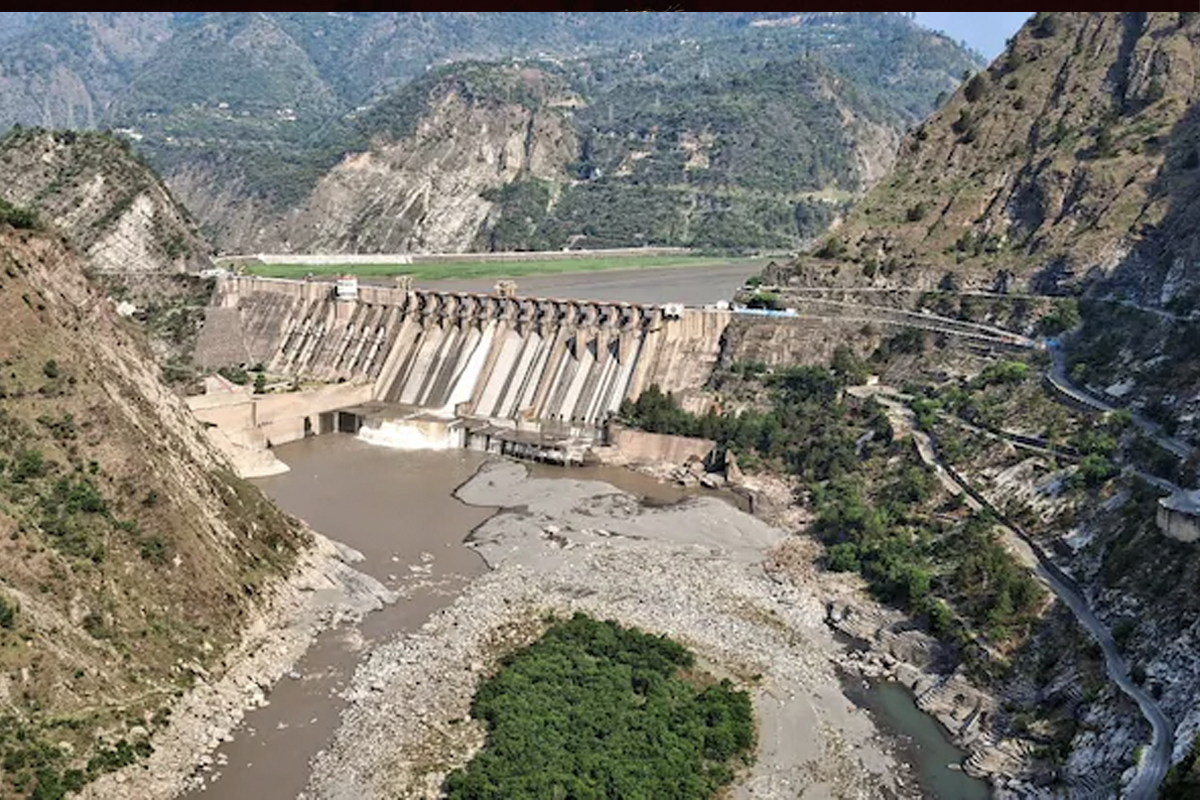






SRINAGAR: In a rare sight not witnessed in recent memory, the Chenab river in the Akhnoor region of Jammu saw its water level recede to below waist height on Monday, drawing astonished locals to the exposed riverbed in large numbers.

According to informed insiders, the unexpected drop followed the complete closure of floodgates at the Salal and Baglihar hydroelectric facilities, located in Reasi and Ramban districts respectively, early Sunday morning.
Although there has been no official statement, sources indicated that dam authorities shut the gates to begin replenishing the reservoir levels after both dams had been drained during desilting operations carried out on Friday and Saturday.
ALSO READ: Business Rules ‘Contrary to J&K Act’, Says J&K LG; Sends Back File to Omar
The move coincides with escalating tensions between India and Pakistan, in the wake of the deadly terror attack in Pahalgam that left 25 tourists and a pony handler dead.
As part of its growing diplomatic pressure on Pakistan, India has also moved to restrict the flow of water from the Baglihar dam.
A senior government functionary had earlier confirmed that the spillway gates of the Baglihar dam were lowered to temporarily limit the discharge of river water into Pakistan’s Punjab region — characterizing it as a “measured retaliatory move.”
Earlier, the Indian government announced its decision to halt implementation of the Indus Waters Treaty, a six-decade-old accord with Pakistan that governs sharing of the Indus river system.
Both the Salal and Baglihar dams, conceived as run-of-the-river projects, grant India control over the timing of water release downstream. During construction, Pakistan had voiced strong objections and sought arbitration through the World Bank. India had then agreed to reduce the dam height from the planned 144.5 metres to 143 metres, which also reduced its water storage capacity by over 13 percent.
Experts note that while these dams cannot block Chenab’s waters permanently, they provide strategic leverage by allowing India to decide when to release water. With the rabi season nearing its end — a phase that requires limited irrigation — this timing allows for minimal agricultural disruption. However, demands for water will peak again during the upcoming paddy cultivation season on both sides of the border.
“Even if this halt in flow is temporary, it sends a firm message — that India will not hesitate to use every tool at its disposal. Chenab’s water nourishes farms in Pakistani Punjab, and this action signals our readiness to escalate pressure,” the senior official emphasized.
Later on Monday morning, as the Baglihar reservoir reached adequate levels, some of the spillway gates were opened, allowing controlled flow downstream. A few gates at the Salal dam were also partially opened to gradually restore water movement toward Pakistan.
Meanwhile, the sudden exposure of the riverbed attracted throngs of villagers — including some prospecting for valuable trinkets and coins — to venture into the river. In response, the Jammu and Kashmir Police issued public warnings, urging residents not to cross the Chenab on foot due to safety risks.

As water levels began rising again in the afternoon, police teams were dispatched to disperse crowds using loudspeakers and public announcements. Police officials worked swiftly to ensure no casualties occurred as the river began returning to its usual depth.