


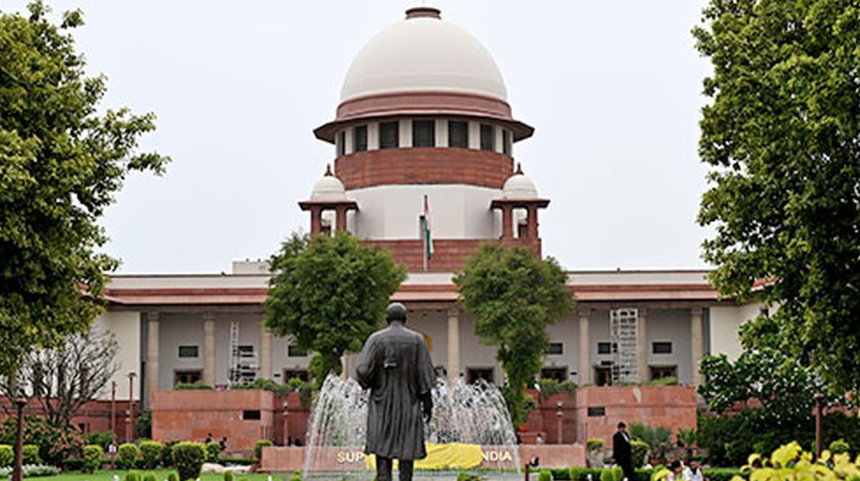






NEW DELHI: In a recent affidavit submitted to the Supreme Court, the Central Government of India has opposed petitions advocating for a lifetime ban on politicians convicted of criminal offenses. The government contends that the existing disqualification period of six years is sufficient and that imposing a lifetime ban would be excessively harsh.

The question whether a lifetime ban would be appropriate or not is a question that is solely within the domain of the Parliament,” the Centre said in the affidavit, adding that the term of disqualification is decided by the House “considering the principles of proportionality and reasonability”.
The affidavit emphasizes that the current provisions under the Representation of the People Act, 1951, which stipulate a six-year disqualification for convicted politicians, are a result of deliberate parliamentary policy. The government asserts that altering this period to a lifetime ban would amount to rewriting the law, a move it deems inappropriate and beyond the scope of judicial review.
ALSO READ: Nitish expands Bihar cabinet, BJP gains 7 ministers ahead of polls
This stance comes in response to a plea arguing that the time-bound disqualification violates constitutional principles and advocating for a permanent ban on convicted individuals from contesting elections. The government, however, maintains that the existing time-limited disqualifications are neither arbitrary nor unconstitutional.
The debate over the duration of disqualification for convicted politicians has been ongoing. In a landmark 2013 judgment, the Supreme Court declared Section 8(4) of the Representation of the People Act unconstitutional. This section had previously allowed elected representatives a three-month window to appeal their conviction without facing immediate disqualification.

The current discourse centers on whether a lifetime ban would serve as a more effective deterrent against criminalization in politics or if it would unjustly impede individuals’ rights to rehabilitation and public service. The Supreme Court’s decision on this matter is poised to have significant implications for the future of electoral politics in India.