








Author: Bhaavna Arora

When Union Home Minister Amit Shah stood in Bastar and set a public deadline — “By March 31, 2026, Naxalism will be wiped out” — the words landed as both a challenge and a measure of policy intent.
Deadlines on insurgency have been issued before; P. Chidambaram famously offered optimistic timeframes in an earlier era, and the problem persisted.
What makes the 2026 pledge different is not bravado alone but a steady accumulation of results on the ground: sustained, intelligence-driven operations that have reclaimed territory; an unprecedented wave of surrenders; and the unraveling of a leadership that once seemed invulnerable.
This article tells that story — the operations, the intelligence architecture behind them, the leaders who fell or surrendered, and the Samadhan doctrine intended to turn security gains into lasting peace.
From sanctuary to siege
For decades the Maoist insurgency depended on three intertwined advantages: dense forests that sheltered camps and training grounds, weak and intermittent state presence in tribal belts, and an ideological cohesion that discouraged desertion. That balance has begun to shift because the security apparatus moved away from episodic raids to sustained, intelligence-driven campaigns aimed at severing supply lines and denying sanctuary. The intelligence picture itself matured: villager tips, detailed debriefs from surrendered cadres, signal intercepts and drone or satellite observation were fused into actionable leads. Rather than broad sweeps, forces now conduct cordon-and-hold missions that leave no escape corridor unguarded, and administrative presence is pushed into zones immediately after clearing operations. The effect has been cumulative: lost sanctuaries, seized caches, and eroded morale.

Leaders lost and leaders choosing to stop
Two events in 2025 punctuate the change. In May, the prolonged engagement in the Abujhmarh forest block resulted in the neutralisation of Nambala Keshava Rao — Basavaraju — a strategist long implicated in planning some of the movement’s deadliest ambushes. That encounter was not an overnight raid but the outcome of sustained cordons by District Reserve Guards acting on corroborated human and technical intelligence, and it yielded weapons, documents and other intelligence that fed follow-on actions.
Later that year, in Gadchiroli, Mallojula Venugopal Rao — Bhupathi, a senior politburo ideologue — surrendered along with more than sixty cadres and dozens of weapons. His surrender was the product of pressure plus pathways: intelligence had mapped his safe houses and routes, security forces sealed likely exits, and negotiated channels (through intermediaries or community actors) provided a face-saving path out. Bhupathi’s decision to lay down arms is as telling as Basavaraju’s death: one event demonstrates kinetic reach, the other demonstrates how coordinated pressure, intelligence and credible rehabilitation options can persuade even senior figures to abandon the gun.
Taken together, these events did more than reduce the movement’s numerical strength. They fractured command cohesion, disrupted training and logistics, and made the ideological case for armed struggle harder to maintain among rank-and-file fighters.
The operations that produced results
Operation Black Forest (Kagar), the combing operations in Abujhmarh, and the synchronized sweeps across the Karreguttalu corridor were not isolated spectacles but coordinated campaigns applying the same operational logic. Each operation began with validated leads — often a surrendered cadre’s debrief, a villager’s tip, or an anomaly in intercepted communications — which were fused with historic incident maps and aerial surveillance. That intelligence narrowed probable grids, and multi-district forces moved simultaneously to seal escape routes and hold ground.

Operation Black Forest, mounted in the April–May 2025 window, targeted the arteries linking Telangana and Chhattisgarh. The campaign combined central assets such as CRPF and aerial surveillance with state special forces and DRG units. The result: large seizures of IEDs and explosives, multiple weapon recoveries and the denial of a cross-state movement corridor previously vital to Maoist operations. In Abujhmarh, a careful cordon-and-hold approach by terrain-schooled DRG units, supported by technical surveillance and follow-up exploitation of captured material, produced the neutralisation of a top leader. In Gadchiroli, the sealing of corridors and provision of safe surrender pathways allowed dozens of cadres to give up arms without a battlefield outcome.
What sets these operations apart is not one decisive tool but the pipeline: intelligence that becomes operational plan, synchronized multi-jurisdictional execution, exploitation of captured material and immediate follow-ons that keep pressure constant.
Where the intelligence came from
Modern counter-insurgency is less about a single breakthrough and more about a mosaic of inputs. Villagers and local leaders supply HUMINT; surrendered cadres provide the most granular operational maps; covert surveillance and signal intercepts reveal movement and pattern anomalies; drones and satellite imagery identify new clearings or transient camps; and data-fusion units combine historical incident patterns with real-time inputs to narrow search areas. The decisive difference today is speed: agencies now collect, fuse and act on intelligence in days rather than months, which prevents underground networks from cooling their tracks. Central desks coordinate live feeds with state policing units, and joint task forces seal multi-state corridors simultaneously, denying the old safe escape across borders.
Samadhan: why governance matters as much as operations
Winning on the battlefield is a necessary precondition; making that victory enduring requires governance. The Samadhan doctrine is an institutional response that stitches security gains to developmental and rehabilitative measures. Under Samadhan, surrender is coupled with monetary assistance, vocational training and housing; cleared areas receive urgent infrastructure — roads, health outreach and connectivity — and local governance institutions are strengthened to resolve land, forest and livelihood grievances. The aim is straightforward: if physical refuge for militants is removed and the social reasons for recruitment are addressed, the insurgency becomes irrelevant. Samadhan’s monitoring dashboards and performance metrics also mean that area recovery is tracked and cannot simply be counted as a one-time security win.
The last mile: risks and the path forward
The gains are tangible: leadership disruption, shrinking sanctuaries and rising surrenders. Yet the path to a durable end of large-scale armed activity is not automatic. Small groups retain asymmetric strike capability; rights concerns and any heavy-handed excess can rekindle grievances; and neglecting development promises risks reoccupation. The political deadline of March 2026 provides a rallying point, but the real test will be irreversible decline on the ground — fewer ambushes, functioning schools and medical outreach, and communities that no longer rely on parallel authorities.

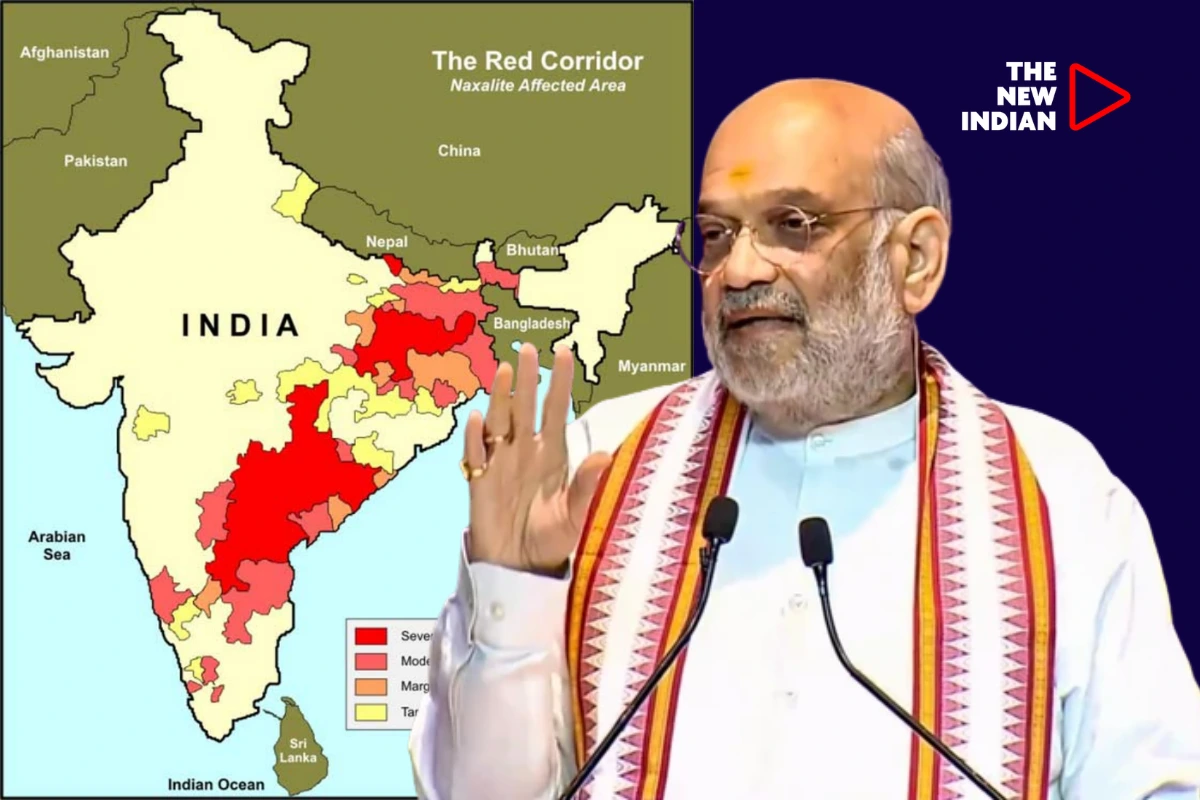
Amit Shah’s deadline frames a national effort whose evidence is now visible: a pipeline of intelligence, coordinated operations and post-clearance governance that has inflicted meaningful damage on the Maoist movement. The combined effect of targeted operations, intelligence fusion and Samadhan-style rehabilitation makes continuing armed struggle less tenable and surrender more viable. The images above visually summarise the operational timeline, the geographical focus and the hotspot where decisive events occurred.