


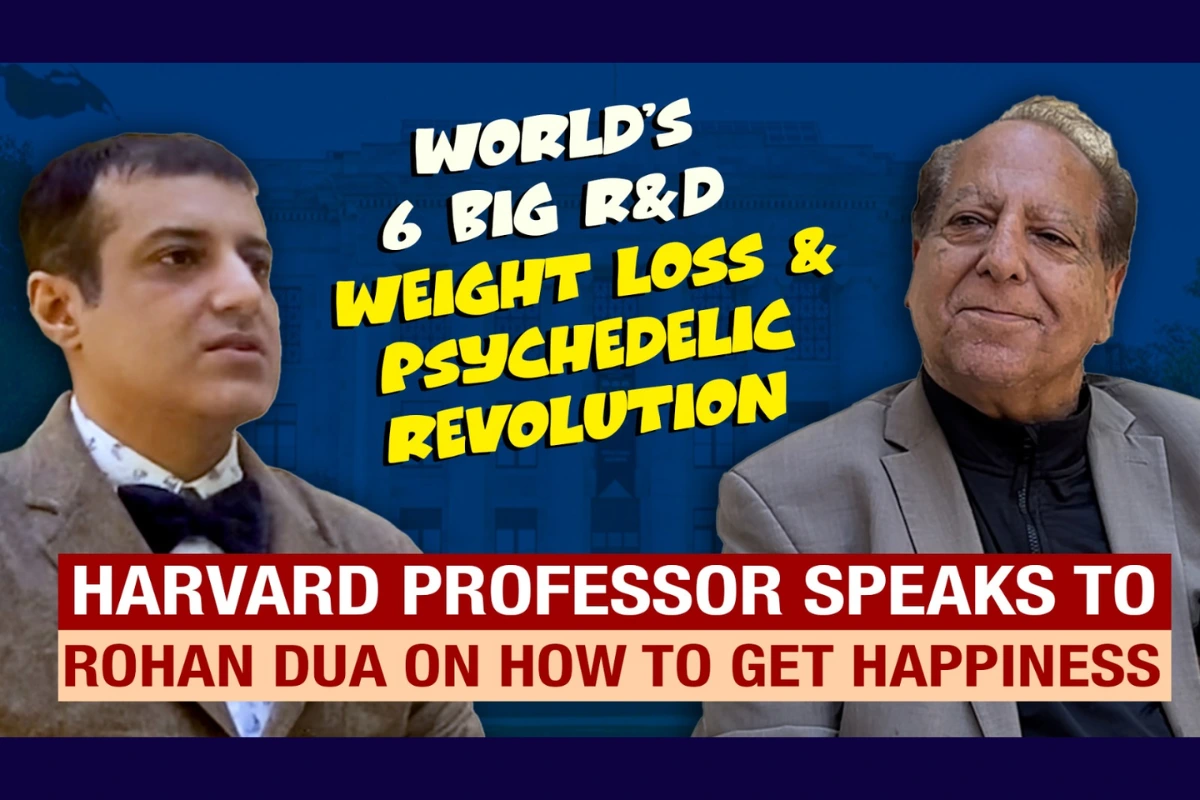






BOSTON (MASSACHUSETTS): Harvard medical professor and renowned hepatologist Dr. SanjIv Chopra has revealed a deeply personal story about how he regained his eyesight, crediting his father for diagnosing the condition at a time when his vision seemed irreparably lost.

Speaking candidly about his journey, Dr. Chopra explains that his life as a physician and academic was not free from personal health battles. He described the moment his eyesight deteriorated and how his father — himself a doctor — played a crucial role in identifying the cause.
“I’m very fortunate that I have some level of intuition and a great memory that I probably inherited from my father and grandfather,” Dr. Chopra shares emphasizing how familial medical wisdom shaped his career and personal health journey.
According to him, the turning point came when his father correctly diagnosed his condition before anyone else could. This early intervention was critical. “I could see things evolving, the things that are going to be huge in the next 20–25 years,” he noted, tying his father’s diagnostic instincts to his own later ability to predict medical trends.
Dr. Chopra’s revelation about his eyesight underscores a larger theme of resilience and gratitude. He often reflects on how adversity shaped his outlook, quoting the Sufi mystic Rumi: “The wound is where the light enters you.”
The Harvard professor also connects his personal health recovery to his broader philosophy of happiness and gratitude. “I define gratitude as having something positive gained coupled with the realization somebody else was responsible for your gain,” he says.
Dr. Chopra, who is often referred to as “Dr. Happy” in New Zealand thanks to his popular lectures on happiness, framed his restored eyesight as both a scientific victory and a personal lesson. The role of his father, he stressed, was less about formal treatment and more about awareness, attentiveness, and mentorship — values that continue to shape his medical philosophy.
His story aligns with a broader set of lessons he shares publicly: nurture resilience, find gratitude, and never underestimate the role of family in one’s medical and emotional well-being.
As he puts it: “I’ve lived a good life and I’ve helped other people. I’ve inspired other people. And I was very, very fortunate to have the greatest mentors in my academic profession. They packed my parachute. My father did that for me first — he diagnosed my eyesight problem and gave me a chance to see the world again.”

For Dr. Chopra, regaining his vision was more than a medical recovery; it was a metaphorical illumination, one that continues to guide his teaching and his advocacy for happiness and gratitude in medicine.