


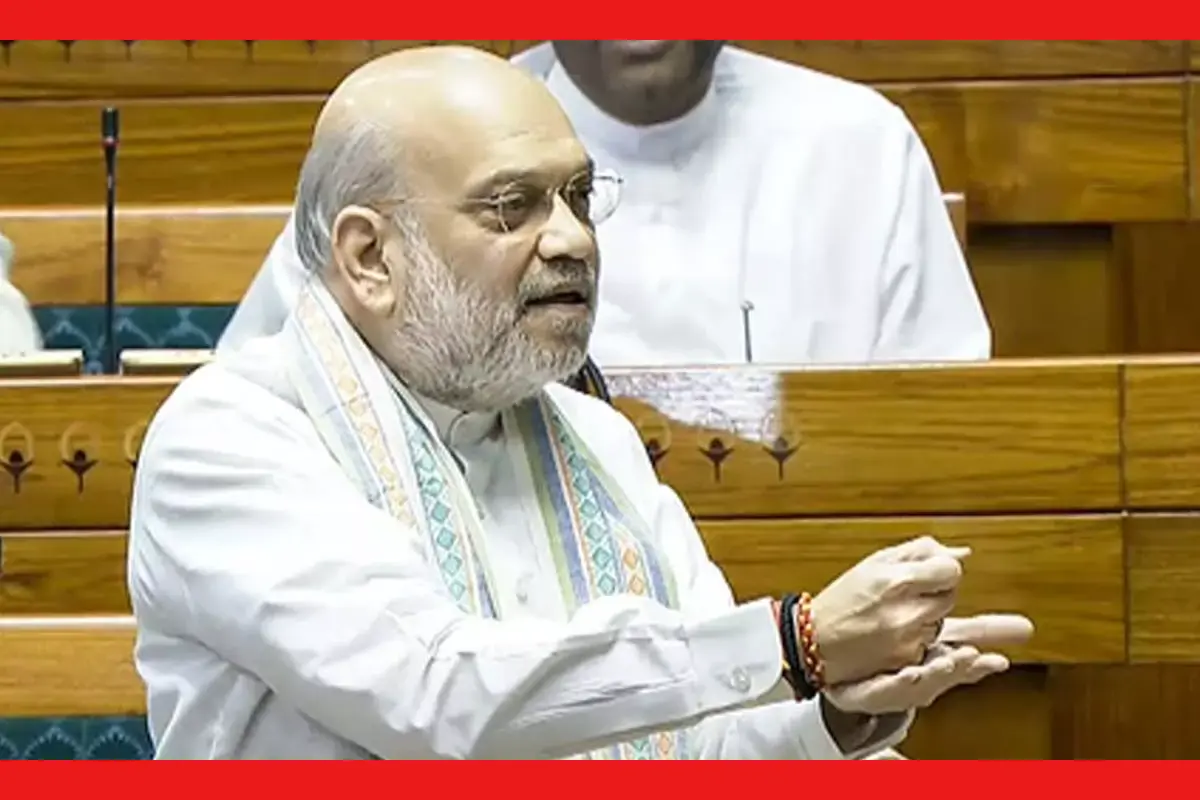






NEW DELHI: Union Home Minister Amit Shah, during his address in Parliament, accused the opposition of misleading Muslims by spreading falsehoods about key legislative decisions taken by the Modi government. He emphasized that despite past claims of unrest, none of the fears propagated by opposition leaders have materialized.

“It has become a fashion to instill fear. When the construction of the Ram Janmabhoomi temple was announced, they said rivers of blood would flow in this country. They claimed that Muslims would take to the streets, and their rights would be stripped away. When Triple Talaq was abolished, they again created panic. When CAA was introduced, they falsely claimed that Muslims would lose their citizenship. It has been two years—can anyone point to a single Muslim who has lost citizenship because of CAA? I appeal to my Muslim brothers through this House—these people have been misleading you for years.”
He further added:
“They said that after the abrogation of Article 370, Muslims in Kashmir would suffer. Today, Omar Abdullah has contested elections, terrorism has been eradicated, development has begun, and tourism has increased. The Congress Party and its allies have built their vote bank by scaring Muslims. We are not the ones scaring them—you are! You claim disasters will follow every reform, but I say that under Narendra Modi’s government, no citizen—regardless of religion—will face any harm.”
Clarifications on the Waqf (Amendment) Bill
Addressing the Lok Sabha, Shah clarified that the inclusion of non-Muslim members in Waqf councils and boards is solely intended to enhance transparency and ensure proper administration of Waqf properties.
He stressed that these non-Muslim members would not be involved in religious activities or decision-making processes related to Waqf institutions. The primary objective, according to Shah, is to prevent corruption and mismanagement within Waqf boards.
Opposition’s Stance and Public Reaction
Opposition parties and several Muslim organizations have voiced strong objections to the proposed amendments. They argue that the bill could undermine Muslim rights and potentially lead to the confiscation of historically significant mosques and properties.
Critics view the bill as a politically motivated attempt to weaken minority rights, especially in the context of rising communal tensions in the country.
Government’s Justification and Future Implications
The government maintains that the amendments are necessary to curb corruption and improve the management of Waqf properties. Shah highlighted that the bill aims to protect lands and ensure that no individual’s property is declared as Waqf without proper certification by the district collector.
He assured that the legislation is designed to safeguard the interests of all citizens, irrespective of their religion.

As the Waqf (Amendment) Bill progresses through the legislative process, it continues to evoke diverse reactions from political entities and the public. The discourse surrounding the bill underscores the complexities of balancing religious rights with the need for transparent governance in managing charitable endowments.