


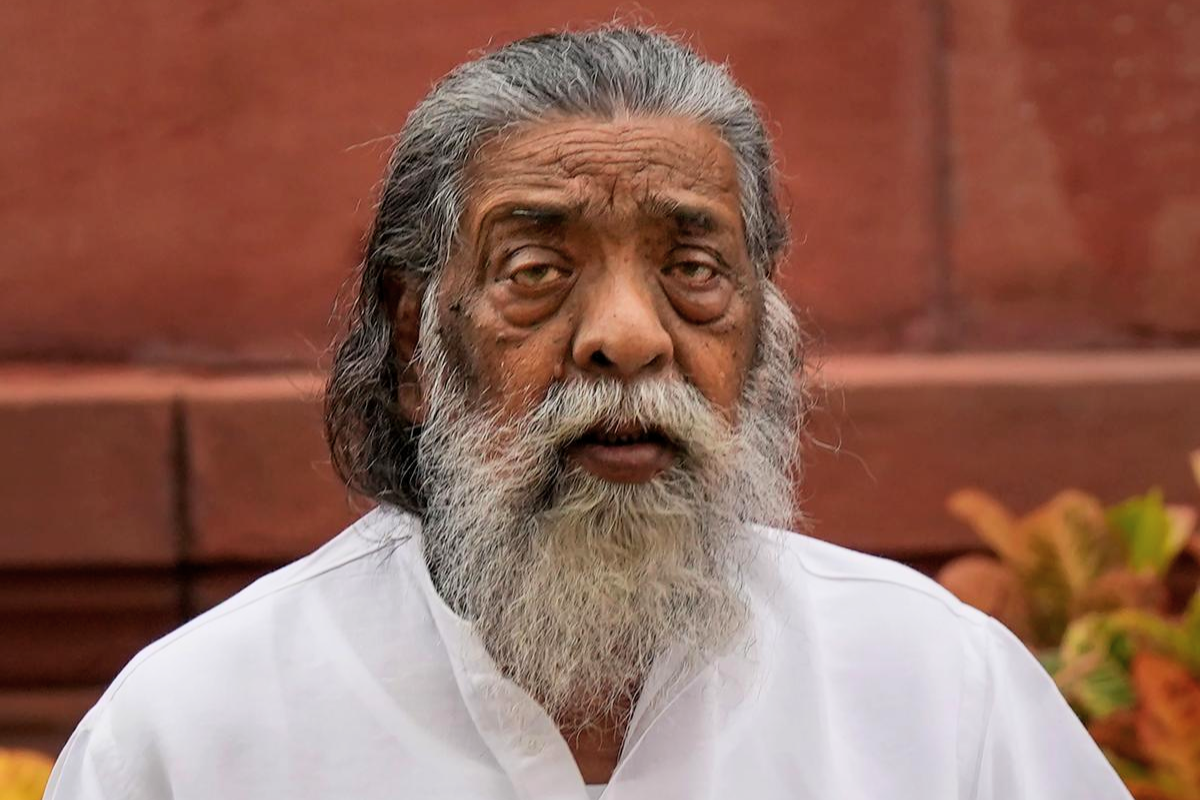






NEW DELHI: Former Jharkhand Chief Minister and founder of the Jharkhand Mukti Morcha (JMM), Shibu Soren, passed away on Monday at the age of 81 after battling prolonged illness. Popularly known as “Dishom Guru” and “Guruji,” Soren died at 8:56 AM at Sir Ganga Ram Hospital in New Delhi, where he had been admitted since late June with severe kidney-related complications, diabetes, and heart ailments.

According to hospital authorities, the veteran leader had been on ventilator support for over a month following a stroke that left him partially paralysed. Despite intensive medical care, his condition deteriorated, leading to multi-organ failure.
Born on January 11, 1944, in Nemra village in the Santhal heartland of present-day Ramgarh district, Soren emerged as one of the tallest leaders of India’s tribal politics. In the early 1970s, he founded the Jharkhand Mukti Morcha, spearheading the movement for a separate Jharkhand state. His lifelong commitment to the rights of tribal and marginalized communities earned him respect and influence across the state.
Over a political career spanning five decades, he served three terms as Chief Minister of Jharkhand and was elected to the Lok Sabha eight times, representing constituencies such as Dumka. He also served as Union Coal Minister in the UPA government.
Tributes poured in from across the political spectrum. Prime Minister Narendra Modi hailed him as a “pillar of tribal politics” whose work will inspire generations, while President Droupadi Murmu remembered him as a leader deeply committed to tribal empowerment. Union Home Minister Amit Shah, Finance Minister Nirmala Sitharaman, Bihar Chief Minister Nitish Kumar, and RJD supremo Lalu Prasad Yadav expressed their condolences, describing his death as a major loss to Indian politics.
Congress leader Priyanka Gandhi Vadra called him “a stalwart of grassroots politics and a true voice of the Adivasis.”
In honour of his contributions, the Jharkhand government has declared three days of state mourning from August 4 to August 6, with all government institutions, schools, and colleges closed, and the national flag flown at half-mast. His body will be brought to Ranchi for public homage at his Morhabadi residence, the JMM headquarters, and the Jharkhand Legislative Assembly.
The final rites will be performed with full state honours in his ancestral village of Nemra, following tribal customs. Prime Minister Modi is expected to attend the funeral.
Shibu Soren’s passing marks the end of an era in Jharkhand’s political history. His journey from a Santhal village to the highest echelons of state and national politics stands as a testament to his resilience, political acumen, and unwavering commitment to his people.

For millions of Adivasis, he was not merely a political leader but the embodiment of their aspirations, a voice that rose from their midst and fought for their rights until his last breath.