








Now that Chief of Defence Staff Anil Chauhan has highlighted the vital importance of the question, why did Indian jets go down on the night of 6-7 May, it is important to shine a torch on what actually went down that night. Not just that, we must examine reasons for things not going perfectly that night in order to assess what might lie ahead in future confrontations.

This is vital because military circles are now hearing that Pakistani pilots were in the cockpit when the J-35 stealth fighter was recently tested—over Gilgit-Baltistan, which is juridically Indian territory. This aircraft is the latest fifth generation jet, with total stealth and immense range. It appears that even its most advanced version is being developed as much for the PAF as for the PLAAF.
`This isn’t just cooperation. It’s full-spectrum fusion,’ an unnamed defence attache based in Pakistan was quoted as saying about the joint tests of what might possibly emerge as the most sophisticated aircraft in the world.
There is talk of China transferring several J-35s to Pakistan by August, just a couple of months hence. That could cause a horrific imbalance of air power resources in the subcontinent. The J-35 was apparently reverse-engineered from US F-35s, which have hitherto been thought to be the world’s most advanced fighter jets.
If indeed that transfer takes place, the Indian Air Force would be at a greater disadvantage than they faced that Tuesday night of 6-7 May—from which the Force recovered admirably by Friday night, 9-10 May. On that last night of the mini-war, the IAF wrecked hangars and runways across several major Pakistani air bases, and returned unscathed.
Massive defence deals possible
The putative imbalance has opened up a market opportunity for the Military-Industrial Complex. It has been reported that US Vice-president JD Vance had urged India to buy F-35s during his visit to the country a little before the near-war in the subcontinental air. The country is said to be seeking 114 fighter aircraft.
Meanwhile, US President Trump’s repeated claims that he prevented nuclear war between India and Pakistan. In tandem, there was much talk of radiation leaks, a US Department of Energy radiation surveillance aircraft, and Boron flown in from Egypt.
However, mature figures in India’s defence circles discount talk of the IAF having hit the mouth of a major Pakistani nuclear missile silo that Friday night. Indian defence experts point out that they haven’t seen a single satellite photo of a burning silo, only ground videos, which could be generated by AI.
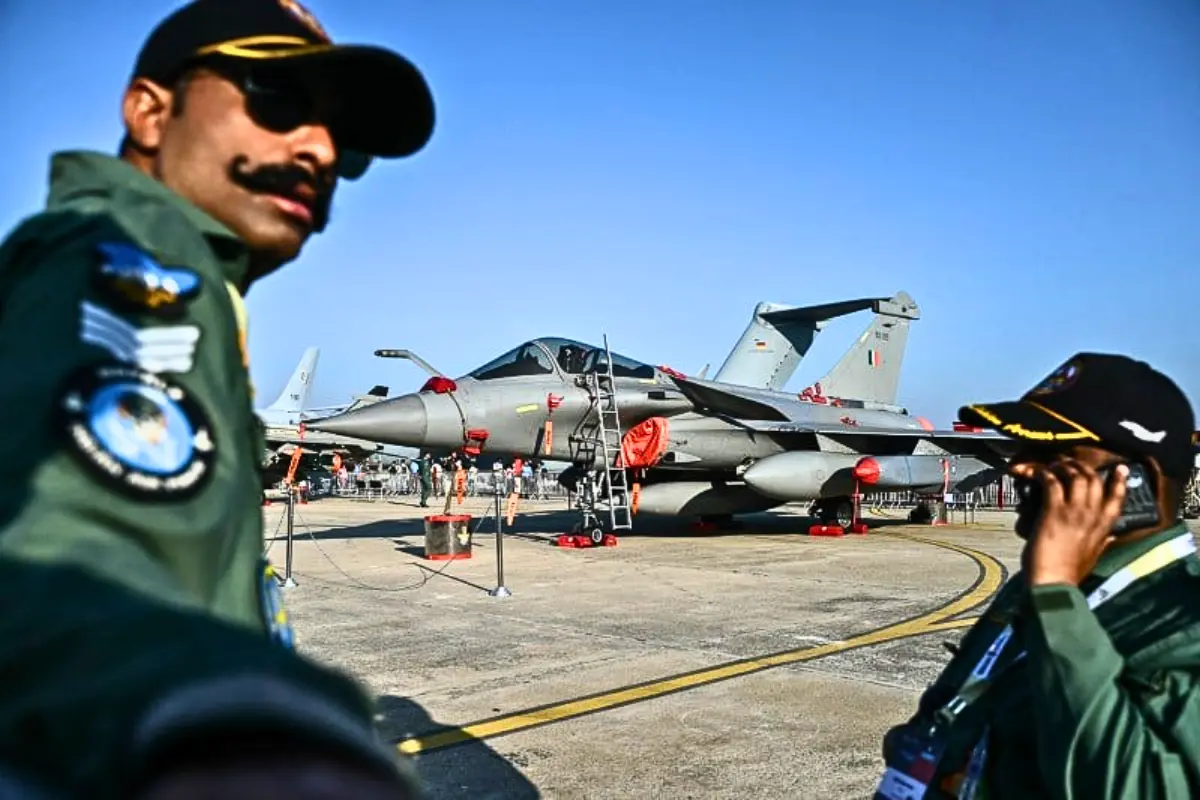
So, the country ought to be cautiously aware of the thin line separating urgent defence needs from a precipitate panic purchase. For sure, one thing became clear in the early hours of 7 May: irrespective of whether planes went down, the Rafale apparently did not measure up against the capabilities of even the Chinese J-10, and the PL-15 missiles they launched. The French Rafale aircraft are the most advanced fighters currently with the Indian Air Force.
Why did Spectra suite fail?
From what one can make out, the Spectra suite of the IAF’s Rafales failed to deflect or evade the stealth and range of the Chinese PL-15 missiles fired from the PAF’s J10s that night. The Spectra suite is meant to be the Rafale’s comprehensive spotting, deflection, and overall defensive system, working across electromagnetic, laser and infrared domains.
The IAF was apparently unaware that the PAF was using original J-10s, designed for the PLAAF, and not the J-10e export version. The aircraft used had greater range and stealth, and so Indian pilots may have had no idea Chinese missiles had locked onto their aircraft until it was too late to evade them.
After what has happened, the nation must soberly consider whether the focus on including Anil Ambani on the Rafale deal took precedence over ensuring that the aircraft’s specs were truly up to the mark. While the initial order for 126 aircraft, approved by the previous Congress government, was scaled down to 36, the price actually went up during the current government’s renegotiation.
The Spectra suite’s library of potential threats apparently needs to be updated as new potential threats become known. One wonders whether the suite’s library on the IAF jets had been updated with specs of the more sophisticated aircraft and missiles they were actually up against that night.
It seems that Chinese satellites were watching India keenly, and perhaps had been watching ever since the bloodbath at Pahalgam. Experts believe that those satellites were integrated with Chinese aircraft and missiles in Pakistan, and so, instantly activated air defence responses as soon as Indian jets took off.
IAF pilots deserve kudos for successfully hitting their targets before those stealth-based responders got to some of them.
Non-application of mind?
What there is of an Indian intelligence set-up was evidently surprised that Pakistan used original Chinese jets and missiles that night, and not export versions. If that’s true, they must be held accountable. The PL-15 designed for the PLA—and the PAF too, it seems—has a longer range, and better stealth, than the export version. That’s what the IAF found itself up against that night.
It wasn’t a tatical mistake,’ as the CDS chose to put it, but an intelligence failure that exposed Indian aircraft to hits. Even if they couldn’t get specific information about what was afoot, should our intelligence czars have at least applied their minds to the logic of China’s announcements that it stood solidly with iron brother’ Pakistan?
It turned out that night—and over the next two nights—that India was fighting China and Turkey by proxy, which some of us have been mocked for predicting.

One wonders if RAW did not know, or did not tell the air force, about how sophisticated, stealthy, and prompt the Chinese air defence integrated systems, including the home version J10 jets, could be. Surely there should have been intelligence inputs in the days following the Pahalgam bloodbath that those jets were ready to act as soon as Indian jets took to the skies.