


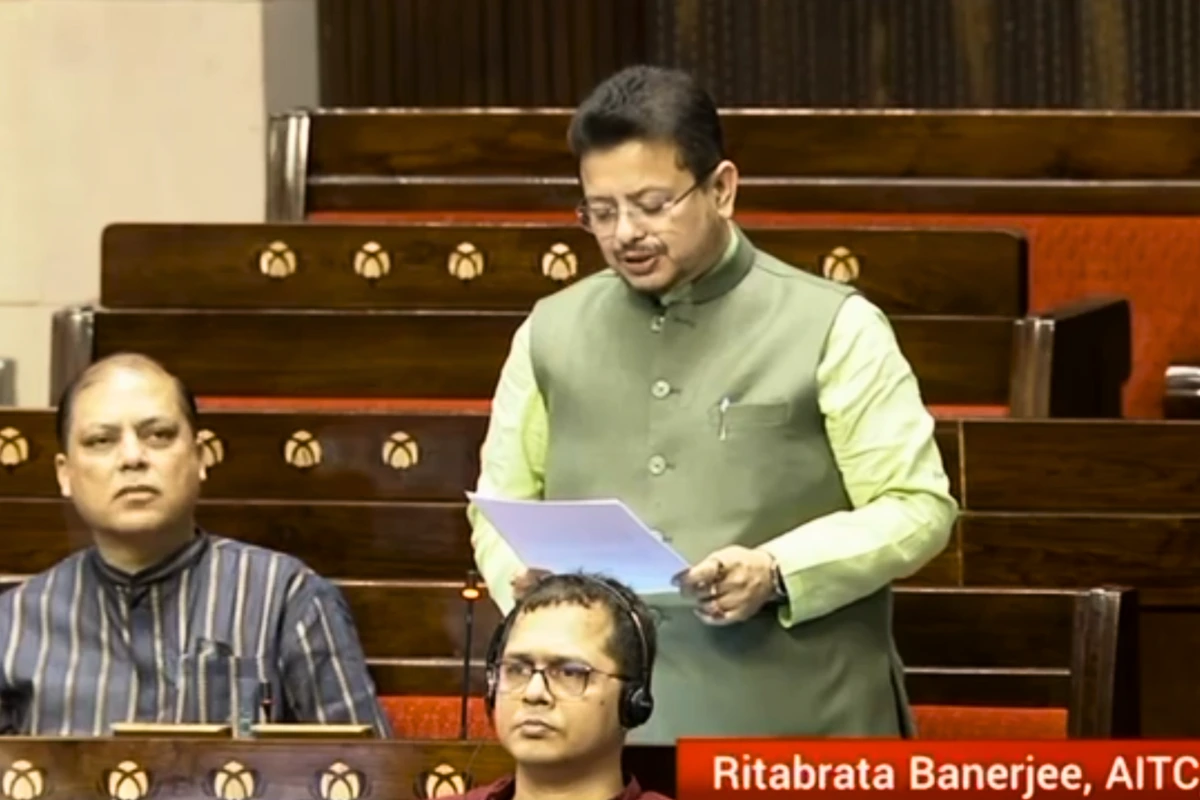






NEW DELHI:In a passionate address during today’s parliamentary session, Ritabrata, a Member of Parliament, raised serious concerns regarding the rising defaults in the Employees’ Profit and Funds Organization (EPFO), which is critical for the social security and retirement savings of millions of workers in India.

Ritabrata stressed the alarming rate at which employers in the private sector were defaulting on both their contributions and the employee’s deducted share of the Provident Fund (PF).
The Importance of the Employees’ Profit and Funds Act, 1952
Ritabrata began his speech by emphasizing the significance of the Employees’ Profit and Funds and Miscellaneous Provisions Act, 1952, describing it as one of the most vital social security schemes for the working people of the country. The Act mandates the creation of a retirement savings fund where both employers and employees contribute a portion of the employee’s salary to establish pension funds and insurance schemes.
The EPFO, managed by the central government, oversees these contributions, ensuring that workers have a financial safety net upon retirement or in times of emergencies.
However, Ritabrata highlighted that despite its importance, there has been a sharp rise in defaults within the EPFO system, particularly in the private sector. According to official data, the default amount reached a staggering Rs. 26,000 crores by the end of the financial year 2023-2024, representing a 69.3% increase from the previous year’s default figure of Rs. 15,254 crores.
This rapid increase in defaults is becoming a cause of great concern, especially since the private sector, where this issue is most prevalent, seems to be more prone to not depositing the necessary contributions.
Defaults in the Private Sector: A Growing Concern
The Member of Parliament pointed out a dangerous trend in the private sector where employers are not only neglecting their own contributions to the Provident Fund but are also failing to deposit the employee’s share, which they are legally required to deduct from workers’ salaries.
Ritabrata called this an “alarming” and “dangerous” trend, which not only jeopardizes workers’ financial security but also undermines the core principles of social welfare and labour rights.
Lack of Cooperation and Inaction by Authorities
In his speech, Ritabrata also brought attention to a lack of cooperation from authorities that are supposed to be addressing these defaults. Specifically, the Labour Department of West Bengal has been persistently requesting the Additional Central PF Commissioner for critical data regarding the list of defaulters from jute mills and other sectors under their jurisdiction.
However, despite repeated requests, the official response has been non-existent.
The Labour Department has been particularly concerned about Haldia Port, where nearly 1,000 contractual employees raised a formal complaint about huge PF defaults by a private contracted agency working at the Haldia dock complex. Despite the department’s formal letters to the Additional Central PF Commissioner since August 2023, Ritabrata stated that they had not received any concrete replies or actions in response to these complaints.
This delay in providing the requested data has raised concerns about a potential nexus between the PF office and the contractor, with Ritabrata questioning whether the PF office is deliberately protecting the defaulter at the expense of workers’ rights.
Failure to Respond from Other Regional PF Offices
Ritabrata also touched upon the lack of response from the Regional PF Offices in various regions, including Jalpaiguri, Siliguri, and Darjeeling. Since 2024, the West Bengal Labour Department has been requesting details regarding garden-wise PF dues within these regions, but again, no satisfactory response has been received from the concerned officials.
This continued inaction by the authorities is creating a sense of frustration and helplessness within the state government and among workers who are being denied their rightful PF dues.
In his concluding remarks, Ritabrata made a strong call for stringent measures against the PF defaulters. He urged the central government to ensure that authorities at both the state and central levels are held accountable for their inaction and lack of transparency. Ritabrata appealed for more cooperation between the Labour Department and the EPFO offices in order to eliminate the loopholes that allow employers to evade their responsibilities.
He further requested the government to shift to a more transparent and responsive system for handling PF defaults and urged that more stringent laws be enacted to prevent such occurrences in the future.