


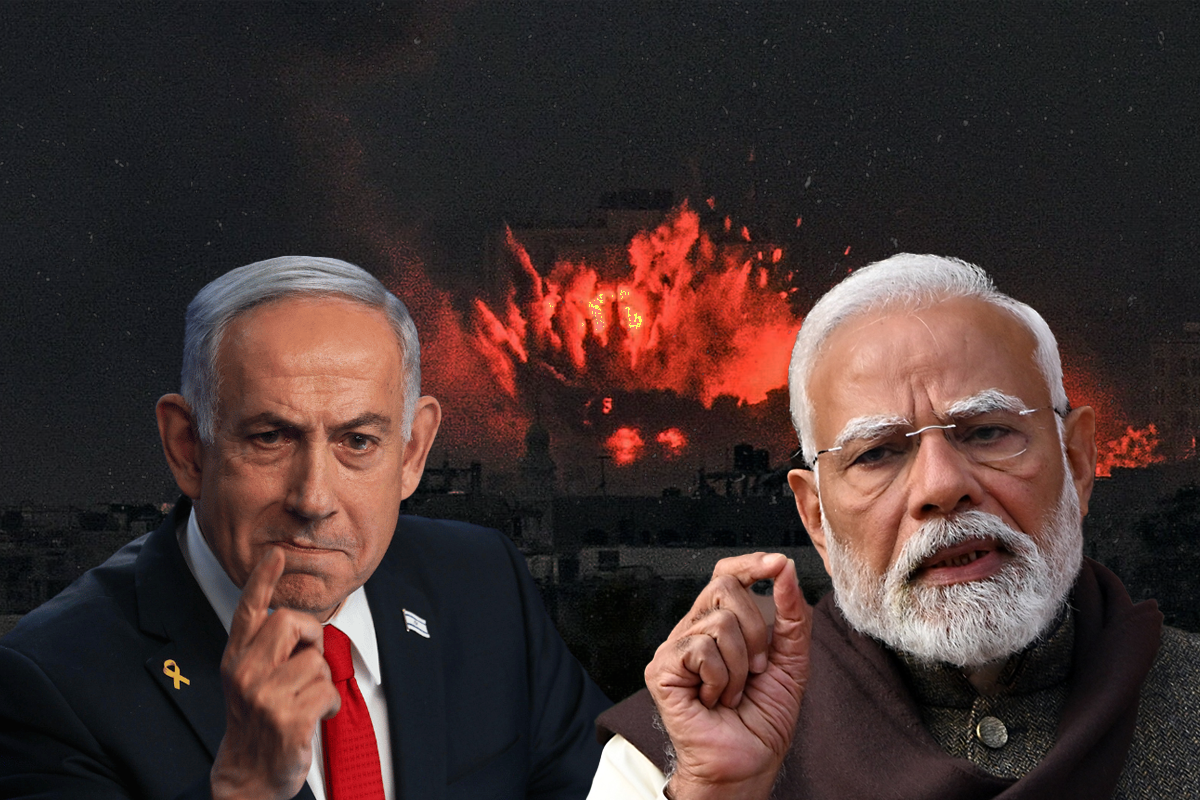






NEW DELHI : With tensions between Israel and Iran threatening to spiral into a broader regional confrontation, Prime Minister Narendra Modi on Friday appealed for a swift return to peace during a phone conversation with Israeli Prime Minister Benjamin Netanyahu.

“Had a phone discussion with PM @netanyahu of Israel. He updated me on recent developments. I conveyed India’s concerns and highlighted the urgent need for peace and regional stability,” Modi wrote on social media platform X.
Earlier in the day, the Ministry of External Affairs (MEA) released a strongly worded statement expressing “serious concern” following Israel’s overnight strikes on Iran’s senior military leadership and strategic nuclear and missile facilities. In retaliation, Iran unleashed over 100 drones aimed at Israeli targets a response that heightened fears of further escalation.
India, emphasizing its balanced ties with both nations, urged Tel Aviv and Tehran to de-escalate tensions. “India is closely watching the evolving scenario and remains committed to supporting all efforts to restore peace. We call on both sides to opt for dialogue and diplomatic engagement,” the MEA said.
The standoff is not just a diplomatic challenge for India, it also threatens to impact its economy and strategic interests in the region. Former Indian Ambassador to the UAE and Egypt, Navdeep Suri, pointed out the immediate ripple effects. “Global crude prices jumped 15% this morning after the news broke. Such instability risks raising inflation and worsening India’s current account balance,” he said.
India’s stakes are considerable. Nearly 25,000 Indian nationals — including students and professionals reside in Israel, while around 10,000 live and work in Iran. Additionally, over 9 million Indian citizens live across Gulf Cooperation Council (GCC) nations, forming the largest expatriate community there. Any regional flare-up could have grave implications for their safety and livelihoods.
As a precaution, Indian diplomatic missions in Tehran and Tel Aviv released coordinated advisories urging Indian citizens in both countries to stay alert, avoid unnecessary travel, and remain near safe zones. “Our embassies are in regular contact with the Indian diaspora. All nationals are advised to be vigilant and adhere to local security protocols,” the MEA noted.
Netanyahu, meanwhile, has warned Israelis to prepare for a potentially extended period of conflict. He claimed that the Israeli strikes targeted critical elements of Iran’s nuclear infrastructure, including Natanz, the heart of Iran’s uranium enrichment efforts.
The possibility of a broader conflict has strategic consequences for India. Suri cautioned that if Iran retaliates by blocking the Strait of Hormuz, the vital maritime passage through which 60% of India’s oil and gas supplies transit, India’s energy security could be severely impacted. The bulk of India’s oil imports from the UAE and Iraq, and its gas imports from Qatar and Kuwait, pass through this chokepoint.
“It’s a region of critical importance to us. A stable and peaceful Iran is essential, especially given our stakes in projects like the Chabahar port,” Suri said, underlining India’s broader economic and geopolitical interests in West Asia.