








NEW DELHI: A fresh diplomatic storm has erupted between India and Turkey after Turkish President Recep Tayyip Erdogan, during his recent visit to Pakistan, made contentious remarks supporting Pakistan’s stance on the Kashmir issue.

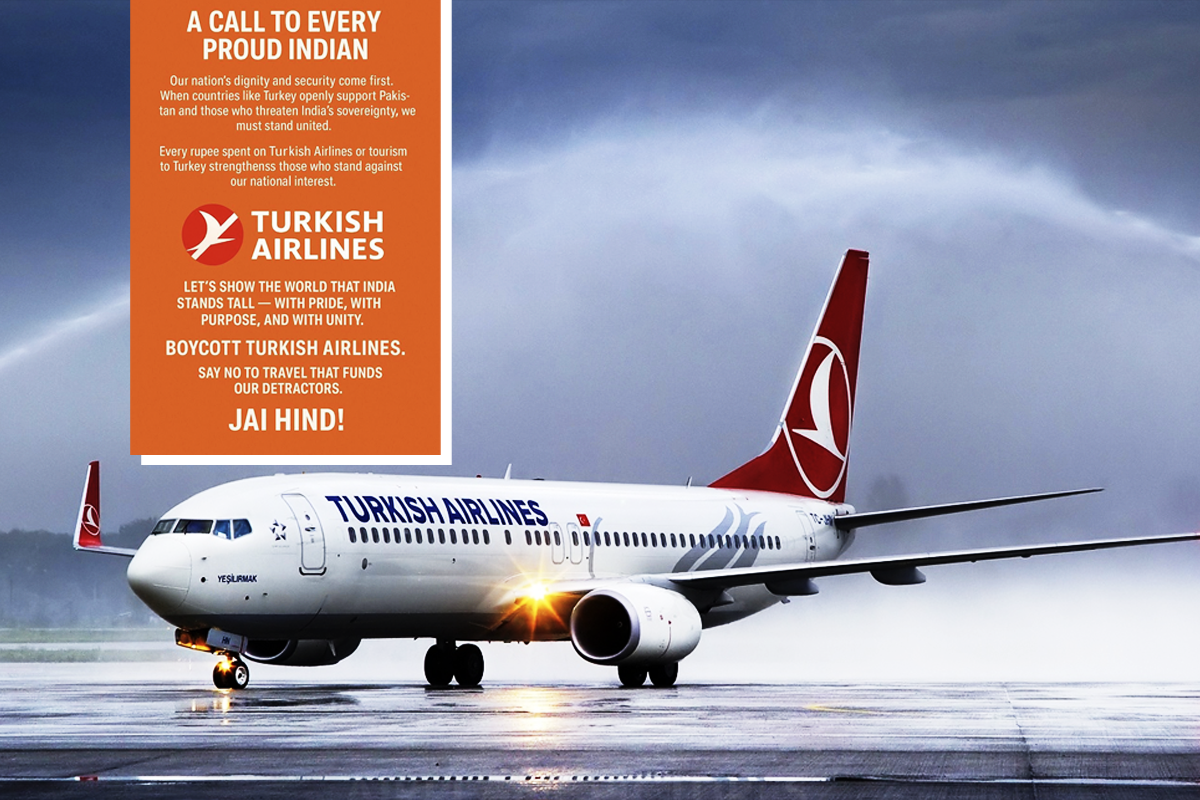
His statements have drawn sharp criticism from India, triggering a significant public backlash, including widespread calls for a boycott of Turkish Airlines led by The New Indian Executive Editor and senior journalist Rohan Dua.
We can do it. To protect the sindoors of our sisters & mothers. pic.twitter.com/dSxITJt2IF
— Rohan Dua (@rohanduaT02) May 8, 2025
Erdogan’s Provocative Remarks
During his visit to Pakistan in February 2025, Erdogan stated that the Kashmir issue should be resolved “according to the UN resolution through dialogue and keeping in mind the aspirations of the people of Kashmir.” Reaffirming his nation’s support for Pakistan’s position, he added,
“Our state and our nation, as in the past, stands in solidarity with our Kashmiri brothers today.”
These comments have deeply angered India, which considers Jammu and Kashmir an integral part of its territory and rejects any external interference.
India’s Strong Response
The Indian government swiftly reacted to Erdogan’s comments, lodging a formal protest with the Turkish ambassador in New Delhi. Ministry of External Affairs (MEA) spokesperson Randhir Jaiswal responded to the media’s query, underscoring India’s firm stance on the issue.
MEA Spokesperson Randhir Jaiswal stated:
“We reject such objectionable comments on matters which are internal to India. Jammu and Kashmir is an integral part of India. No other country has any locus standi to comment on it.”
Jaiswal also reiterated India’s longstanding position on cross-border terrorism, highlighting Pakistan’s role.
He added, “Instead of commenting on the internal affairs of another country, it would have been appropriate if Pakistan’s policy of using cross-border terrorism against India, which remains the biggest threat to the people of Jammu and Kashmir, had been called out.”
The MEA’s response indicates India’s strong disapproval of Erdogan’s remarks and highlights the sensitive nature of territorial issues regarding Kashmir.
Public Outrage and Boycott Movement
Erdogan’s remarks have sparked a wave of public anger across India, leading to calls for a boycott of Turkish products and services. Social media platforms have been flooded with hashtags like #BoycottTurkey and #BoycottTurkishAirlines, with citizens urging others to avoid the Turkish national carrier.
The hashtag #BoycottTurkishAirlines has gained momentum, with many Indian social media users condemning Erdogan’s comments and expressing their frustration over Turkey’s stance on Kashmir. This is not the first time India has seen a boycott movement in response to foreign interference on Kashmir.
Turkish Airlines’ Expansion Plans Under Threat
The controversy has come at a time when Turkish Airlines was planning to expand its operations in India. The airline aimed to double its weekly direct flights from 14 to 28, following a 33.2% increase in Indian tourists visiting Turkey in the first half of 2024. However, the current diplomatic standoff and public backlash could potentially disrupt these expansion plans, as the growing anti-Turkey sentiment among Indian citizens may hurt Turkish businesses operating in the country, particularly in the aviation and tourism sectors.
ALSO READ: Reliance and Others File Trademark for ‘Operation Sindoor’ Amid Rush
Broader Context of India-Turkey Relations
This incident adds to the existing tensions between India and Turkey. In July 2024, Turkey imposed a comprehensive ban on the export of arms and defense-related items to India, which was seen as a gesture of support for Pakistan. The move was revealed during a closed-door session in the Turkish Parliament and further deepened the rift between the two countries.
Turkey’s strategic alignment with Pakistan, especially on sensitive issues like Kashmir, has been a source of strain in bilateral relations. The current controversy surrounding Erdogan’s remarks is likely to intensify the diplomatic friction, further affecting trade, defense, and cultural ties between the two nations.
Foreign policy expert Dr. Anil Trivedi commented on the diplomatic row, stating,
“Erdogan’s remarks are not just a violation of diplomatic norms but a direct interference in India’s internal affairs. Such statements are bound to have repercussions. This is a classic example of how political rhetoric can shape the course of bilateral relations, especially when dealing with sensitive territorial disputes.”
As the diplomatic standoff intensifies, it is clear that the consequences will extend beyond political statements. The public outrage in India is likely to have economic repercussions, with calls for a boycott affecting Turkish enterprises, particularly Turkish Airlines, which was on the verge of expanding its operations in the country. The incident underscores the delicate nature of international relations and the far-reaching impact of political statements, especially when it concerns long-standing territorial disputes.