


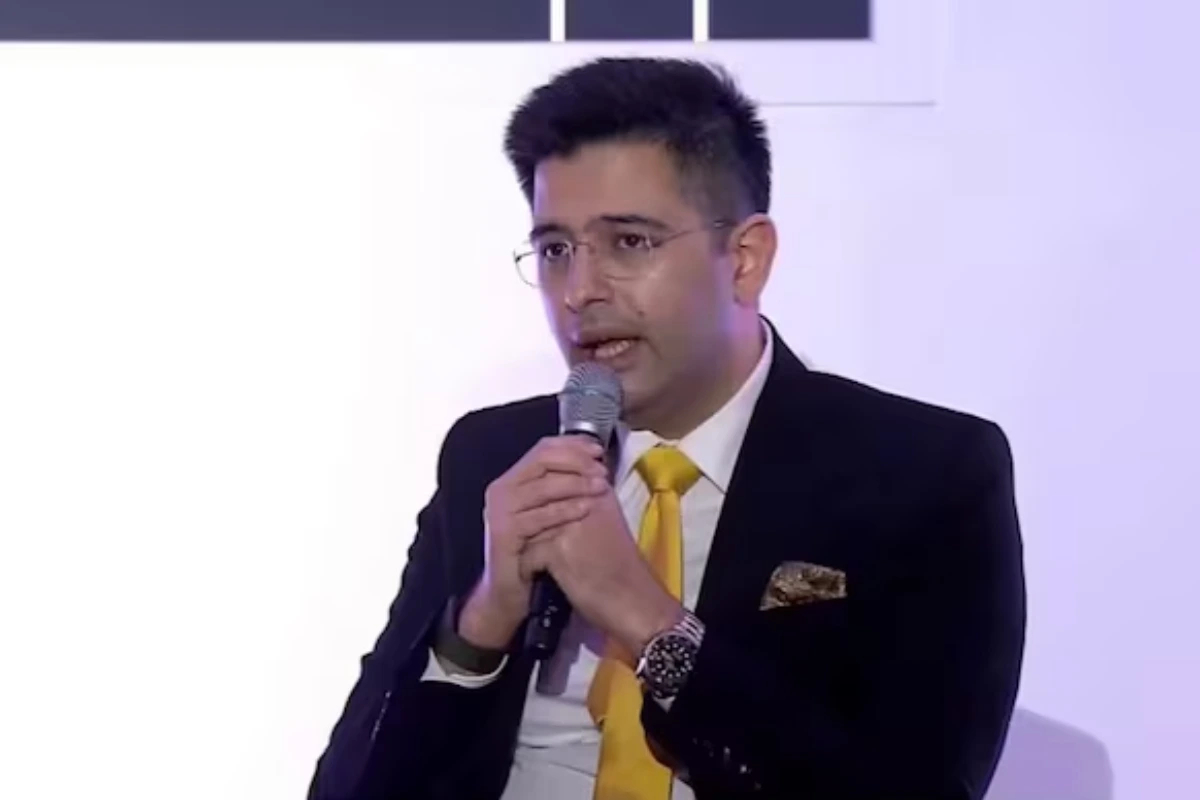






NEW DELHI: At the ‘Ideas for India Conference 2025’ in London, Indian Member of Parliament Raghav Chadha delivered a forceful condemnation of Pakistan, urging the international community to stop viewing it as a victim and instead unequivocally recognize it as a perpetrator of terrorism.

Chadha exposed what he described as Pakistan’s “deep-rooted terror links,” framing his argument through a series of stark contrasts:
“Lies and loans cannot go together. Diplomacy and duplicity cannot go hand in hand. Terror and tolerance cannot coexist. Blood and water cannot flow together.”
He argued that Pakistan’s alleged strategy of seeking international financial aid while simultaneously harboring and supporting terrorist groups is fundamentally unsustainable and morally reprehensible.
Call for Concrete Action: Building on this, Chadha issued a direct demand to the global community: “Stop all aid.” He insisted that financial assistance indirectly enables Pakistan’s terror infrastructure, and the world must acknowledge its role in fostering cross-border terrorism.
India’s Resolve Exemplified: Operation Sindoor: Contrasting Pakistan’s actions, Chadha held up India’s Operation Sindoor as “a shining example of strategic precision and moral clarity in the fight against cross-border terrorism,” highlighting its significance for India’s security.
Chadha concluded by outlining India’s dual-track approach: “We offer [the] hand of friendship,” he stated, affirming India’s desire for peaceful relations. However, he added a firm warning: “but that can be changed to a fist of retribution, in case of any misadventure.”

Context and Implications: Chadha’s speech at this major international forum signals India’s ongoing diplomatic push to globally isolate Pakistan on terrorism. His demand to cut aid reflects long-standing Indian frustration with perceived international leniency. The strong endorsement of Operation Sindoor reinforces the government’s narrative of decisive action against threats. The address is expected to draw strong reactions from Islamabad while being seen domestically as a robust articulation of India’s security concerns.