


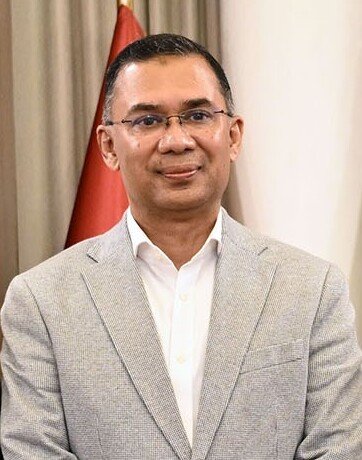






New Delhi: India on Friday congratulated Tarique Rahman after the Bangladesh Nationaliist Party (BNP) secured a decisive victory in Bangladesh’s 12th parliamentary elections, the first national poll since the long-time rule of the Awami League came to an end in 2024.

Prime Minister Narendra Modi released a message on X congratulating Mr Rahman on his “decisive victory” and extended his best wishes to the people of Bangladesh. India’s Ministry of External Affairs (MEA) said it “values historic and cultural ties” and looks forward to working with the new government to strengthen bilateral relations and regional cooperation.
The BNP’s success marks a dramatic shift in Bangladesh’s political landscape following the ousting of former prime minister Sheikh Hasina’s government in August 2024 and the subsequent banning of the Awami League from contesting this election, a move that fundamentally altered the electoral field.
According to official results from the Bangladesh Election Commission, the BNP secured a strong parliamentary majority, winning 209 out of 297 seats declared and capturing 49.97 per cent of the vote share.
The Islamist Bangladesh Jamaat-e-Islami, once banned and now restored as a political force, emerged as the main opposition party with 68 seats and 31.76 per cent of the vote, its best electoral performance in decades.
Independents and smaller parties — including the National Citizen Party (NCP), formed by youth activists allied with Jamaat — also won seats, while a concurrent national referendum on constitutional reforms passed with large support.
Tarique Rahman himself won in multiple constituencies, including Dhaka-17 and Bogura-6, and is to be sworn in as prime minister, returning to power after nearly two decades.
This election was the first national contest since the interim government led by Nobel laureate Muhammad Yunus disbanded the Awami League and barred it from participation, citing legal and security concerns. Sheikh Hasina, who led the Awami League to four successive terms, was reported to have fled the country following the 2024 protests that brought down her government.
The absence of the Awami League removed Bangladesh’s once-dominant political force from the ballot, turning the contest into a bipolar struggle between the BNP and a Jamaat-led alliance.
The voter turnout was reported at 59.44 per cent, a comparatively high figure in a politically volatile environment, with polling taking place across nearly all of Bangladesh’s constituencies.
India’s congratulatory messages were issued promptly after results became clear. The MEA statement said: “As two close neighbours with deep-rooted historical and cultural ties, we reaffirm India’s continued commitment to the peace, progress and prosperity of both our peoples.” The prime minister’s message highlighted hopes for strengthened cooperation across economic, connectivity and people-to-people ties.
The BNP acknowledged PM Modi’s message, thanking him for the “gesture of goodwill,” according to party communications released publicly.
India has also deputed senior officials — including Lok Sabha Speaker Om Birla and Deputy National Security Advisor Vikram Misri — to attend Rahman’s swearing-in ceremony, underlining the strategic importance New Delhi places on stable ties with Dhaka.
India and Bangladesh share a 4,000-km border, extensive economic ties and historical bonds dating back to Bangladesh’s independence in 1971. India is one of Bangladesh’s largest trading partners, and cross-border connectivity and energy cooperation have expanded in recent years. Analysts say both governments have signalled continuity in dialogue despite the political transition.
However, the rise of Jamaat-e-Islami as the main opposition — a party historically opposed to Bangladesh’s 1971 independence — introduces new dynamics to parliament and could influence domestic policy debates and foreign relations, including ties with India.
As Rahman prepares to take office, observers say his government faces immediate challenges: rebuilding democratic institutions after years of unrest, managing economic pressures, and navigating Bangladesh’s foreign relations amid shifting geopolitical interests.

India’s official response has emphasised collaboration and shared priorities, reflecting New Delhi’s long-term interest in a stable and prosperous Bangladesh. Foreign ministries in both capitals have said they will open regular consultations to address bilateral issues — signalling that, despite political change in Dhaka, India remains engaged with its neighbour.