


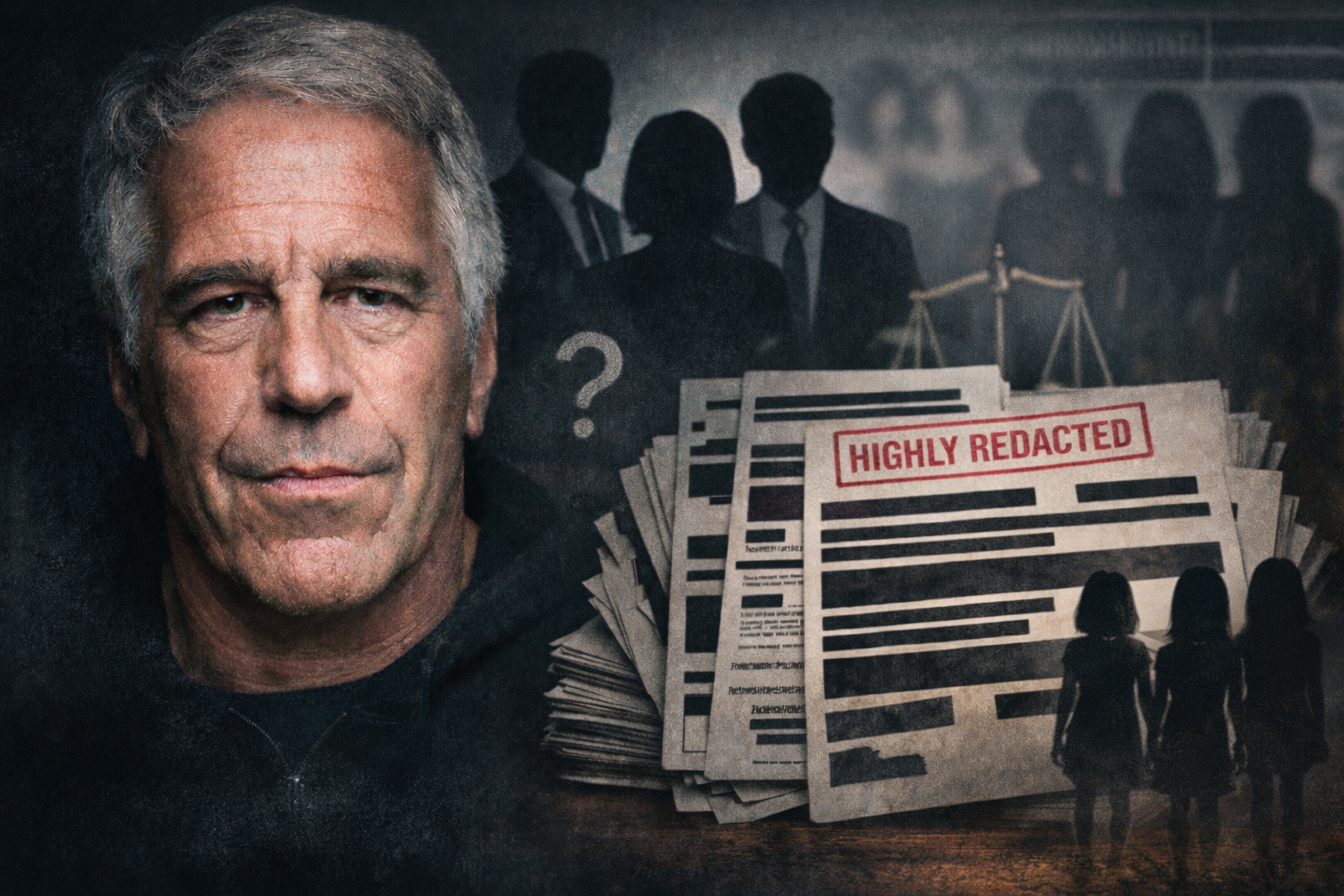






New Delhi: Newly unsealed documents from the Jeffrey Epstein investigations have unveiled fresh details about the late financier’s alleged connections to Israeli intelligence, dealings involving Iran, and opportunistic engagements with conflicts across the Middle East.

The releases, part of millions of pages disclosed by the US Justice Department under the Epstein Files Transparency Act, include emails, informant reports, and communications that suggest Epstein may have operated at the intersection of espionage, diplomacy, and high-stakes business. While many claims remain unsubstantiated and have been denied, they paint a picture of a shadowy network exploiting geopolitical turmoil.
Epstein, who died in prison in 2019 while awaiting trial on sex trafficking charges, has long been scrutinised for his associations with powerful figures. The latest batch, released last week, focuses on his purported role in facilitating international deals and intelligence operations. Central to the revelations are Epstein’s alleged links to Israel’s Mossad intelligence agency.
A confidential FBI informant claimed Epstein was a “co-opted Mossad agent,” trained under former Israeli Prime Minister Ehud Barak. The document alleges that Epstein’s attorney, Alan Dershowitz, informed US officials that Epstein “belonged to both US and allied intelligence services,” likely referring to Israel. Dershowitz has vehemently denied these assertions, calling them “baseless conspiracy theories.”
Ehud Barak, who served as Israel’s prime minister from 1999 to 2001 and later as defence minister, features prominently in the files. Records show Barak visited Epstein’s New York townhouse more than 30 times between 2013 and 2017, and the pair maintained frequent contact even after Epstein’s 2008 conviction for procuring a minor for prostitution.
In one 2016 email, Barak reportedly asked Epstein to arrange an interview with then-candidate Donald Trump for an Israeli TV channel. Investigative reports suggest Epstein brokered a security agreement between Israel and Mongolia, and attempted to facilitate backchannel talks between Israel and Russia during the Syrian civil war to remove President Bashar al-Assad. A 2013 meeting between Barak and Russian President Vladimir Putin, allegedly arranged by Epstein, is cited as part of these efforts.
Epstein’s ties to Israel are further traced through his mentor, Robert Maxwell – father of his associate Ghislaine Maxwell – who was widely reported to have been a Mossad asset. Former Israeli intelligence officer Ari Ben-Menashe has claimed Maxwell involved Epstein in arms transfers from Israel to Iran in the 1980s, echoing operations linked to the Iran-Contra scandal. Epstein is also alleged to have sold Chinese weapons to Iran via the state-owned firm Norinco during that period.
References to Iran extend beyond historical arms deals. An email from evolutionary biologist Robert Trivers describes a purported meeting between Epstein and former Iranian President Mahmoud Ahmadinejad in New York after Ahmadinejad’s UN speeches criticising Israel. Ahmadinejad’s adviser has denied the encounter.
Other communications from 2014-2018 with Iranian businessman Alireza Ittihadieh discuss US-Iran policy under President Trump, including predictions about the nuclear deal’s collapse. Epstein leased a Manhattan property that once served as Iran’s consulate, seized after the 1979 revolution.
Mentions of Palestine and Gaza are sparse and indirect in the files. In a 2015 recorded conversation with Epstein, Ehud Barak urged Vladimir Putin to send “one more million” Russians to Israel to “change Israel in a dramatic, dramatic manner” and dilute the Palestinian presence. Barak noted Palestinian citizens of Israel (referred to as “Arabs”) growing from 16% to 20% over 40 years, stating: “Even within the borders of smaller Israel, there is still an issue.”
He proposed massive conversions to Judaism for Russians, breaking orthodox monopolies, and being “selective” now, unlike post-1948 when Israel took Jews “from North Africa, from the Arabs, from whatever” as necessity. Barak outlined a hierarchy for equality: Prioritizing Druze (1%, “totally Israelis”) and Christians (2%, better educated), but excluding Muslim Palestinians. This is framed as demographic dominance to address the “issue” of Palestinians inside 1948 borders.
One email chain involves Epstein claiming influence over Indian Prime Minister Narendra Modi’s 2017 visit to Israel, where Modi notably skipped meetings with Palestinian leaders, drawing criticism from the Palestinian Authority. Epstein boasted in a message: “The Indian Prime Minister Modi took advice and danced and sang in Israel for the benefit of the US president.” India’s foreign ministry dismissed this as “trashy ruminations by a convicted criminal.”
The Epstein files also delve into the financier’s opportunistic forays into other Middle East conflicts, particularly during periods of upheaval in Libya, Syria, and Egypt, though mentions of Iraq are notably absent. In Libya, a 2011 email to Epstein outlines a scheme to access approximately $80bn in frozen state assets amid the NATO-backed uprising against Muammar Gaddafi.
The correspondence, sent months before Gaddafi’s death, discusses enlisting former MI6 and Mossad officials to trace “stolen” funds, framing it as a lucrative opportunity tied to post-war reconstruction estimated at over $100bn. Epstein’s associate highlighted the chaos as a gateway for financial and legal ventures, with the real asset value potentially “three to four times” higher. This has raised questions about how Epstein’s network anticipated regime change outcomes, intersecting with Western intervention timelines.
Regarding Syria, emails from 2010 position the country as a “hot spot” for banking investments following deals in Egypt. Later documents reveal Epstein’s 2013 efforts to broker a backchannel with Russia via Ehud Barak to oust President Bashar al-Assad, though unsuccessful. Recent files touch on post-Assad dynamics, but these appear tangential to Epstein’s direct involvement. In Egypt, the files reference prior acquisitions in banking sectors amid regional instability, part of broader discussions on Middle East opportunities post-Arab Spring.
Epstein’s communications portray these conflicts as investment frontiers, often leveraging intelligence contacts. Many of his claims remain unverified, but they fuel scrutiny of intelligence roles in regional destabilisation.

Even as US media coverage has been criticised for underplaying Epstein’s Israeli connections, the disclosures have sparked a wave of online conspiracy theories, some veering into antisemitism, prompting warnings from Jewish organisations. Emails show Epstein using derogatory terms like “goyim” for non-Jews, and discussing historical anecdotes involving Jewish families, including the Rothschilds. Israeli officials, including former Prime Minister Naftali Bennett, have rejected any Mossad involvement, stating: “These are recycled falsehoods aimed at undermining Israel.”