


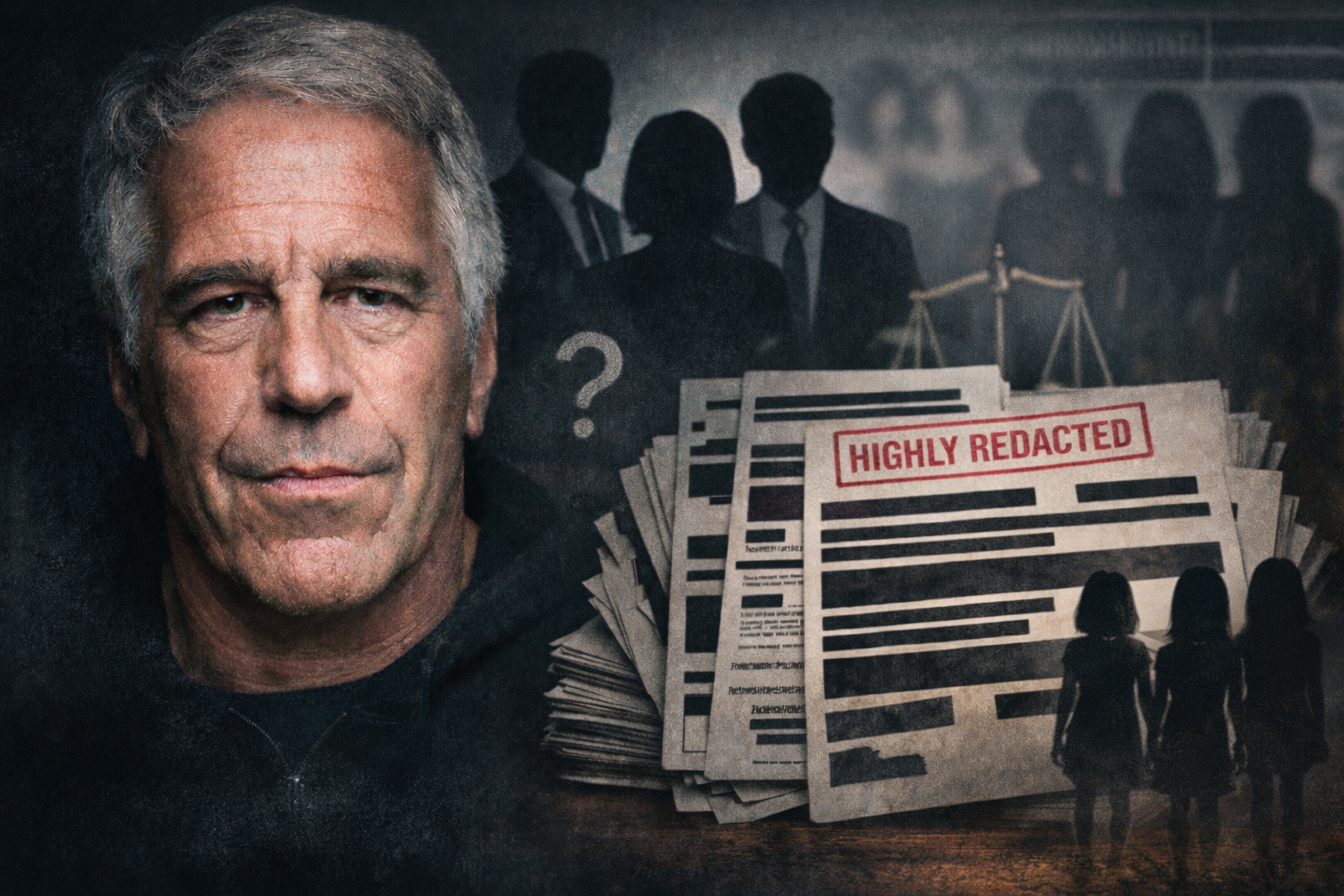







New Delhi: Public anger has intensified following the release of further US records linked to Jeffrey Epstein, a convicted sex offender accused of sexually abusing and trafficking underage girls, renewing scrutiny of how he was able to maintain close ties with some of the world’s most powerful figures long after his crimes were widely known.
A US financier, Epstein in 2008 pleaded guilty in Florida to state charges of soliciting prostitution involving a minor, becoming a registered sex offender. More serious felony charges were not pursued as part of a plea agreement later criticised by a federal judge as unlawful.
Epstein died in suspicious circumstances in a Manhattan jail in August 2019 while awaiting trial on federal charges of sex trafficking and conspiracy to traffic minors. He pleaded not guilty. Due to his death, the case was never tested in court.
However, since 2025, the Epstein Files have entered the public domain through a series of legal steps. In November, the US Congress passed the Epstein Files Transparency Act, requiring the Department of Justice (DOJ) to publish unclassified records in its possession relating to Epstein. The DOJ began releasing files in December, initially publishing hundreds of thousands of pages before issuing further tranches later that month.
The largest disclosure came on 30 January 2026, when the Justice Department made public more than three million pages of documents, along with thousands of videos and images, following a review of more than six million records.
Separately, US federal courts ordered the unsealing of previously sealed civil case material linked to Epstein and his associate Ghislaine Maxwell. Officials have stressed that grand jury material and victim-identifying information remain protected under US law.
Much of the newly released material originates from civil litigation, including lawsuits brought by Epstein’s accusers. It includes emails, deposition transcripts, travel records and investigative summaries. Judges overseeing the release have repeatedly warned that the appearance of a name in the records does not amount to an allegation or finding of criminal wrongdoing.
Epstein was accused by dozens of women of sexually abusing them when they were minors, allegations detailed in sworn statements and court filings. Several civil cases were settled, with Epstein paying substantial sums without admitting liability. His long-time associate Ghislaine Maxwell was convicted in 2021 of helping recruit and groom minor girls for sexual abuse and is serving a 20-year prison sentence.
The recent disclosures mention some of the most powerful men including various heads of states, businessmen, intellectuals, royals, celebrities and others. The release of such emails have already had political and professional repercussions.
In the UK, Lord Peter Mandelson, a former cabinet minister and senior Labour figure, stepped back from public duties after confirming that he had contact with Epstein, including meetings that took place after Epstein’s 2008 conviction. Lord Mandelson has denied any wrongdoing, describing his association with Epstein as a serious error of judgement.
British police have said they are reviewing the newly released material to assess whether any criminal investigation is required. In the United States, law-enforcement agencies have similarly said they are examining the documents, while emphasising that such reviews do not imply criminal suspicion and that no new indictments have been announced.
Public reaction has been swift and intense, particularly online, where anger has focused on how Epstein — despite his 2008 conviction — continued to socialise with politicians, financiers, academics and royalty.
Survivors’ groups say the disclosures underscore systemic failures that allowed abuse to continue. In a statement, the advocacy group Epstein Justice said the files “demonstrate how power and wealth insulated a convicted sex offender from accountability for years”.
Melinda French Gates, the philanthropist and former wife of Microsoft co-founder Bill Gates, told NPR that the revelations were “beyond heartbreaking”. “No girl should ever be put in the situation that they were put in by Epstein,” she said.
Legal experts caution that much of the released material reflects allegations recorded in civil proceedings, not findings of criminal guilt. Judges overseeing the unsealing have repeatedly emphasised the importance of restraint and accuracy.
Yet for many, the anger driving renewed scrutiny is not about naming individuals, but about how a convicted sex offender accused of abusing and trafficking minors was able to operate in power corridors for years with impunity.
As journalists continue to examine the records, survivors say transparency must now be matched by accountability — not just for Epstein’s crimes, but for the failures that allowed them to continue.