








Just a few days after the Pahalgam massacre in late April, I first heard in Srinagar that the ruling party was looking for arguments with which to restore statehood for Jammu and Kashmir. Since then, there have been various rumours, and some speculative news reports — about how it would be done — but the rumours have been swirling like a storm within Kashmir and Jammu over the past few days.

Everyone expects that a change is about to happen — that statehood will be restored on 5 August, the anniversary of the introduction of the constitutional amendments and other bills through which the hitherto most autonomous state of India was reduced to two union territories.
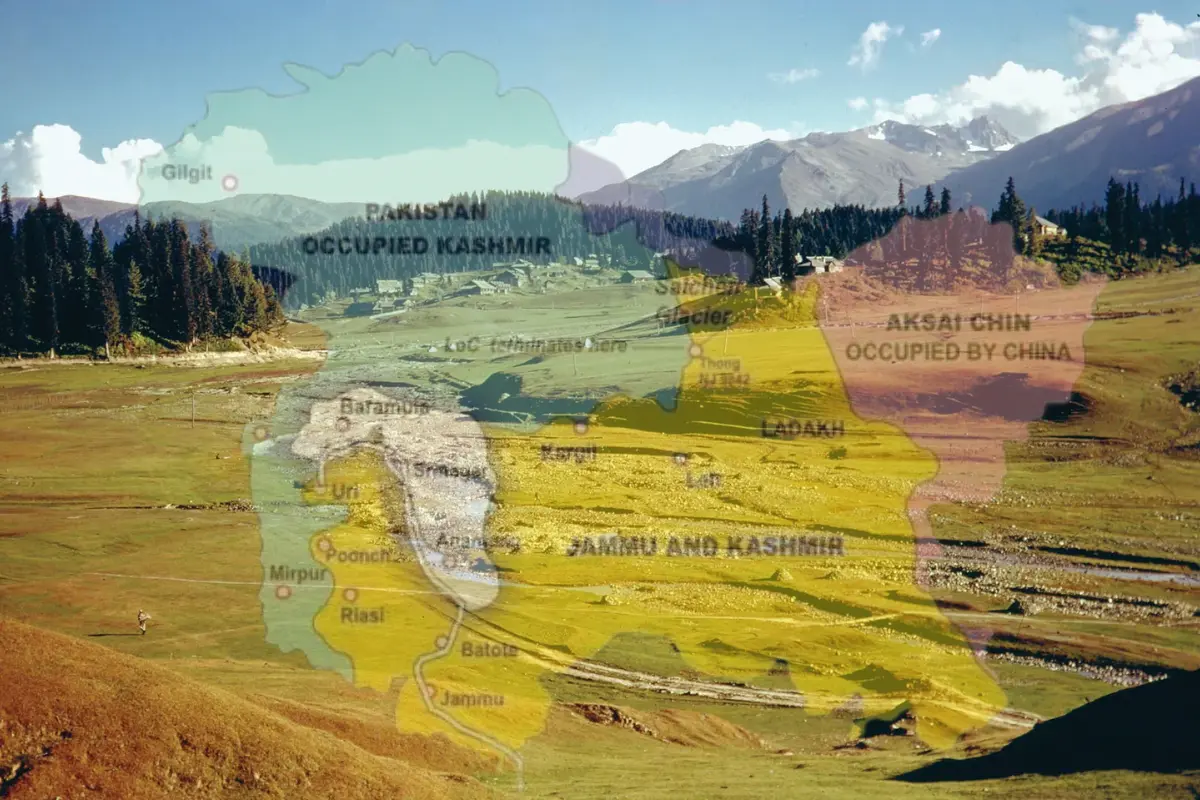
The most common rumour since last week is that the Jammu region is about to become a state, while the Kashmir Valley remains a union territory. The erstwhile state, once ruled by the Dogra dynasty, was divided into two union territories six years ago by separating Ladakh from the rest of Jammu and Kashmir.
The appointment of Kavinder Gupta, veteran BJP leader from Jammu, as the lieutenant-governor of Ladakh just a couple of weeks ago made it clear that that sprawling area would remain separate from Jammu and Kashmir.
Since Gupta was a leading contender for chief ministership of a putative Jammu state, it could also be that he was given this post as a sinecure before a (perhaps younger) leader was made chief minister of a new Jammu state.
Talk of restored statehood went viral after Chief Minister Omar Abdullah announced that he would make sacrifices if that was required to regain statehood. That was evidently in response to talk of the state requiring a new assembly instead of the one that was elected for the union territory.
A long-time MLA pointed out, however, that the Supreme Court had clearly asked the Centre to hold elections and restore statehood — in that order. So, he maintained, there was no question of fresh elections.
There has also been speculation over whether the place might be placed under President’s Rule as soon as statehood was restored — so that action against Pakistan might be more seamlessly undertaken, if strong action was to be taken.
Dividing Is Dangerous
The most dangerous of these various rumours is the one about separating the Jammu region from the Kashmir Valley. As with the partition of Pakistan from India, this could cause uncertainty and suspicions across the Chenab basin. A significant proportion of the Jammu region live around that basin, which is geographically the larger part of the Jammu region.
The populations of Doda, Bhaderwah, and Kishtwar regions are pretty evenly divided between Hindus and Muslims. Bhaderwah in particular is now a powder keg of communal distrust and polarisation. The much smaller Hindu and Sikh populations of Poonch are fearful, and similar uncertainties extend across the Poonch and Rajouri districts — among whichever community happens to be in a minority locally.
Dividing Jammu from Kashmir would almost certainly be followed by demands for Rajouri and Poonch to be further separated, and possibly for the upper Chenab (Kishtwar and Doda) regions too to be separated. Surely, we don’t want a never-ending process of fragmentation!
Generating antagonism, even potentially violence, among the Muslims of Rajouri and Poonch could play into Pakistan’s hands. It would almost be an invitation to foreign forces — possibly from very far afield — to play with fire in this long-troubled part of the country.
It is very possible that Muslims, who form a large majority of those two border districts, could fear neglect in a Hindu-dominated Jammu state. Propaganda of one sort or another could generate a sense of victimhood, alienation and, potentially, separatism.
Layer the Administration
Very soon after the constitutional changes in 2019, I had proposed a more complex administrative system for the state. Within a composite state, I had suggested that the Kashmir Valley and the Akhnoor-Kathua-Ramnagar-Reasi quadrilateral could have an assembly each, with a lieutenant-governor for each.
I had further suggested that Poonch and Rajouri could together have a hill development council of the sort that had worked well in Leh and Kargil districts until those councils were overtaken by the lieutenant-governor’s secretariat. Kishtwar, which has a sprawling area, could have a separate hill development council, and Doda, Bhaderwah, Ramban, and perhaps a part of Reasi could have another.
I had further proposed that all the hill development councils could have a common lieutenant-governor, and that a governor (whose title might even be chief governor) could head the entire sprawling state. He or she could chair a coordinating council, of which lieutenant-governors, chief ministers and a couple of others from the two assemblies, and the chairpersons of the hill development councils could be members.
In any case, it is imperative that local representative bodies, including village panchayats, town councils, and district development boards, be re-established and empowered. These were a great success from 2021 to 2023, but were wound up for no apparent reason.
It’s as if any smoothly functioning peaceable institution or process has to be rooted out, and conflict-generating processes and institutions be nurtured — almost as if that were the design or the policy of some malevolent but powerful forces.
Jammu and Kashmir is arguably the most culturally, demographically and geographically diverse part of the world. Keeping it united, and giving all its people a sense of belonging and safety, is a tough task. Reuniting the state, with a multi-layered administrative system which could ensure that each of its peoples feel secure with at least one or other level of administration, is vital for stability and peace.