


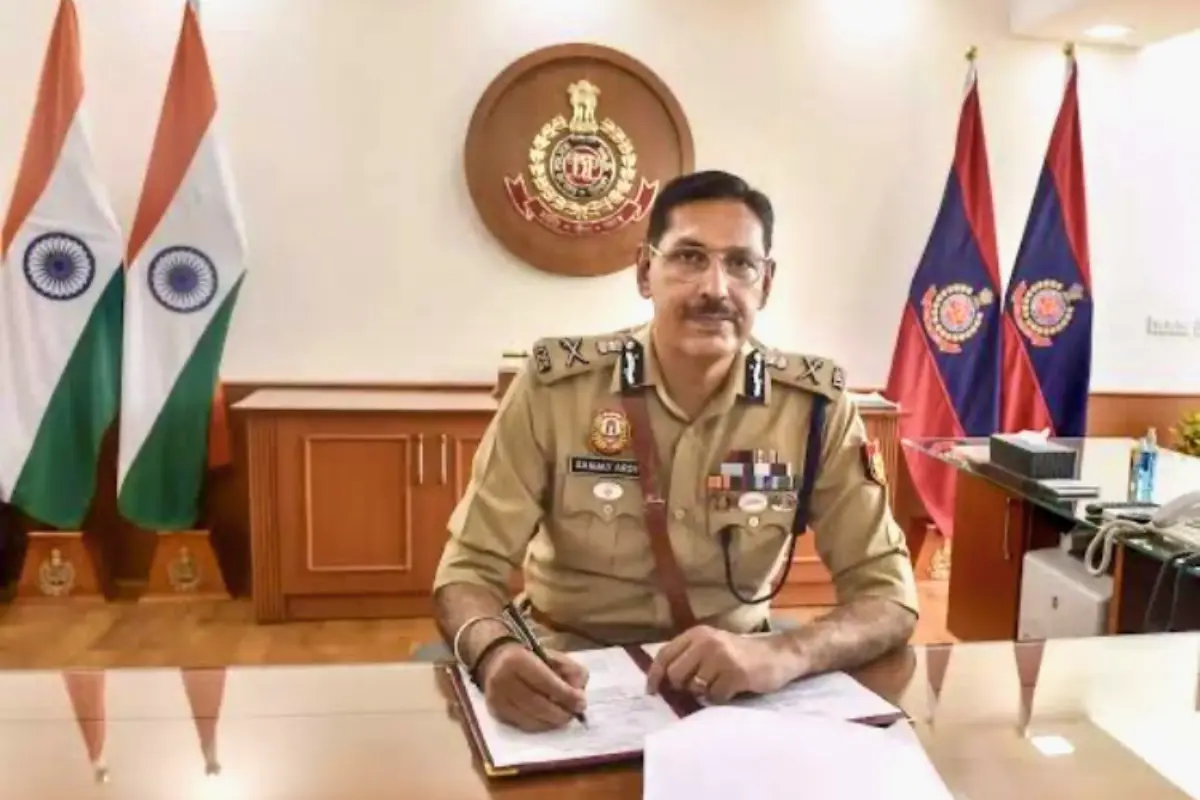






New Delhi: Delhi Police Commissioner Sanjay Arora will not receive a service extension. Arora, a 1988-batch IPS officer from the Tamil Nadu cadre, was appointed as Delhi’s top cop nearly three years ago on August 1, 2022. His retirement is due on July 31, but in an unusual move, the Delhi government’s Deputy Home Secretary Sanjeev Kundu issued an order 50 days prior, confirming that Arora will retire on schedule without any extension.

This early announcement has sparked speculation within the department. Senior IPS officers noted that this is the first time an order regarding the Police Commissioner’s retirement has been issued so far in advance. Reports suggest that Arora had requested a service extension from the Home Ministry, but the Lieutenant Governor, on the ministry’s advice, declined the request, leading to the June 9 order.
Before Arora, Rakesh Asthana, a 1985-batch IPS officer from the Gujarat cadre, was appointed Delhi Police Commissioner by the Central Home Ministry just one day before his retirement from the BSF. Despite efforts to secure an extension, Asthana served for about a year before being replaced by Arora.
Over the past four years, the appointment of non-UT cadre IPS officers as Delhi Police chiefs has left many UT cadre officers disappointed. Critics argue that this trend failed to bring significant improvements, with corruption reportedly increasing during this period. A large number of police personnel were caught accepting bribes, and controversial policies—such as limiting inspectors to three-year tenures as SHOs—backfired, encouraging corruption among officers who feared losing opportunities later.

With Arora’s retirement, expectations are high that the next Police Commissioner will revert to being a UT cadre IPS officer, marking a shift from recent practices.