


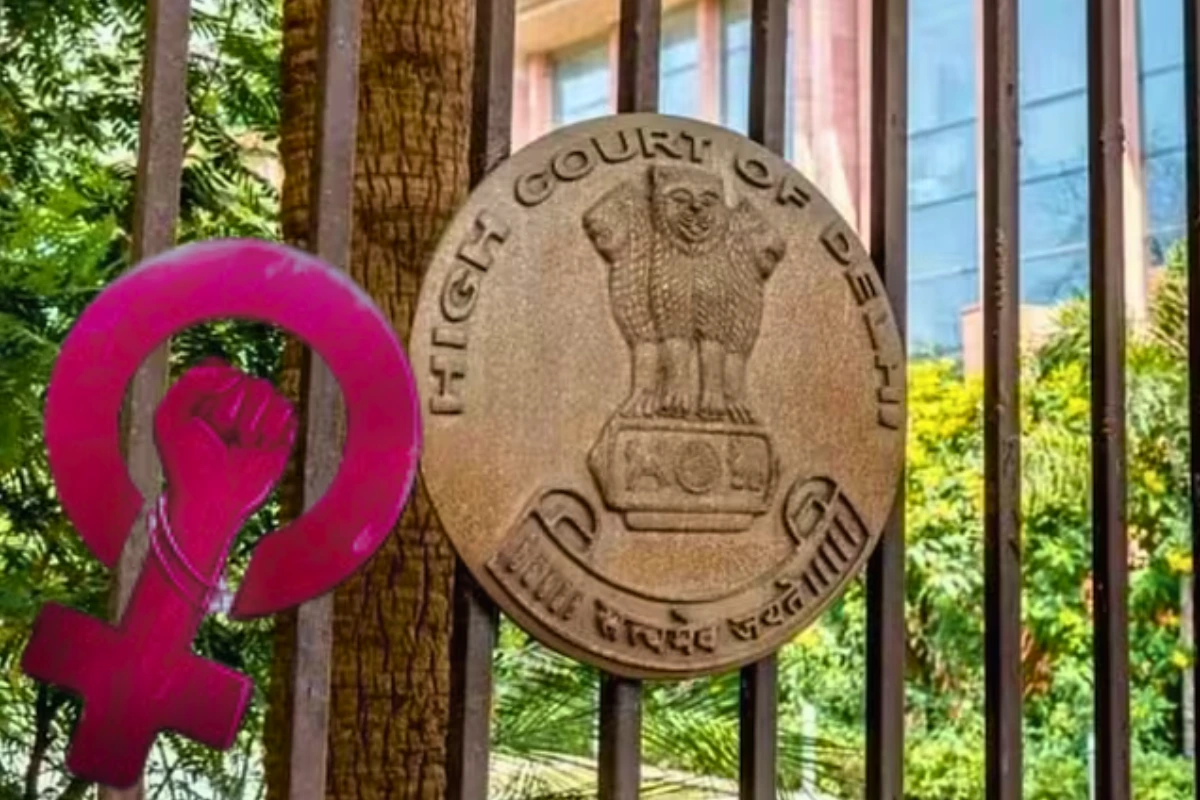






NEW DELHI: The Delhi High Court has issued a notice to the Central government regarding a plea challenging Article 334A of the Constitution, which delays the implementation of women’s reservation in Parliament and State Assemblies until a delimitation exercise is conducted.

A bench comprising Chief Justice Devendra Kumar Upadhyay and Justice Tushar Rao Gedela has also sought the response of Attorney General R. Venkataramani, given that the plea contests the constitutional validity of Article 334A. The petition questions why the reservation, introduced through the Constitution (One Hundred and Sixth Amendment) Act, 2023, is contingent on delimitation and census data.
ALSO READ: Delhi High Court Flags AI as a Security Risk, Seeks Government’s Response on DeepSeek
Delimitation refers to redrawing electoral constituency boundaries based on the latest population figures from a census. Under Article 334A, women’s reservation can only be implemented after the first census conducted following the 2023 amendment, followed by the delimitation process. Since no census has taken place since the law was passed in September 2023, the reservation has yet to take effect.
The petition has been filed by the National Federation of India Women. Representing the petitioner, advocate Prashant Bhushan argued that the provision serves as a tactic to stall the implementation of women’s reservation.
ALSO READ: Haryana cops want to serve summons to Kejriwal | Yamuna river row
“We are only challenging the part that makes the reservation conditional on a future census and delimitation. There is no logical connection between these processes and women’s reservation. It is an arbitrary and unreasonable provision aimed at delaying implementation,” Bhushan contended.
The court pointed out that the petition’s prayer section required correction since it inaccurately referred to the amendment as the “Women’s Reservation Act.” The petitioner agreed to make the necessary revisions.

Following the initial arguments, the court issued notices to the Centre and the Attorney General, scheduling the next hearing for April 9.