


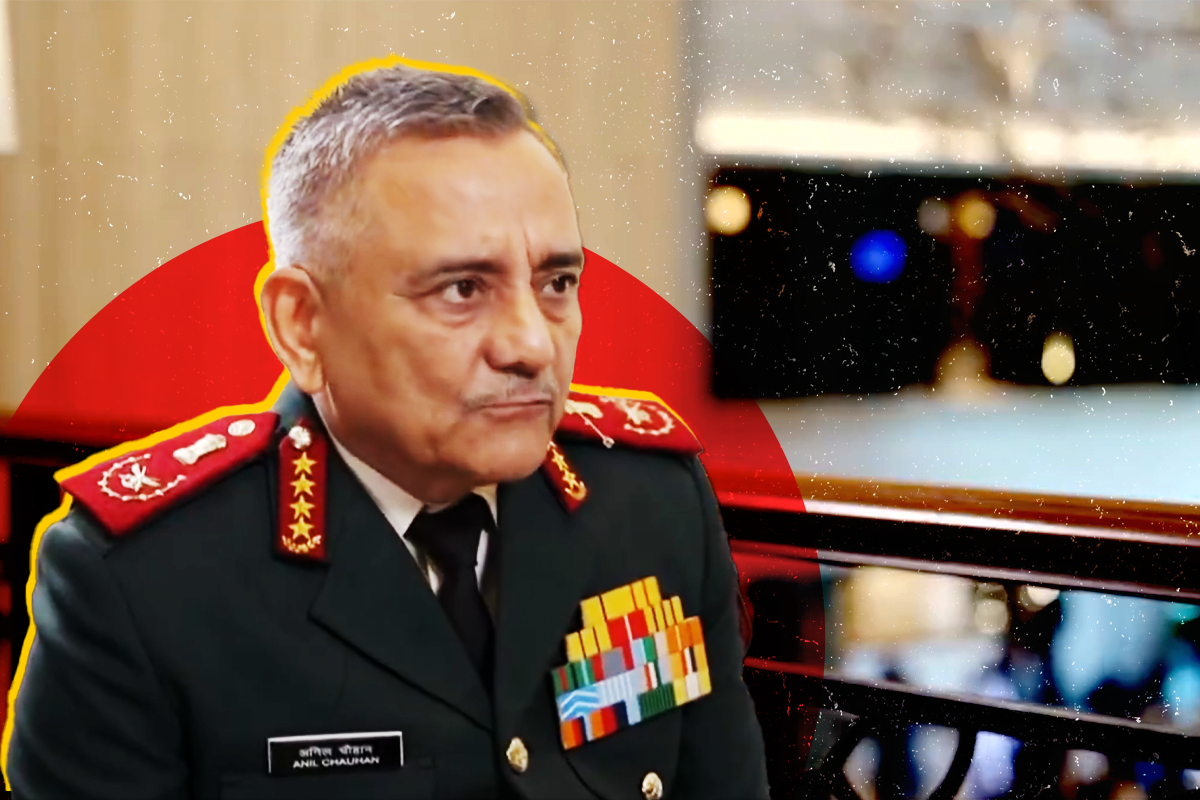






New Delhi: In the first official acknowledgment of air losses during this month’s four-day conflict with Pakistan, India’s Chief of Defence Staff, General Anil Chauhan, confirmed on Saturday that the country did lose fighter jets but declined to specify how many. Speaking to Bloomberg TV at the Shangri-La Dialogue in Singapore, Chauhan emphasised that the significance lay not in the number of aircraft lost but in understanding the reasons behind those losses. While firmly dismissing Pakistan’s assertion of downing six Indian jets as “absolutely incorrect,” he reiterated that the details were less important than the tactical insights gained. According to Chauhan, India swiftly identified its missteps, corrected them, and resumed long-range precision operations just two days later.

The aerial conflict, which occurred between May 7 and 10, was the most serious military engagement between the two nuclear-armed neighbours in over five decades, featuring the exchange of missiles, drones, artillery fire, and air strikes. The violence followed the April 22 killing of 26 civilians in Indian-administered Kashmir, an attack India blamed on Pakistan-supported militants, a charge Islamabad has denied.
India’s military confirmed for the first time that it lost an unspecified number of fighter jets in clashes with Pakistan in May.
Anil Chauhan, chief of defense staff of the Indian Armed Forces, spoke to Bloomberg TV on Saturday, while attending the Shangri-La Dialogue in… pic.twitter.com/9y3GW6WJfn
— Bloomberg TV (@BloombergTV) May 31, 2025
Pakistan’s Prime Minister Shehbaz Sharif had earlier claimed responsibility for shooting down six Indian aircraft, a claim that had not been verified until Chauhan’s remarks refuted it outright. India had until now remained silent on whether it had sustained aerial losses.
ALSO READ: India’s Covid-19 Cases Climb to 2,710; Kerala, Maharashtra, Delhi Worst Hit
General Chauhan also dismissed the notion that the confrontation risked nuclear escalation, calling such fears “far-fetched.” He asserted that ample room exists between conventional military operations and any nuclear threshold, adding that communication lines between India and Pakistan remained open throughout the standoff. In response to reports that Pakistan used Chinese-supplied weapon systems during the hostilities, Chauhan was unequivocal: “They didn’t work.” He stated that Indian forces successfully conducted deep strikes into Pakistani territory, targeting airfields 300 kilometers inside with meter-level accuracy.
Although a ceasefire is currently in place, Chauhan underlined that its continuation depends squarely on Pakistan’s conduct going forward. He confirmed that India has made its red lines clear and will continue to act within them while monitoring developments closely.