


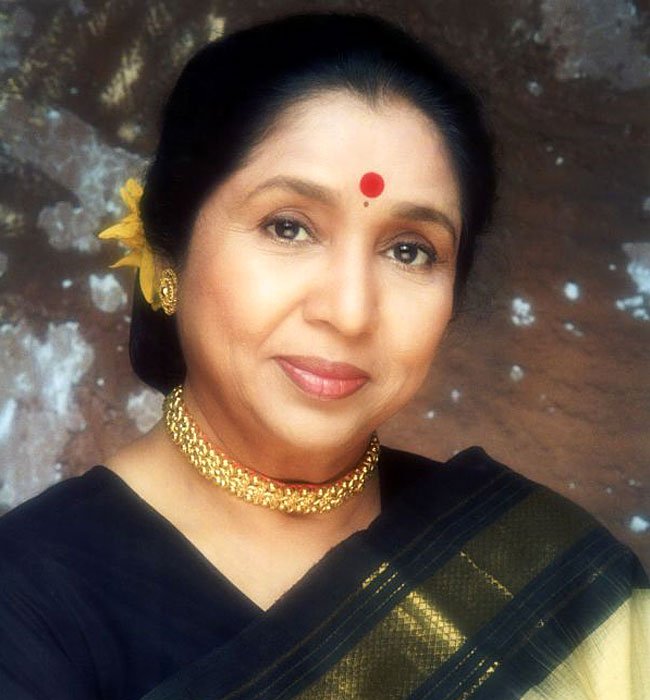






Mumbai: Legendary Indian playback singer Asha Bhosle, whose versatile voice defined Bollywood for more than seven decades, died Sunday at age 92 in Mumbai’s Breach Candy Hospital after suffering multiple organ failure, her family confirmed.

Bhosle was admitted to the hospital Saturday evening following extreme exhaustion and a chest infection that led to cardiac and respiratory complications, according to hospital sources. She was placed in intensive care but could not be revived.
Her death marks the end of an era for Indian cinema, where she lent her voice to more than 12,000 songs across Hindi, Marathi, Bengali, Tamil and dozens of other languages, from soulful ballads to playful qawwalis and Western pop-fusion tracks.
Her son, Anand Bhosle, issued the family’s first official statement confirming the news. “She passed away today,” he told reporters. “Those who wish to pay their last respects can visit her residence tomorrow at 11 a.m. The last rites will be performed tomorrow at 4 p.m. at Shivaji Park.” The family requested privacy during her final hours but opened the doors for public tributes at her Lower Parel home, Casa Grande.
News of Bhosle’s passing triggered an outpouring of grief across India and Indian film industry, with top leaders and stars taking to X (formerly Twitter) to pay tributes and share personal memories.
Prime Minister Narendra Modi was among the first national leaders to pay tribute, calling her “one of the most versatile voices” in Indian music. Union Home Minister Amit Shah posted a lengthy homage on X, praising her “melodious voice and unparalleled talent” that enriched Indian music across genres and languages.
Actor Akshay Kumar posted: “No words can convey the loss I feel at Asha Bhosle ji’s demise. Unki surily awaaz hamesha hamesha ke liye amar rahegi. So many memories, so many emotions tied to that voice. It feels like a part of our growing up has gone silent today.” He added his condolences to her family and fans.50
Vivek Oberoi echoed the sentiment with a poetic nod to one of her signature songs. “Asha Tai, you were the rhythm in our pulse and the soul in our stories. ‘Abhi na jao chhod kar, ke dil abhi bhara nahi…’ Today, our hearts are heavy, but we find peace knowing your voice is now a part of the stars,” he wrote, sharing throwback photographs.
South Indian actor Vikram Prabhu recalled her warmth off-stage: “A legend passes on Asha Bhosle ji. She was the sweetest person to talk to & always had sweet words of advice for us.”
Born Asha Mangeshkar on Sept. 8, 1933, in Sangli, Maharashtra, Bhosle stepped into the shadow of her elder sister, the late Lata Mangeshkar, but quickly forged her own path with a range that few could match. She recorded her first song at age 10 and went on to collaborate with every major music director of post-Independence India, from S.D. Burman and R.D. Burman (her second husband) to A.R. Rahman. Hits such as “Dum Maro Dum,” “Chura Liya Hai Tumne,” “Kajra Mohabbat Wala” and “Yeh Mera Dil” became cultural touchstones, crossing linguistic and generational lines. Her songs for Umrao Jaan movie, composed in a distinct genre and sung in her unique style, elevated her stature and immortalised her voice in the world of Hindustani music.
Even in her 80s and 90s, Bhosle continued performing live and recording, most recently featuring on British virtual band Gorillaz’s 2026 album. She received the Padma Vibhushan, India’s second-highest civilian award, and held Guinness World Records for the most recorded artist.
Bhosle is survived by her son Anand and grandchildren. Her daughter Varsha and elder son Hemant predeceased her. Funeral arrangements are expected to draw thousands of mourners to Shivaji Park on Monday, where the singing legend will be cremated in a ceremony reflecting her deep roots in Maharashtra.

Her family has asked fans to celebrate her life through her music rather than public displays of grief. Yet across India and the Indian diaspora, radios and streaming platforms were already filling with her timeless recordings — a final, fitting farewell from the voice that refused to fade.