


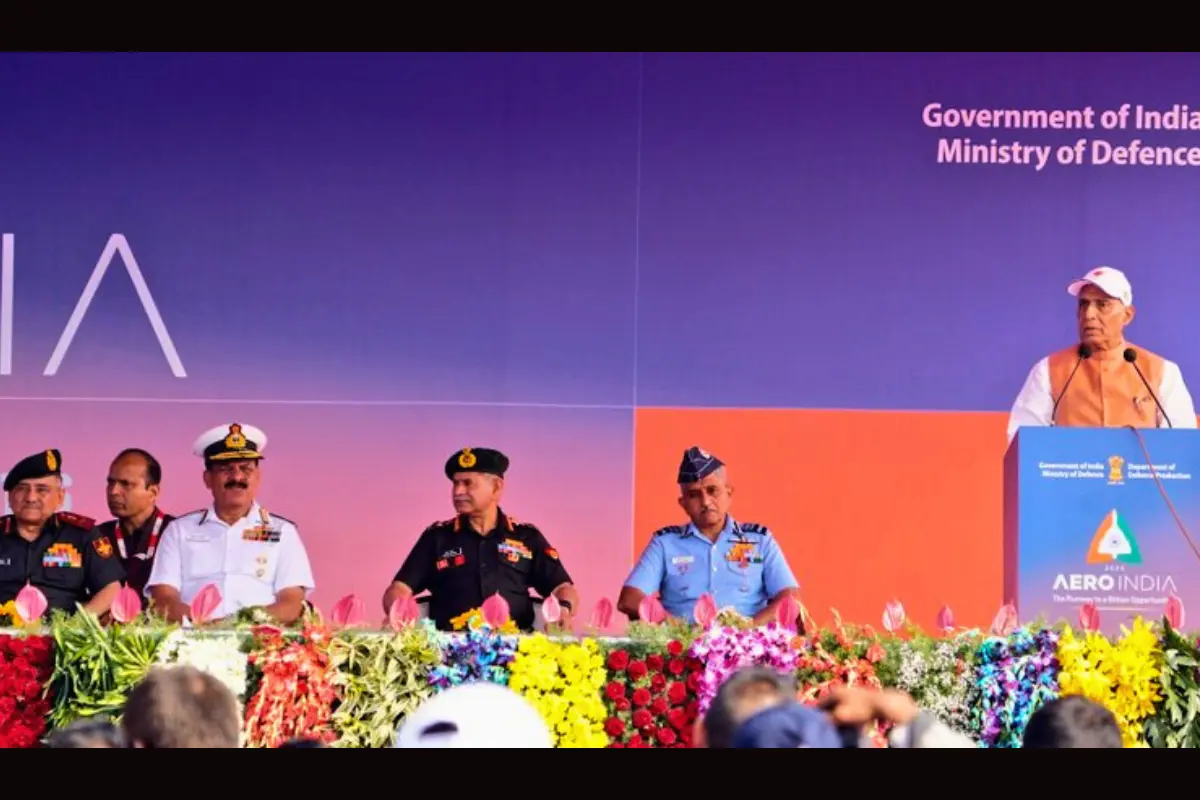






NEW DELHI: The biennial Aero India 2025, Asia’s largest aerospace and defence exhibition, has kicked off at the Yelahanka Air Force Station, showcasing India’s latest advancements in military aviation, defence technology, and self-reliance initiatives. Inaugurated by Defence Minister Rajnath Singh, the event has drawn global attention as India continues its strategic push towards reducing dependence on foreign arms imports while expanding its footprint in the global defence export market.

A short film on #AeroIndia2025—Asia’s biggest airshow returns for its 15th edition!
Get ready for a spectacular showcase of aerial displays, cutting-edge aviation technology, and India’s advancements in defence and aerospace.#AeroIndiaShow #AeroIndia #AatmanirbharDefence… pic.twitter.com/zQ7wdMGwqu— Aero India (@AeroIndiashow) February 9, 2025
A key highlight of the event is the India Pavilion, a dedicated space emphasizing the country’s ‘Atmanirbhar Bharat’ vision in defence and aerospace. Featuring over 900 exhibitors, including 150 foreign companies, the pavilion serves as a testament to India’s progress in unmanned systems, AI-driven combat solutions, electronic warfare, and advanced missile technology.
AI, Autonomy, and Next-Generation Warfare
Artificial intelligence and autonomy remain focal points of India’s military innovation drive. Several indigenous systems making their debut at the India Pavilion underscore this shift:
Mule NSUAS – Varun Mk1: A next-generation logistics drone designed to operate in contested environments, ensuring safe supply chain operations in high-risk zones.
ALSO READ: India, China to resume pilgrimages, restore flights, address trade issues
Autonomous Multi-Mode Amphibious Drone: Capable of operating across land, water, and air, this unmanned system is designed for surveillance, reconnaissance, and special forces missions.
MBC2 Swarm Drone System: Marking a leap in swarm warfare technology, this system enhances India’s ability to conduct coordinated UAV attacks and reconnaissance missions.
AI-Powered Mission Planning & Debrief Systems: Leveraging machine learning to optimize mission strategy, this tool is expected to revolutionize battlefield decision-making.
These advancements align with global trends in unmanned combat and AI-driven warfare, positioning India as a key player in the future of military technology.
Defence Electronics: India’s Leap in Secure Communications and Radar
India’s quest for self-reliance is evident in its latest breakthroughs in defence electronics, particularly in electronic warfare (EW), radar technology, and secure communications:
Indigenous P-098 Modem: A military-grade encrypted communication system ensuring secure data exchange for frontline troops.
ALSO READ: Army chief more worried for Bangladesh due to China’s dam project
Gallium Nitride (GaN) Semiconductor Solutions: Enhancing radar and EW systems, providing better efficiency and resilience in electronic combat.
LTE-Based Passive Radar: A cost-effective, non-emitting radar system enhancing stealth surveillance capabilities.
D4 Radar for Anti-Drone Systems: Designed to counter UAV threats in asymmetric warfare scenarios.
These technologies reflect India’s growing expertise in defence electronics and its ambitions to become a leading exporter in this sector.
Missile Systems and Airborne Defence Capabilities
With over 90 participating countries and the presence of key global defence leaders, India’s advancements in missile technology and air defence systems have been a major attraction at Aero India 2025. The India Pavilion showcases cutting-edge developments, including:
Astra Missile: A homegrown beyond-visual-range air-to-air missile (BVRAAM) integrated with India’s frontline fighter jets.
Naval Anti-Ship Missile (Medium Range): Strengthening India’s maritime strike capabilities in contested waters.
Rudram-II: A next-gen air-launched anti-radiation missile (ARM) designed to neutralize enemy radars.
ULPGM (Ultra-Light Precision Guided Munition): Tailored for high-altitude warfare and urban combat scenarios.
With India targeting ₹50,000 crore ($6 billion) in defence exports by 2029, these systems are expected to attract interest from global buyers, especially in Southeast Asia, the Middle East, and Africa.
Global Collaborations and Strategic Partnerships
Aero India 2025 has become a hub for international defence collaborations, with defence ministers, air chiefs, and over 100 global CEOs attending high-profile events such as:

Defence Ministers’ Conclave: Scheduled for February 11, focusing on supply chain resilience, strategic defence partnerships, and Indo-Pacific security.
CEOs’ Roundtable: Bringing together leading defence manufacturers to discuss joint ventures and new technology collaborations.
Potential Defence Deals: Discussions on UAV sales to Southeast Asian and African nations, naval system exports, and missile technology partnerships with Western and Middle Eastern allies.
ALSO READ: Rajnath Singh stresses need-based growth, honors Sugathakumari
Indo-Pacific Strategy and India’s Growing Defence Market
India’s increasing role as a regional security provider in the Indo-Pacific is reflected in its engagements at Aero India 2025. The event highlights:
India’s Position as an Alternative to Western and Chinese Defence Suppliers: Providing cost-effective, reliable, and battle-tested solutions for emerging defence markets.
Strengthened Maritime Security Cooperation: Collaboration with Indo-Pacific allies on naval technology, anti-submarine warfare, and surveillance capabilities.
Rising Defence Exports: India’s defence exports reached a record ₹21,083 crore in 2023-24, marking a 32.5% growth, underscoring the nation’s expanding presence in the global arms market.
What’s Next at Aero India 2025?

With record-breaking attendance from policymakers, defence officials, and industry leaders, the coming days will be pivotal in shaping India’s defence export policies, procurement strategies, and international partnerships. Expectations include official announcements on new defence procurement policies, unveilings of next-generation fighter jets and missile systems etc.