








From maritime security in the Indian Ocean to joint development of advanced defense technologies, U.S.–India defense cooperation is expanding in both scope and ambition. The recently signed Framework for the U.S.–India Major Defense Partnership sets the course for the next decade of operational and industrial collaboration.

Renewed every 10 years, the Framework serves as the foundation for defense cooperation between Washington and New Delhi and serves as the anchor document for the relationship. It reflects the two countries’ strategic convergence and their intention to deter conflict in the region. It provides vision and direction for the Major Defense Partnership, benefiting both the U.S. and Indian systems.
Advancing regional security
Regional and global security remain central to the partnership. Bilateral defense cooperation increases interoperability at the tactical, operational, and strategic levels, which, in turn, enhances multilateral efforts like those led by the Quad and Combined Maritime Forces.
Maritime cooperation is especially significant. U.S. engagement with India stretches from East Africa to the Strait of Malacca and beyond. U.S. cooperation with India’s navy, the only resident blue water navy in the Indian Ocean, supports the national security objectives of both the United States and of India to ensure freedom of navigation and reliable supply chains for all. The Indian Ocean supports two-thirds of the world’s oil shipments and one-third of its bulk cargo traffic.
Interoperability in action
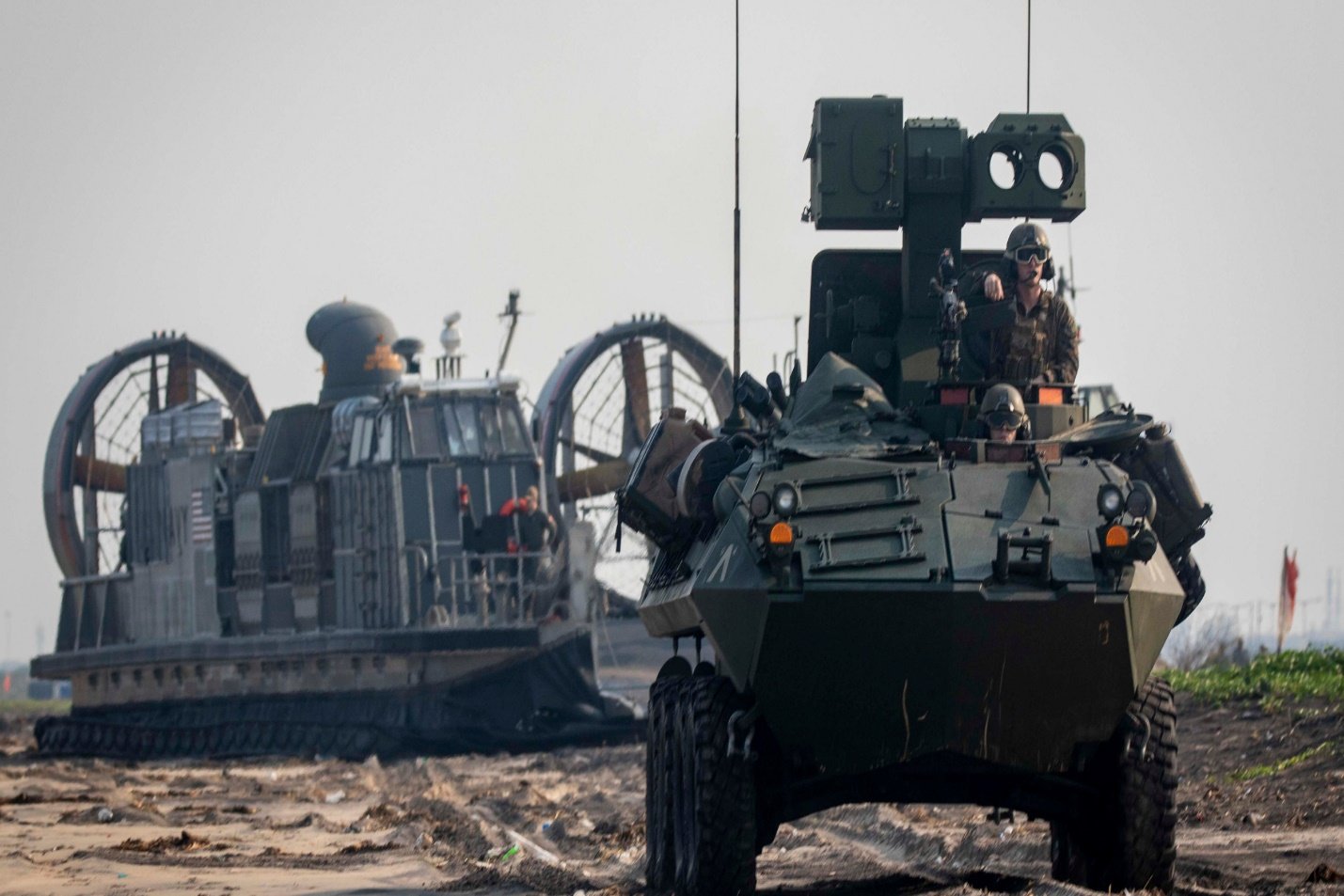
The Framework emphasizes operational interoperability across domains. Exercises such as Yudh Abhyas, Malabar, Tiger Triumph, and Cope India integrate land, maritime, air, space, and cyber components, strengthening the ability of U.S. and Indian forces to operate together. Logistics cooperation further enhances that coordination. Expanded use of shared airlift, air refueling, and replenishment at sea enables faster and more efficient responses to regional challenges and humanitarian crises.
Information sharing is equally critical. Secure communications and data exchange help create a shared operating picture, and the Framework emphasizes better information exchange at all levels to enable greater situational and domain awareness. Existing agreements, including the Communications Compatibility and Security Agreement (COMCASA) and the Basic Exchange and Cooperation Agreement (BECA), support this coordination and ensure that U.S. and Indian forces can coordinate effectively during peacetime, crises, and contingencies.
Technology and industrial cooperation
Beyond operational coordination, the Framework deepens defense trade and industrial cooperation. The Framework’s senior-level direction provides a key impetus for expanded defense sales and co-production, strengthening alignment between the two militaries. But the emphasis goes further than expanded trade. The Framework signals a structural shift in how the two countries collaborate and represents a significant evolution in bilateral defense ties transforming defense industrial cooperation between the two nations from a traditional buyer-seller relationship into a genuine partnership that leverages the technological strengths and manufacturing capabilities of both countries.
Advanced and emerging technologies are central to that evolution. Collaboration in artificial intelligence, human-machine teaming, advanced materials, and manufacturing reflects a shared effort to maintain technological advantage.
The Framework envisions joint development and production across critical areas including intelligence, surveillance, and reconnaissance; undersea domain awareness; air combat and support; air and space domain awareness; munitions; and mobility. It also supports developing India as a regional hub for logistics, maintenance, repair, and overhaul, promoting market access for defense equipment, and reviewing export control restrictions.
Private-sector engagement is central to these efforts. The U.S.-India Defense Technology and Trade Initiative (DTTI) and the India-U.S. Defense Acceleration Ecosystem (INDUS-X) will continue facilitating private sector partnerships among American and Indian companies, investors, and researchers. These initiatives strengthen supply chains and support industrial resilience.
Building trust through training
Beyond platforms and technology, the Framework invests in people. It provides opportunities for more integrated, operationally relevant training by linking education more closely with joint exercises.
Building trust through training
Beyond platforms and technology, the Framework invests in people. It provides opportunities for more integrated, operationally relevant training by linking education more closely with joint exercises.
Professional Military Education remains a central pillar. The Framework reinforces the current robust bilateral Professional Military Education (PME) engagement through International Military Education and Training (IMET). Expanded exchanges and institutional partnerships are designed to build familiarity and trust over time, because institutionalizing personnel exchanges supports long-term professional relationships and strengthens cooperation at the tactical, operational, and strategic levels.

This article was first published by SPAN magazine, a publication of the U.S. Embassy in New Delhi. Since 1960, SPAN has fostered greater understanding between the United States and India through stories on science, technology, education, culture, and bilateral relations in English, Hindi, and Urdu.