


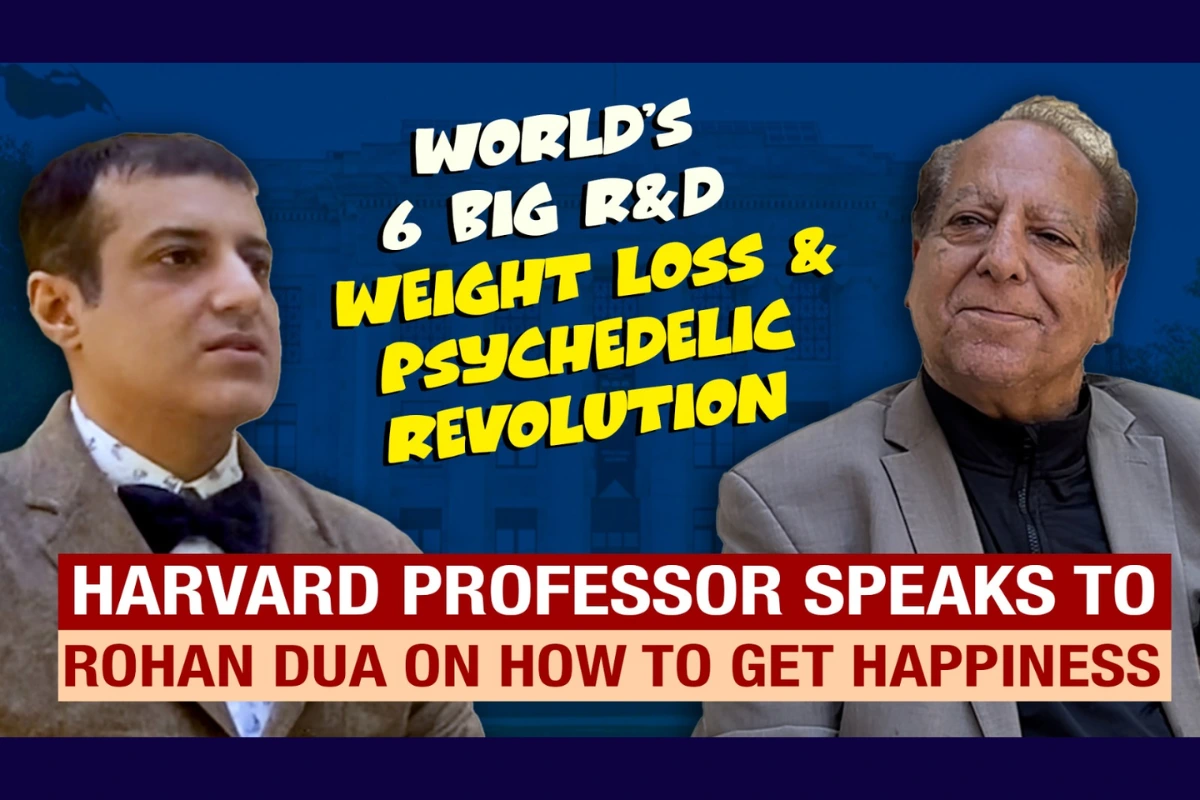






BOSTON (MASSACHUSETTS): Beyond his expertise in liver diseases, Harvard professor Dr. Sanjiv Chopra is known for blending medical science with unconventional explorations of happiness and brain chemistry. In a recent conversation, he shared his thoughts on psychedelic foods, endorphins, and how these substances and hormones shape human emotions.

Dr. Chopra describes psychedelics as powerful agents that can alter perceptions, emotions, and cognition.
“There are foods and substances that act like psychedelics. They interact with the brain’s chemistry in ways we are only beginning to understand,” he explains.
The physician noted that in controlled conditions, psychedelic agents — including certain naturally occurring foods — can produce experiences similar to those triggered by meditation or spiritual practice.
“The wound is where the light enters you,” he quotes the Sufi poet Rumi, linking the transformative effects of psychedelics to human resilience.
But for Dr. Chopra, it’s not only about psychedelics themselves — it’s also about harnessing endorphins, the body’s natural “feel-good” hormones. He pointed out that endorphins are crucial in stress relief, pain control, and creating the sense of euphoria often described as a “runner’s high.”
“People often ask — can we measure endorphins? The answer is yes,” he says.
“There are laboratory tests, but the most immediate way to notice them is in your own body: when you laugh deeply, when you exercise vigorously, or when you experience true joy, your endorphins are flooding your system.”
According to him, these simple acts — laughter, gratitude, exercise — can be more sustainable than artificial or external stimulants. “If you cultivate gratitude, you will see how endorphins manifest. That’s nature’s own psychedelic,” he said with a smile.
But Dr Chopra warns against uncontrolled or recreational misuse of psychedelic substances, underlining the importance of context, moderation, and scientific oversight.
“These are not toys. They can open doors, but they can also create chaos if misused,” he says.
His broader philosophy ties the science of endorphins to everyday happiness.
Known in New Zealand as “Dr. Happy” for his lectures on happiness and health, he encourages people to explore natural ways of boosting brain chemistry.
“I tell my audiences: if you want to feel the surge of endorphins, dance, laugh, meditate, or express gratitude. You don’t always need a pill or a psychedelic substance. Your brain is capable of producing its own.”
In drawing parallels between ancient wisdom and modern science, Dr. Chopra explains that cultures worldwide have historically used psychedelic plants in rituals for healing and self-discovery. “Today, science is catching up. We’re studying what shamans and healers knew for centuries — that certain foods and plants can expand the mind and create a shift in perspective.”
Yet he keeps circling back to one point: gratitude and resilience can be the strongest psychedelic of all. “I could see things evolving, the things that are going to be huge in the next 20–25 years,” he remarked, suggesting that medical science will continue to unravel the mysteries of endorphins and psychedelics.

His advice remains simple: “Harness your body’s chemistry by living a grateful life. That’s the most sustainable way to activate endorphins — your inner pharmacy.”