








Author: Bhaavna Arora

Why Islamabad’s moral grandstanding rings hollow
Pakistan routinely styles itself as a guardian of Muslims in India. Yet an unflinching look within its own borders—especially Balochistan, Khyber Pakhtunkhwa (KPK), “Azad” Jammu & Kashmir (AJK/PoK), and Gilgit-Baltistan (GB)—reveals a sustained pattern of repression: enforced disappearances, extrajudicial killings, collective punishment, weaponised blasphemy laws, and a shrinking civic space for ethnic and religious minorities.
The contrast with the democratic churn and voter participation across the Indian Union Territory of Jammu & Kashmir (J&K) over the last year is stark.
A week that laid the hypocrisy bare
On 22–23 September 2025, at least two dozen people—including women and children—were reported dead after a predawn series of explosions in the Tirah Valley of KPK. Local accounts and opposition figures alleged Pakistani air force strikes; officials initially blamed a militant bomb-factory blast. As outrage grew, India told the UN Human Rights Council that Pakistan is a “nation that bombs its own people,” urging objectivity and accountability.
While the modalities of the Tirah incident are still contested, the pattern is not: collective punishment, opaque “operations,” and denial—followed by intimidation of critics—has long been the state’s playbook in the northwest and in Balochistan.
Balochistan: the long emergency
Enforced disappearances & killings. Pakistan’s own Commission of Inquiry on Enforced Disappearances (COIED) has registered 10,078 cases since 2011, with 2,752 in Balochistan (and 3,485 in KPK)—figures rights groups say undercount reality. Independent monitors in Balochistan reported 830 enforced disappearances and 480 extrajudicial killings in 2024 alone, reflecting entrenched impunity.
Communities at the forefront. The Baloch Yakjehti Committee’s mass, women-led protests against disappearances and “kill-and-dump” practices have faced heavy crackdowns, even as families march for years to demand the return of loved ones. International outlets and NGOs have chronicled these mobilisations and the state’s reprisals.
Resource extraction without rights. Balochistan’s mineral and coastal wealth (Gwadar/CPEC) fuels resentment over dispossession without local consent or benefit—repression rises whenever citizens organise against this model. Pakistan’s human-rights community has repeatedly warned of the security-for-investment paradigm overwhelming basic rights.
Why this matters now. The KPK bombings and ongoing train/bus attacks underscore an escalatory environment where the state frames dissent as militancy and responds with force first, accountability later—if at all.
Pakistan’s minorities under siege
1) Ahmadis
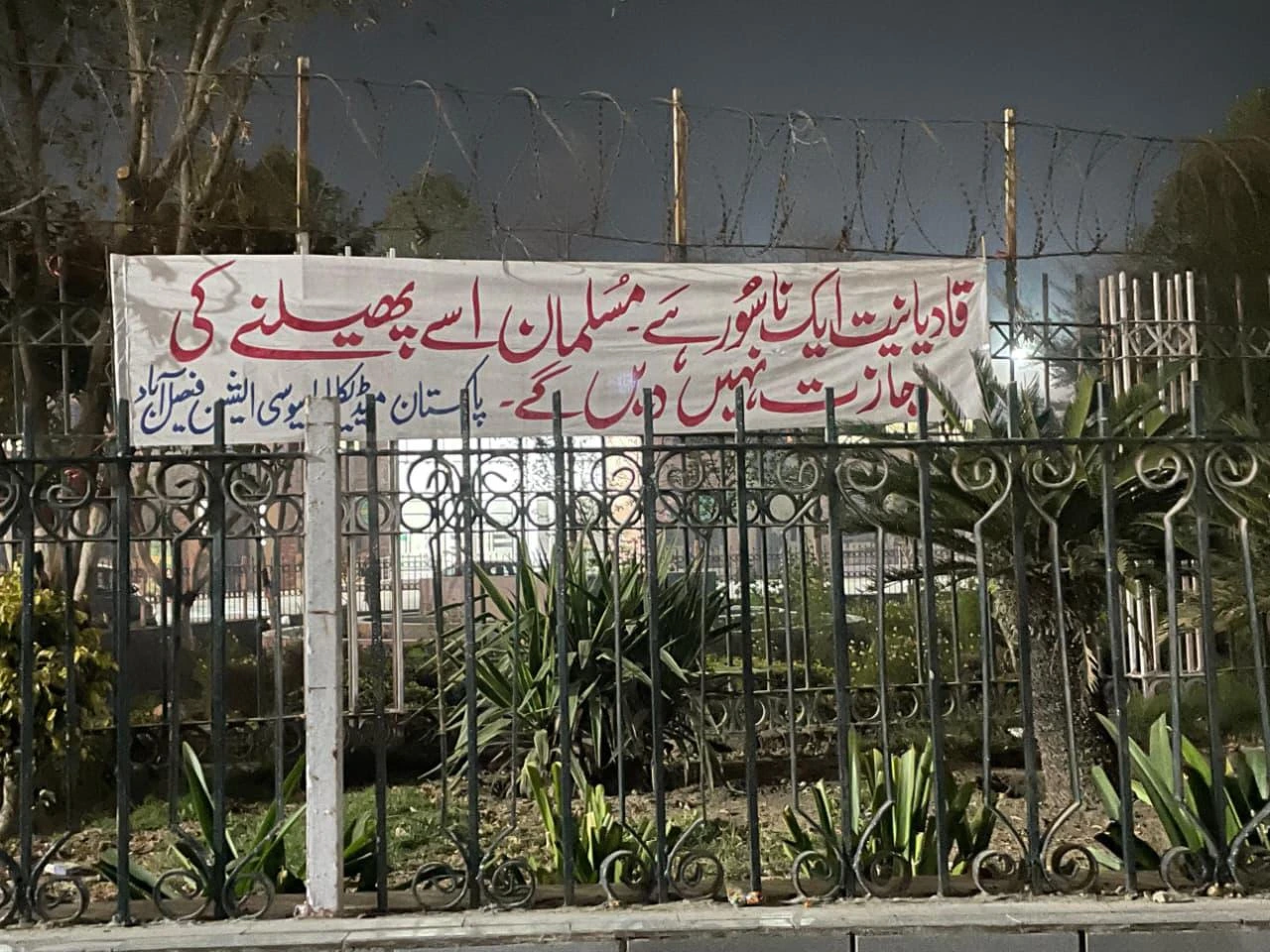
A constitutional excommunication (1974) and Ordinance XX (1984) criminalise basic Ahmadi worship. A March 2025 UK government brief confirms continuing legal disabilities and under-counting; community tallies since 1984 list 277 murdered, 4,280 prosecuted on religious charges, and 245 mosques desecrated. Recent joint calls urge Pakistan to end systemic repression.
- In May 2025, Dr. Sheikh Mahmood, an Ahmadi physician in Sargodha, was shot dead at a private hospital. The motive remains officially unclear; local Ahmadi leaders say this is part of a pattern of targeting the community.
- Ahead of Eid-ul-Adha 2025, Amnesty International documented that authorities pressured Ahmadis to sign affidavits forbidding them from publicly praying, and in several localities prevented celebration outright.
2) Christians
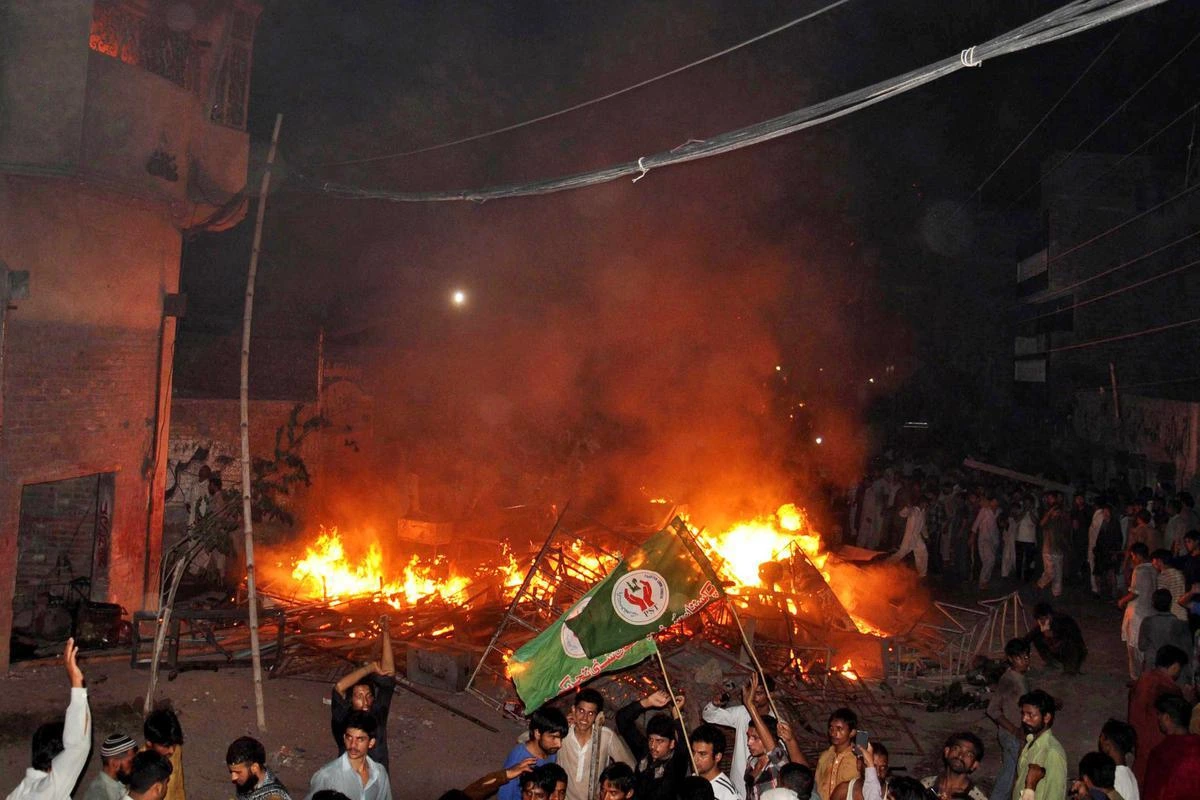
Mob violence weaponised through blasphemy narratives persists. In Jaranwala (Aug 2023), 22–69 churches and >80–hundreds of homes were attacked; the Supreme Court rejected the police’s initial report in Feb 2024 for being inadequate. In 2024–25, blasphemy-linked lynchings and even death sentences continued.
- In May 2024, a Christian settlement in Sargodha (Punjab, eastern Pakistan) was attacked over blasphemy allegations: houses and a shoe factory burned, several Christians beaten, protesters threw bricks and stones.
- In August 2023, in Jaranwala, Punjab, 26 churches were torched by mobs reacting to false Quran desecration claims. Churches were looted, Christian homes attacked, and a Christian cemetery vandalised.
- In June 2025, Human Rights Watch released a report titled “A Conspiracy to Grab the Land” showing how blasphemy laws are systematically weaponised for land grab and extortion against non-Muslims and dissenters. The laws allow accusations to be used as leverage.
3) Hindus (especially in Sindh)
Credible fieldwork documents forced conversions and coerced marriages of Hindu girls; HRCP’s 2024 study of Sindh records patterns of abduction, conversion at shrines, and weak legal redress. Multiple civil society updates through 2025 show the practice persists.
- In June 2025, three Hindu sisters (ages ~15, 19, and 21) and a male cousin (13) in Sindh province were allegedly abducted and forcefully converted to Islam. Local media downplayed it, claiming “willing conversion,” even as the family contested that narrative.
- In Sindh, courts have reportedly demanded Hindu families pay USD 35,000 to recover abducted children who converted to Islam.
- A recent Pakistan National Commission on the Rights of the Child (NCRC) report finds systemic discrimination: minority children (Christian, Hindu) are particularly vulnerable to forced conversions, child marriages, bonded labour.
- UN human rights experts, in April 2024, expressed alarm at the lack of protection for minority girls from abduction and forced religious conversion in Pakistan.
- A rights-monitoring forum documented widespread cases of abduction, forced conversion, exploitation of minority girls and boys especially in Sindh, calling it a collapse of minority rights protections.
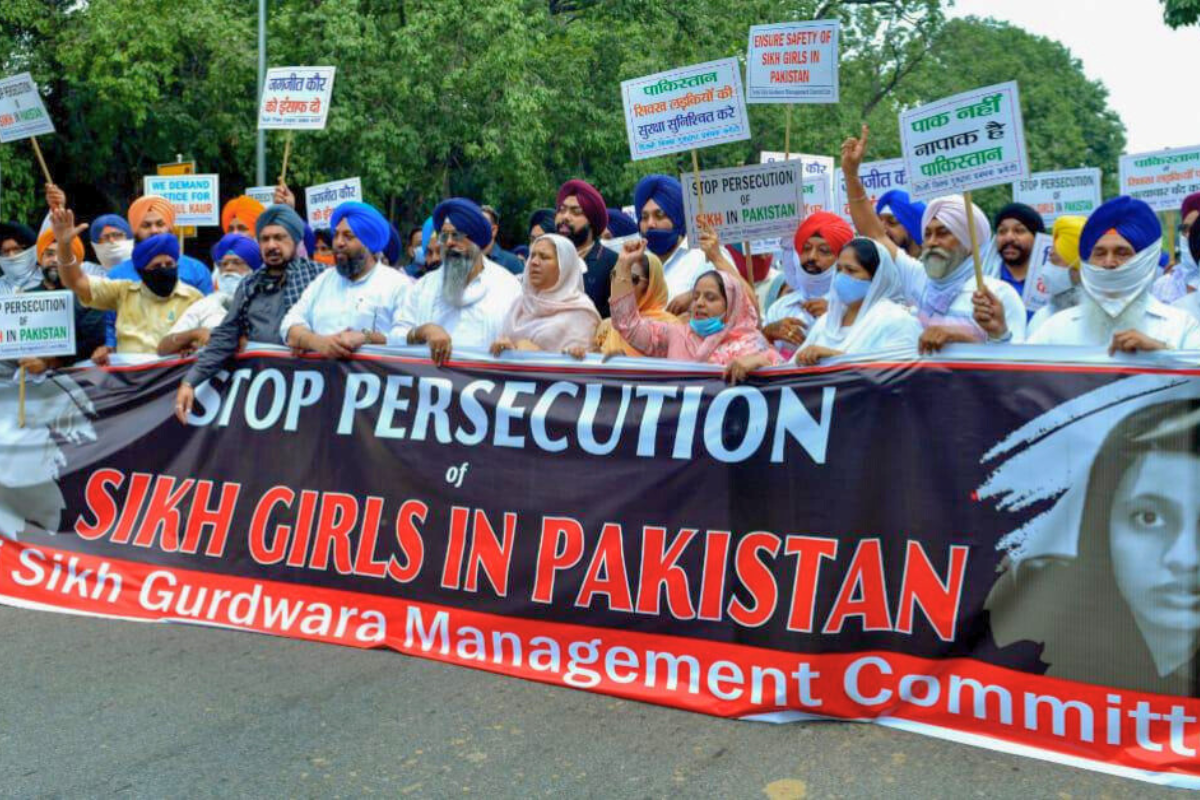
4) Sikhs
Targeted killings in KPK—often Peshawar—have serially hit a tiny, shrinking community (e.g., multiple assassinations 2022–23).
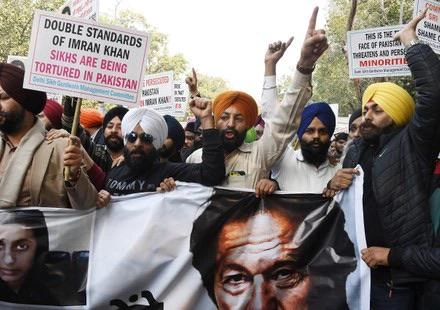
Families and local press identify a climate of fear and impunity.
- Targeted killings in KPK: In June 2023, Manmohan Singh, a Sikh shopkeeper in Peshawar, was shot dead by militants. His killing triggered fear and displacement among local Sikh families, many of whom fled Khyber Pakhtunkhwa under rising violence.
- Peshawar double murder (2022): Two Sikhs were gunned down in broad daylight in Peshawar, part of a series of assassinations that have drastically reduced the once-thriving community.
- Forced marriage & conversion (2022): Protests erupted in KPK after a young Sikh woman was allegedly abducted, converted, and married off against her will.
- Taliban beheadings (2010): In a chilling episode, the Pakistani Taliban beheaded Sikh men in FATA after demanding conversion to Islam, sending their severed heads to a gurdwara in Peshawar.
- Heritage neglect: The historic Samadh of Mahan Singh (father of Maharaja Ranjit Singh) in Gujranwala lies in neglect, with Sikh groups urging Pakistan to restore it, seeing cultural disregard as part of systemic marginalisation.
5) Shias and other Muslims
Blasphemy and “sedition” provisions are used across sects; watchdogs document the “legal process as punishment” and a rising “blasphemy economy” driven by offline/online vigilantism.
- On 21 November 2024, in Kurram District (KPK), gunmen ambushed a convoy of Shia pilgrims, killing 54 and injuring 86.
- Sectarian violence remains frequent, and human rights experts warn of “widespread impunity” for sectarian killings and discrimination against Shias in Pakistan (2025 UN experts statement).
PoK (AJK) & Gilgit-Baltistan: democracy denied, dissent criminalised
Price-hike protests met with bullets and shutdowns. In May 2024, AJK saw mass demonstrations over electricity and wheat prices; at least 3–4 people were killed, >90–100 injured, and dozens arrested before Islamabad rushed an Rs 24 billion (≈USD 86 million) subsidy to quell anger. Internet disruptions and preventive detentions were reported.
GB’s rolling unrest. GB witnessed a month-long shutdown over wheat prices and broader autonomy/economic demands; more recently, rights groups flagged a federal crackdown on dissent at the UNHRC. Arrests of Awami Action Committee leaders, curbs on assembly, and sedition-style cases are becoming routine.
Pashtun Tahaffuz Movement (PTM). For years, PTM leaders like Manzoor Pashteen have been serially detained on sedition and public-order charges for non-violent rights advocacy—textbook suppression of peaceful dissent.
The blasphemy complex: law, mobs, and a broken bargain
Pakistan is one of seven countries prescribing death for blasphemy. Courts still hand down death sentences; mobs frequently pre-empt the law—lynching suspects, torching police stations, and targeting entire neighborhoods. Rights monitors chronicle hundreds of accusations annually, a chilling effect on all minorities, dissenters, and even Muslims who oppose misuse.
Islamabad’s narrative war
Abroad, Islamabad invests in messaging that externalises blame to India and paints a monochrome picture of Kashmir, while its own citizens protest rising prices, lack of representation, and the daily terrors of disappearances and mob vigilantism. The KPK incident and India’s UNHRC intervention spotlight the credibility gap: a state that cannot protect its people—or worse, is accused of turning its arsenal inward—cannot sermonise on human rights.
The contrast with J&K in India
No region is above scrutiny. Yet electoral participation and civic normalisation in J&K have measurably increased:
- Lok Sabha 2024:46% turnout in J&K—the highest in 35 years. Srinagar’s participation more than doubled vs 2019.
- Assembly 2024: A ~64% overall turnout across three phases—the first state-level polls in a decade—with the final phase touching ~69%. Multiple international media tracked the scale and logistics.
In parallel, infrastructure push—including fresh 1,781 km of rural roads sanctioned under PMGSY-IV in June 2025—signals ongoing integration-through-delivery (even as debates on federal-state powers continue).
What the data demands
- Independent accounting of atrocities in Balochistan, KPK, AJK/GB—via UN Special Procedures and credible domestic observers—with access guarantees, victim protection, and publication timelines. (The HRCP’s 2024–25 documentation and U.S. human-rights reporting already outline specific abuses.)
- Moratorium on enforced disappearances and custodial abuse, immediate publication of COIED case-level data, and time-bound action plans for truth-telling and rehabilitation. (Start with cases highlighted by BYC, VBMP, and Amnesty.)
- Repeal or radical reform of blasphemy provisions to remove death penalties, add strict penalties for false accusations, and create fast-track witness protection—an urgent guardrail against mob rule.
- End legal apartheid against Ahmadis; decriminalise Ahmadi worship and enforce protection of places of worship.
- Protect minority women and girls through a federal anti-forced-conversion law with consent standards, age verification, cooling-off periods, and judicial oversight.
- Restore real local democracy in AJK/GB, align public-order policing with international norms, and cease collective punishment/economic shutdowns as responses to civil agitation.
The KPK Airstrike / Bombing: A Spotlight on Pakistan’s Brutality
In September 2025, a major escalation shook Khyber Pakhtunkhwa (KPK) when fighter jets dropped bombs (LS-6 ordnance) on Tirah Valley villages, resulting in at least 30 Pashtun civilians killed, including women and children.
Initially, security forces claimed the explosion was the result of a militant bomb factory detonation. But within hours, provincial lawmakers contradicted the narrative, insisting all the dead were civilians, and asserting that airstrikes were used.
The KPK provincial government responded by denouncing the attack as an assault on unarmed people. It announced compensation of Rs 10 million for each affected family, but refused to accept the official “militant bomb factory” version without independent verification.
Human rights observers and media outlets quickly flagged this as yet another case in a pattern: when civilian deaths are undeniable, the state plays spin.
India’s Diplomatic Rebuttal at the UNHRC
In the aftermath, India seized the moment at the United Nations Human Rights Council (UNHRC) to call out Pakistan’s systemic hypocrisy. India’s envoy accused Islamabad of being a “nation that bombs its own people”, demanding objectivity and urging the Council not to let Pakistan weaponise human rights forums for propaganda.
India further challenged Pakistan’s credibility: how can a state lecture others on rights when its own citizens, especially in Pashtun, Baloch, and minority communities, live under aerial bombardment and enforced disappearances?
Pakistan’s Moral Standing is Built on Sand
From beheadings of Sikh men by the Taliban to the lynching of Christians in Punjab, from the forced conversions of Hindu girls in Sindh to the legal apartheid faced by Ahmadis, Pakistan’s minorities have lived for decades under siege. The recent bombing of Pashtun villages in Khyber Pakhtunkhwa, which killed scores of civilians and forced India to call out Pakistan at the UNHRC as a “nation that bombs its own people,” has once again torn the veil off Islamabad’s hypocrisy.
The contrast is glaring: while Jammu & Kashmir records its highest electoral turnout in decades and new roads, schools, and civic projects are launched, Pakistan’s occupied territories in PoK and Gilgit-Baltistan remain denied democracy, crushed under paramilitary boots, and stripped of resources without representation.
Pakistan thrives on exporting a manufactured narrative of victimhood, yet within its borders it presides over a slow-burn genocide of its own diversity. The international community must stop indulging Islamabad’s moral posturing. True solidarity lies with those silenced within Pakistan — the Baloch families searching for their disappeared, the Pashtuns burying their bombed children, the Ahmadis forbidden from praying, the Hindus fighting to keep their daughters safe, and the Christians defending their churches from mobs.

Until these voices are heard, Pakistan’s sermons on human rights are not just hollow — they are an insult to the very idea of justice.