








NEW DELHI: Every year on 15th August, we come together as one nation to celebrate the festival of freedom. This year marks 78 years since India gained independence. In his first Independence Day speech in 1947, Pandit Jawaharlal Nehru said, “At the stroke of the midnight hour, when the world sleeps, India will awake to life and freedom… The ambition of the greatest man of our generation has been to wipe every tear from every eye.” He reminded us that our mission must be to bring freedom and opportunity to every citizen — especially the common man, the farmer, and the worker — and to build a prosperous, democratic, and progressive India.

We can take pride in how far we have come in these decades, but as a nation, we must also accept that much remains to be achieved. Prime Minister Narendra Modi has set before us an ambitious goal for the centenary of our independence: the vision of Viksit Bharat — a fully developed India by 2047. This, he has said, must be the shared mission of every Indian in the Amrit Kaal — the 25-year period we have entered.
A Sanskrit subhashita teaches us:
उद्यमेन हि सिध्यन्ति कार्याणि न मनोरथैः। न हि सुप्तस्य सिंहस्य प्रविशन्ति मुखे मृगाः।।
“Udyamena hi sidhyanti karyani na manorathaih; na hi suptasya simhasya pravishanti mukhe mrigah” — our goals are not reached by wishes alone, but through effort, perseverance, and discipline. Just as countless freedom fighters endured sacrifice and hardship to secure independence, today’s 1.4 billion citizens must resolve to build a strong, self-reliant, and inclusive India.
To achieve this, we must strengthen the qualities that unite us and reduce those weaknesses that hold us back. By fostering trust, positivity, and constructive action, we can all contribute to shaping the India of the future.
Cultural Self-Respect
India is among the world’s oldest civilisations. Its culture has always been inclusive, seeking the welfare of all. The world saw this spirit during the COVID-19 pandemic, when India shared medicines and vaccines with many nations. Yet, a lingering legacy of colonial history has left some of us doubting our own heritage, and even questioning our own heroes. As Rabindranath Tagore reminded us, “A nation’s culture resides in the hearts and in the soul of its people.” It is time to celebrate those who defended our traditions, freedom, and identity, and to draw strength from them.
Work Culture
In the years after independence, countries that began their journey alongside us — such as Japan — surged ahead economically. Japan, through discipline and commitment, became the world’s second-largest economy by the 1960s and made “Made in Japan” a mark of quality. India, with its vast human resources, rich heritage, and abundant natural wealth, must similarly embrace punctuality, honesty, and productivity. As Mahatma Gandhi said, “Satisfaction lies in the effort, not in the attainment; full effort is full victory.”
Health Awareness
A strong nation must be built on healthy citizens. Rising lifestyle diseases are a concern. A study by The Lancet found that one in five Indians over the age of 45 suffers from diabetes, with many unaware of their condition. The Prime Minister has often urged people to reduce excess oil in food, take up daily exercise, and maintain a disciplined lifestyle. A healthy individual, after all, is the foundation of a healthy society.
Self-Reliance
In a changing world economy, the principle of Swadeshi is not merely historical but forward-looking. From arbitrary tariffs to global market fluctuations, the lesson is clear — we must be less dependent on others. Encouraging high-quality local production, nurturing startups, and making indigenous products our first choice will strengthen both the economy and our confidence as a nation.
Language Pride
Language is more than a tool of speech; it is the carrier of a nation’s soul. Tagore said, “Language is the vehicle of the spirit.” Every Indian language carries a shared cultural emotion, yet divisive politics over language sometimes weakens our unity. We must learn, respect, and use each other’s languages, turning language into a bridge rather than a barrier.
Environmental Responsibility
Mahatma Gandhi’s words remain deeply relevant: “The earth provides enough to satisfy every man’s need, but not every man’s greed.” Consumerism has strained our air, water, and soil. The answer lies in reviving traditional practices: conserving water, preserving biodiversity, embracing organic farming, and living simply. Sustainability was once part of our daily lives; it can be so again.
Harmony in Diversity
India’s diversity — of language, cuisine, customs, and beliefs — is vast, but it is also our greatest strength. We must see ourselves as children of the same motherland, bound by a shared destiny. Unity in diversity is not only a guiding ideal but a survival necessity in a complex world.
Civic Duties
National development depends not just on government policy but on responsible citizenship. This means voting in every election, conserving resources, promoting education, helping the less privileged, caring for elders, and rejecting corruption in daily life. A developed India will be one where every citizen feels a sense of ownership and pride.
Prime Minister Modi’s Panch Pran — the Five Pledges — invite us to be confident in our heritage, united in purpose, and determined in our actions. As we celebrate this Independence Day, let us resolve not only to remember the struggles of the past but to honour them through the work we do for the future.
Freedom was our first great achievement. Building a developed, inclusive, and self-reliant India must be our next.

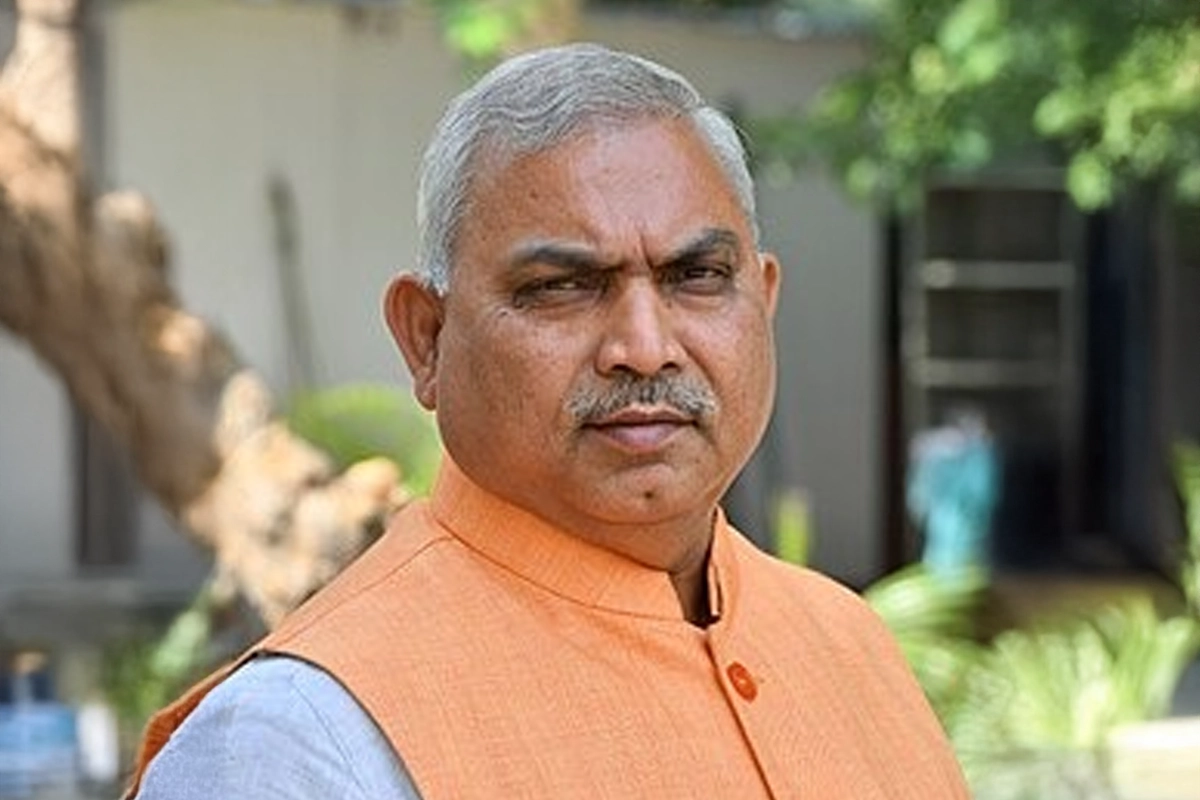
By Shiv Prakash, National Joint General Secretary (Organisation), BJP