


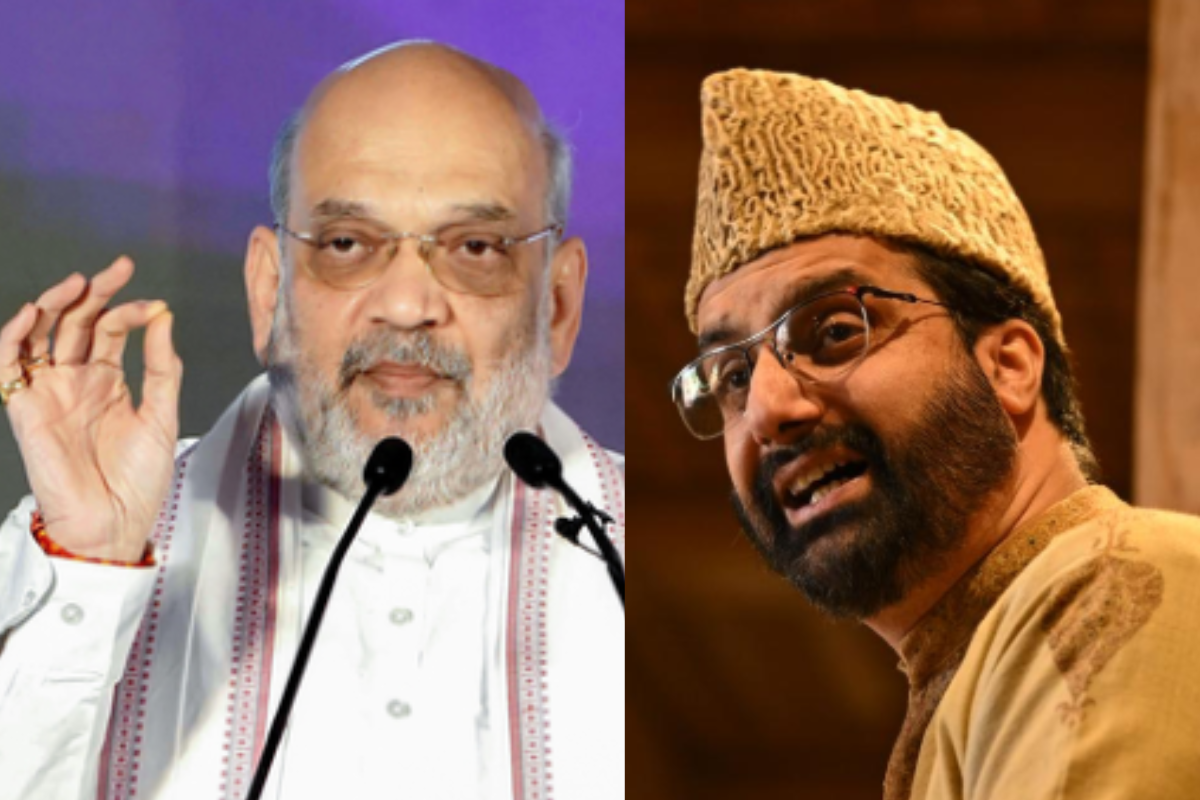






New Delhi: The Union Government has imposed a five-year ban on the Awami Action Committee (AAC), led by Mirwaiz Umar Farooq, and the Jammu and Kashmir Ittihadul Muslimeen (JKIM), headed by Masroor Abbas Ansari, under the Unlawful Activities (Prevention) Act (UAPA), 1967.

The crackdown on AAC comes shortly after the Ministry of Home Affairs (MHA) enhanced Mirwaiz’s security cover, citing a heightened threat perception from a Pakistan-based terror outfit following his visit to New Delhi in January.
Mirwaiz, who serves as the chairperson of the separatist coalition All Parties Hurriyat Conference and chief preacher at Srinagar’s historic Jamia Masjid, is known for delivering Friday sermons at the grand mosque.
In separate notifications, the Home Ministry accused both organizations of engaging in anti-national activities, undermining India’s unity, and promoting secessionist ideologies in Jammu and Kashmir.
The government has alleged that AAC has been involved in abetting terrorism, spreading anti-India narratives, and raising funds for separatist agendas. Additionally, it has been accused of instigating unrest, fomenting hostility against the state, and endorsing terrorism.
Legal proceedings have been initiated against AAC leaders, with cases filed at Nowhatta, Safakadal, and Kothi Bagh police stations in Srinagar. Charges include sedition, unlawful assembly, and incitement to violence. The accusations stem from alleged anti-government speeches, calls for election boycotts, and provoking protests.
The National Investigation Agency (NIA) has also filed a chargesheet against AAC spokesperson Aftab Ahmad Shah and others for their alleged role in subversive activities.
Government’s Stand on JKIM
The Home Ministry has also justified its decision to ban JKIM, alleging that its members have been actively supporting terrorism, engaging in anti-India propaganda, and channeling funds for separatist causes.
The government’s directive states that if unchecked, JKIM would continue fueling discord, questioning J&K’s integration with India, and disturbing peace in the region. Consequently, the group has been banned for five years, effective immediately, under Section 3 of UAPA.
Political Reactions
PDP President and former J&K Chief Minister Mehbooba Mufti criticized the ban, calling it a “serious setback” to Kashmir’s political and social fabric. She argued that suppressing dissent would only worsen tensions and urged the J&K administration to intervene. Mufti asserted that democracy extends beyond elections and involves safeguarding civil liberties.
National Conference General Secretary and MLA Ali Mohammad Sagar also denounced the move, stating that the Mirwaiz family has long been a symbol of peace and communal harmony. He urged the Government of India to pursue reconciliation over alienation, emphasizing that Mirwaiz Farooq should be seen as a peace facilitator rather than being subjected to harsh measures.
In contrast, BJP Leader and Leader of Opposition Sunil Sharma hailed the decision as a bold step against separatism and terrorism. He stated that the Modi government remains committed to protecting national security and sovereignty.

Meanwhile, during Question Hour in the J&K Assembly, PDP MLA Waheed Parra raised concerns over the ban and called for its revocation, asserting that it silences voices rather than addressing grievances.