


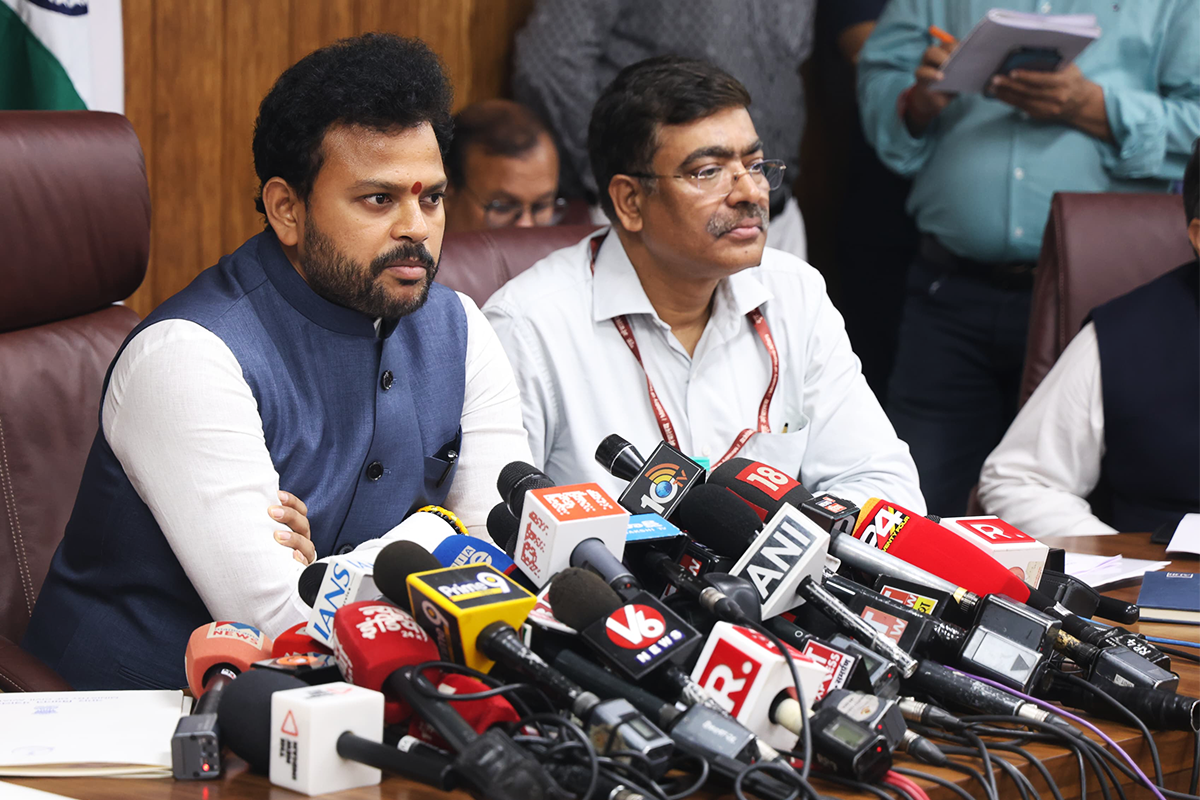






NEW DELHI: Following the tragic crash of an Air India Dreamliner shortly after departing from Ahmedabad airport, heightened safety evaluations are underway across the airline’s wide-body fleet. Civil Aviation Minister K. Ram Mohan Naidu confirmed on Saturday that eight Boeing 787 jets had undergone inspection as part of the latest directive from the aviation regulator, the Directorate General of Civil Aviation (DGCA). Air India, later in the day, updated the count to nine completed checks out of the 33 aircraft in its current inventory.

The DGCA’s urgent mandate was issued just a day after the fatal incident involving a Boeing 787-8 aircraft operating a flight from Ahmedabad to London Gatwick, which had 242 individuals on board. Only one person survived the crash. In addition to those on the aircraft, several casualties were reported on the ground.
The directive instructs Air India to implement additional maintenance tasks on all Boeing 787-8 and 787-9 aircraft fitted with Genx engines. These inspections are to be coordinated with regional DGCA offices and are to be carried out immediately.
The regulator specified a set of intensified technical checks, including one-time pre-departure reviews of essential aircraft components and systems. These include monitoring of fuel parameters, examination of the cabin air compressor, assessment of the electronic engine control units, evaluation of fuel-actuated engine components, checks on the oil and hydraulic systems, and analysis of take-off configurations. The inspections are aimed at identifying any potential anomalies that could compromise flight safety.
Further, in-transit flight control assessments are to be initiated until further instructions are issued. The regulator has also instructed the airline to conduct engine performance validation measures known as power assurance tests.
Air India, in an official release, acknowledged the DGCA’s instructions and stated that the safety checks are being conducted systematically as each aircraft returns to the country. The airline affirmed that nine aircraft have been cleared, and it is working to finalize inspections for the remaining 24 aircraft in line with the regulator’s timeline.
However, the airline cautioned that the additional maintenance workload could impact operational schedules. Certain long-haul services, especially to destinations with airport curfews, may experience delays. Passengers will be informed in advance of any disruptions.
Before the crash, Air India maintained a fleet of 34 Boeing 787 aircraft. Following the loss, the current count stands at 26 Boeing 787-8s and seven 787-9s.
Meanwhile, a comprehensive investigation into the crash has been initiated. The Aircraft Accident Investigation Bureau (AAIB) of India is leading the inquiry, with participation from the U.S. National Transportation Safety Board (NTSB), given that the aircraft was designed and built in the United States by Boeing. Experts from the United Kingdom’s AAIB are also contributing to the probe, as are representatives from Boeing and GE Aerospace, the engine supplier.
As per standard international aviation protocols, the investigation report is expected to be completed within twelve months.