


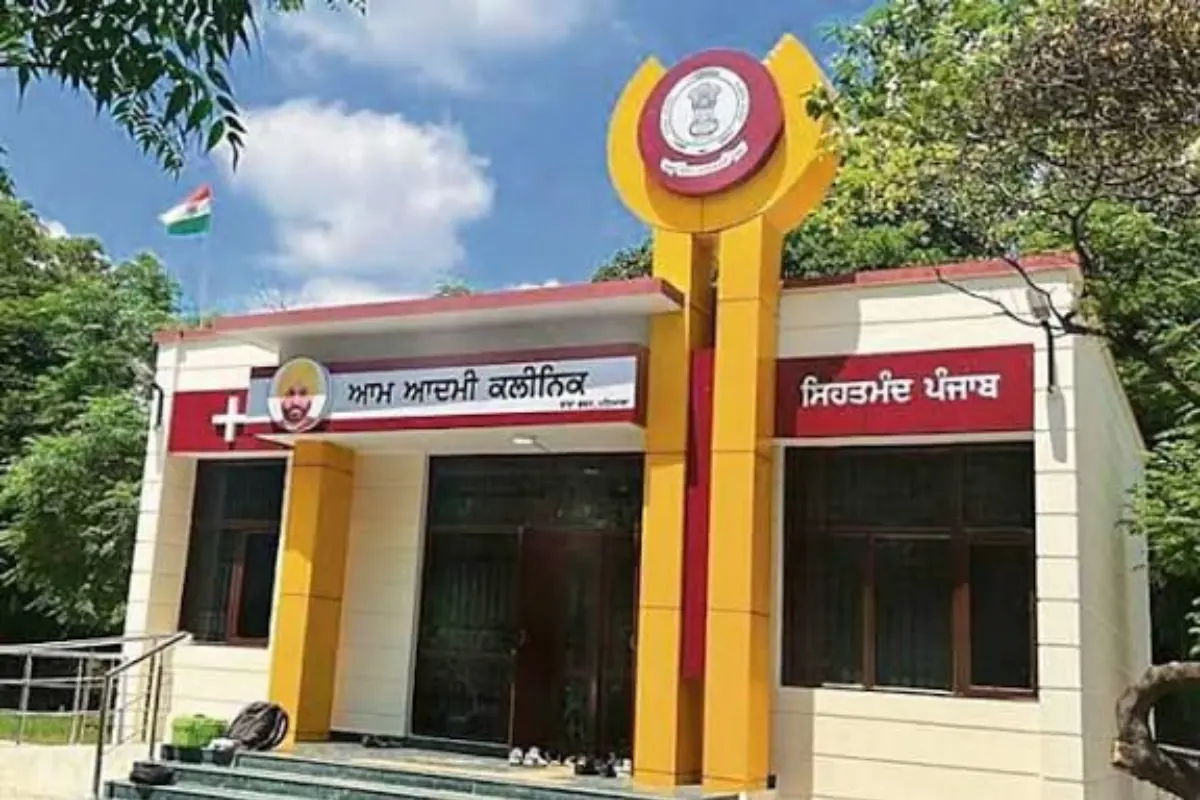






NEW DELHI: The Aam Aadmi Clinic initiative, launched under the leadership of Chief Minister Bhagwant Mann, has emerged as a transformative force in Punjab’s healthcare landscape. This pioneering program has strengthened the state’s health infrastructure while ensuring accessible and quality medical services for citizens, particularly those in rural and underserved areas.

Previously, residents of villages and smaller towns had to travel to major cities or government hospitals even for minor ailments. Today, thanks to Aam Aadmi Clinics located in neighborhoods and villages, citizens receive free and comprehensive healthcare without the burden of additional costs.
According to Health Minister Dr. Balbir Singh, Punjab currently operates 881 Aam Aadmi Clinics, with 565 in rural areas and 316 in urban locations. These clinics serve approximately 73,000 patients daily, reflecting strong public trust and engagement with the scheme.
Since its inception, the initiative has treated a total of 4.20 crore patients. Of these, 2.29 crore received general OPD services, while over 1.91 crore underwent various medical tests, including 6.13 lakh blood tests and 2.48 lakh sugar tests, all provided free of cost. This demonstrates the government’s commitment to citizen health without financial burden.
The scheme has had a notable impact on women, children, and the elderly, with 13.9 lakh women, 6.13 lakh children, and 2.48 lakh elderly people benefiting from these services. By ensuring equitable healthcare access, the program exemplifies social justice and reinforces the principle of equal health rights for all sections of society.
Beyond treatment, Aam Aadmi Clinics serve as Health Awareness Centers, promoting disease prevention, nutrition, exercise, and regular health check-ups. These efforts are improving lifestyle habits and fostering preventive healthcare among the population.
Dr. Balbir Singh emphasized that the clinics have decentralized healthcare services, bringing doctors and paramedical staff directly to villages. This has eased the load on district hospitals, particularly for minor illnesses, while strengthening rural health infrastructure.
Chief Minister Bhagwant Mann stated that the clinics aim not only to provide treatment but also to make Punjab a “healthy and self-reliant state.” The program has attracted national attention, serving as a model for other states seeking to enhance healthcare access and efficiency.

The success of Aam Aadmi Clinics highlights the Mann government’s vision of public welfare through responsive and inclusive governance. Today, the clinics stand as symbols of quality healthcare and dedicated public service, demonstrating how thoughtful policies can transform lives and establish Punjab as a benchmark in the country’s healthcare system.