


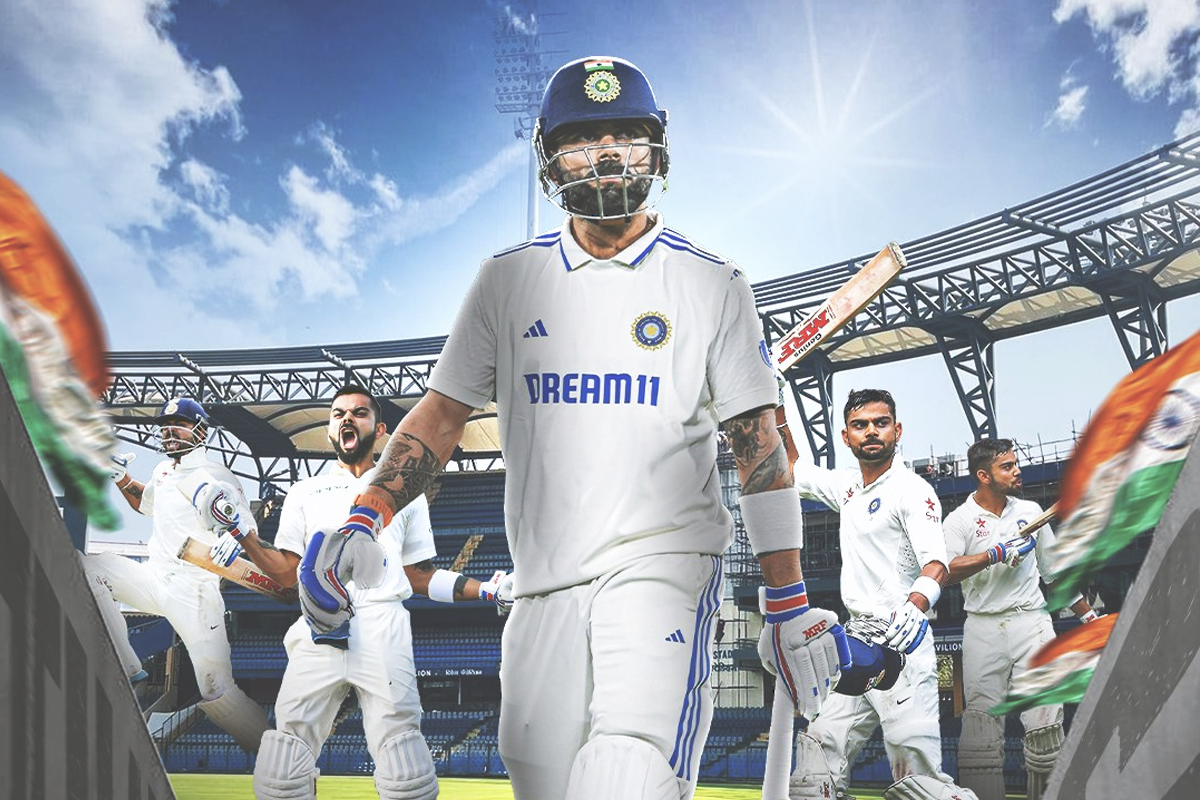






NEW DELHI: Indian cricket has been hit by an unprecedented series of retirements following a challenging Test series in Australia, marking the end of an era. After Ravichandran Ashwin’s mid-tour exit and Rohit Sharma’s abrupt retirement from Test cricket, the final blow has now come from Virat Kohli, one of the greatest Indian cricketers of all time. Kohli’s decision to step away from the longest format of the game leaves a massive gap, both in terms of his batting prowess and leadership legacy.

A Void in the Number Four Slot
Kohli’s retirement is particularly significant due to the impact it will have on India’s batting order, especially the number four slot, a position he made his own since the 2013-14 season. Over the past three decades, the number four spot has been held by two of India’s cricketing greats: Sachin Tendulkar and Virat Kohli. Kohli inherited the role from Tendulkar after the latter’s retirement and became the pillar around which India’s Test batting revolved. With over 9,230 runs and 27 centuries in Test cricket, Kohli has set an incredibly high standard.
ALSO READ: Virat Kohli retires from Test Cricket: An End of an Era
Though still in prime physical condition at 36, Kohli’s recent struggles with his form, particularly against the off-stump, were visible during the recent series against Australia. Despite occasional flashes of brilliance, his overall consistency waned, signaling that his time as a Test cricketer had come to an end. Indian cricket is now left to find a successor capable of filling this monumental void.
A Captain Who Redefined Indian Test Cricket
Beyond his contributions with the bat, Kohli’s tenure as Test captain stands as one of the most transformative in Indian cricket history. Taking over from MS Dhoni in 2014, Kohli faced the challenge of rebuilding a team that was struggling in the longest format. Under his leadership, India underwent a dramatic shift. Kohli prioritized building a formidable pace attack that could challenge the best in the world, especially overseas — a goal that was initially elusive for Indian cricket.
His leadership was marked by aggressive decisions, both tactically and strategically. Kohli and his trusted bowlers, including Ishant Sharma, Mohammed Shami, and the breakthrough star Jasprit Bumrah, turned India into one of the most dangerous fast-bowling units in Test cricket. The culmination of his efforts was India’s historic 2018-19 Test series victory in Australia, their first-ever series win on Australian soil.
Kohli’s focus was equally on creating a culture of mental toughness and resilience, which saw India constantly fight, even in challenging conditions. Under Kohli and coach Ravi Shastri, India also achieved the coveted number one position in the ICC Test rankings, cementing their place among cricket’s elite.
Controversies and a Bittersweet End
However, Kohli’s career was not without its fair share of controversies. His fallout with former coach Anil Kumble in 2017 was one of the most high-profile disputes in Indian cricket. The disagreement led to Kumble’s early departure from the role, but Kohli’s leadership remained undisputed. His abrupt exit from the captaincy in 2022, following a turbulent year, further added to the drama, leaving fans and pundits questioning how his departure could have been handled differently.
Despite these off-field issues, Kohli’s on-field performances and his relentless pursuit of excellence were never in doubt. His contribution to Indian cricket extends far beyond statistics — it is about the attitude and passion he brought to the field, inspiring a new generation of cricketers.
Kohli leaves behind a legacy that is not just about records, but about attitude, intensity, and a winning mindset. For Indian cricket, the challenge now is to rebuild without him. The end of Kohli’s era is not just the departure of a player; it is the end of an attitude that defined Indian Test cricket for nearly a decade.
Missed Milestones and the End of an Era
The timing of Kohli’s retirement comes with a tinge of sadness, especially since fans were hopeful that he would reach the 10,000-run milestone in Tests — a feat only achieved by the likes of Tendulkar, Dravid, and Sunil Gavaskar. At 9,230 runs, Kohli will be remembered for his aggressive and consistent approach at the crease, a combination of technical brilliance and fearless mentality.
While Kohli’s departure leaves a significant void, Indian cricket now enters a phase of rebuilding. The gap left by his absence, both as a player and as a leader, will not be easy to fill. India’s quest for a new number four and a fresh leader to guide the Test team forward will define the coming years for the national side.
End of an Era

Kohli’s decision to retire from Test cricket signifies the end of an era. He leaves behind a legacy of aggressive leadership, remarkable batting records, and a team culture that thrived on competitiveness and resilience. As the cricketing world watches on, one thing is certain: Indian Test cricket will never be the same again without Virat Kohli at the helm.