


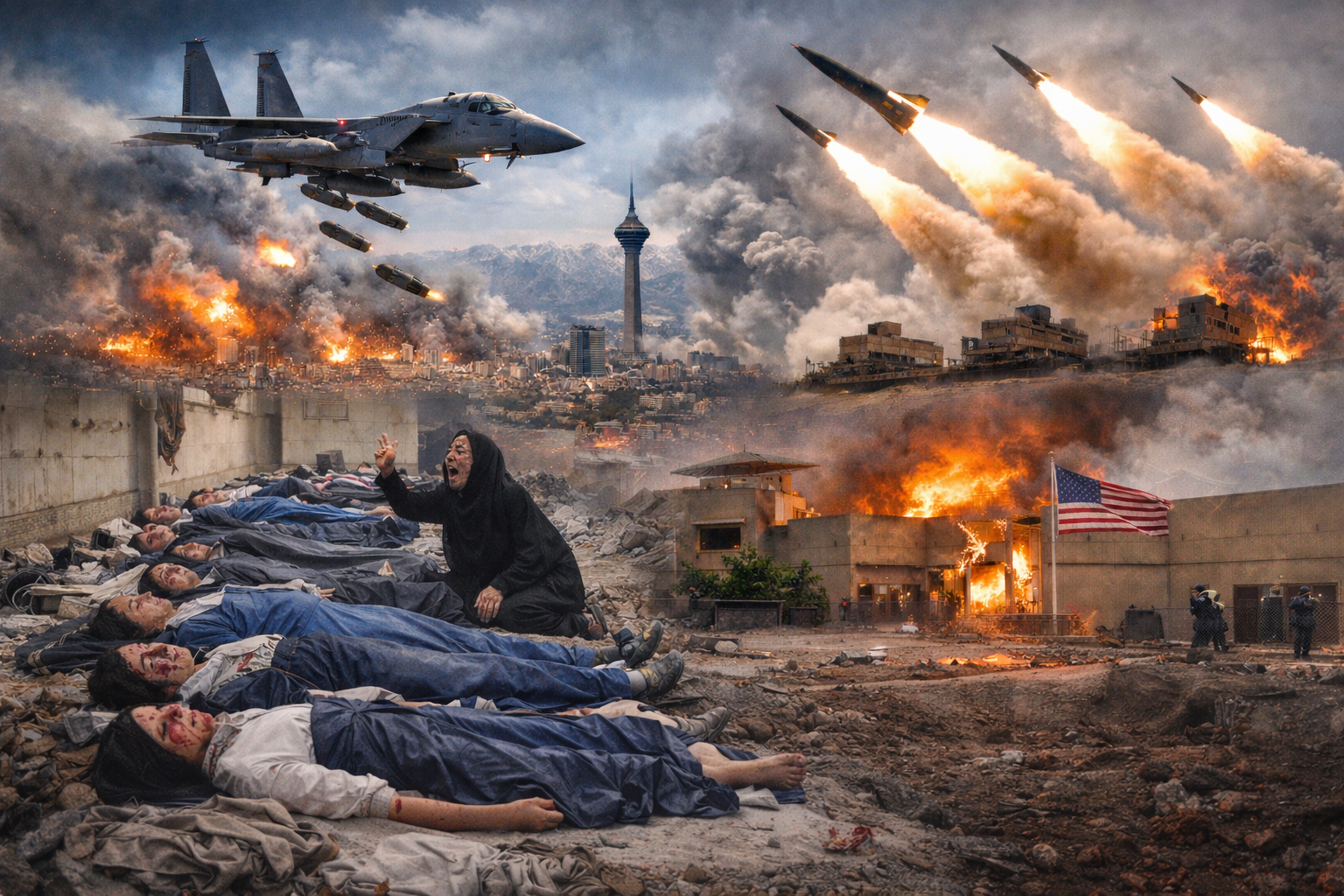






New Delhi: U.S. and Israeli forces carried out additional airstrikes across Iran on Tuesday, expanding a military campaign that American officials say has hit more than 1,000 targets since it began on February 28.

U.S. defense officials, speaking to media persons, said the strikes have targeted missile launch facilities, air defense systems, military command centers and other strategic infrastructure. Explosions were reported in and around Tehran and other major cities overnight, according to reports.
The Iranian Red Crescent Society said at least 787 people including around 200 school girls have been killed in Iran since the start of the joint U.S.–Israeli operation. The toll includes civilians and members of Iran’s security forces, though authorities have not provided a detailed breakdown. Independent verification remains limited because of restricted access to affected areas.
Iran’s government has condemned the strikes as acts of aggression and vowed continued retaliation.
The U.S. military confirmed that six American service members have been killed since hostilities began. U.S. Central Command said the fatalities occurred during retaliatory attacks on U.S. positions in the region. Additional personnel were reported wounded, though exact figures were not disclosed.
On March 3, Iran launched further missiles and drones toward Israel and U.S.-linked facilities in Gulf countries, as per reports. Israeli authorities said at least 11 people have been killed in Iran’s strikes on Israeli territory since the conflict began. Emergency services reported damage to residential buildings and infrastructure in affected areas.
In Saudi Arabia, two drones struck the U.S. Embassy compound in Riyadh on March 3, causing a small fire and structural damage but no reported injuries, according to reports, which cited diplomatic sources and witnesses. The U.S. embassy issued security advisories following the incident.
Missile and drone activity was also reported in other Gulf states, including the United Arab Emirates and Bahrain, though confirmed casualty figures outside Israel remain limited. Several governments in the region extended airspace restrictions and flight cancellations through at least March 4 because of security concerns.
The conflict has also spilled over into Lebanon, where exchanges of fire involving Hezbollah and Israeli forces have resulted in additional casualties, according to AP reporting. Precise numbers were not immediately available.
U.S. President Donald Trump said that the military campaign could last “weeks,” and operations were focused on degrading Iran’s military and strategic capabilities. Israeli officials have similarly stated that the objective is to weaken Iran’s missile and defense infrastructure.
Iranian officials have accused Washington and Tel Aviv of targeting civilian areas, while U.S. and Israeli authorities have said they are striking military objectives.
The situation remains fluid, with military activity continuing and diplomatic efforts limited. Governments across the region have urged their citizens to exercise caution, while international calls for de-escalation have intensified amid fears of a broader regional war. Casualty numbers are expected to change as further assessments are conducted.