


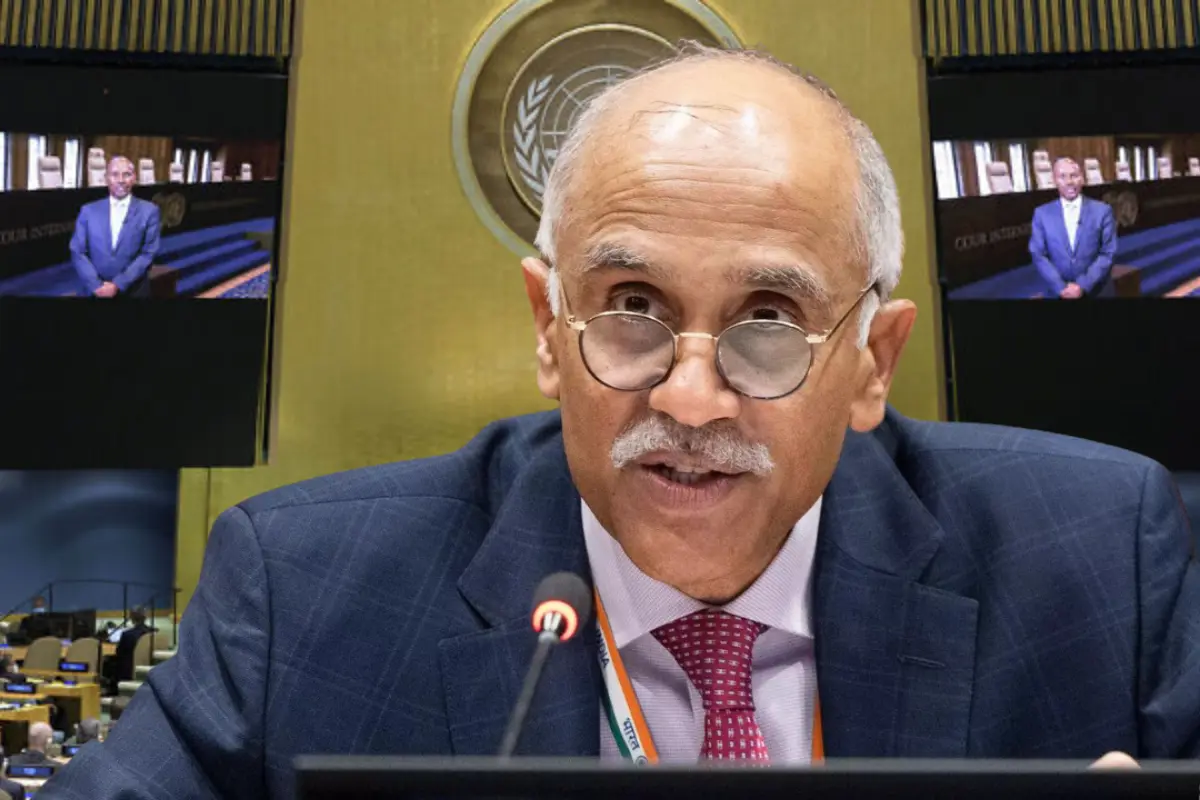






New Delhi: India’s Permanent Representative to the UN, Ambassador Parvathaneni Harish, renewed New Delhi’s call for systemic reform of the Security Council — particularly demanding revision of the veto-power regime long held by the five permanent members.

Harish, during a plenary debate on the “use of the veto,” criticized the entrenched structure of the Council, highlighting that over the last eight decades the veto has been wielded nearly 200 times. Such repeated use, he said, has often served narrow political interests — undermining the principle of sovereign equality among UN member-states.
De facto veto: the hidden barrier to reform
According to India, the problem goes beyond the formal veto mechanism. Harish argued that a de facto veto — exercised through procedural blockades and insistence on “consensus” — has paralysed substantive reform efforts for nearly two decades under the longstanding Inter-Governmental Negotiations (IGN) process.
“This approach is blocking progress,” he said, pointing out that no concrete outcomes have emerged from IGN despite 17 years of deliberations.
Principle of fairness and wider representation
Underlining India’s principled stand, Harish stated that if veto power is to continue, it should be extended fairly to all permanent members. He reiterated support for the “common African position” that calls for equitable distribution of veto power — rather than preserving a monopoly in the hands of a few.
Further, he called for a comprehensive reform of all five key pillars of the Security Council — not piecemeal changes — to reflect today’s geopolitical realities, which are vastly different from those prevailing in 1945, when the UN was founded.
Why India’s push matters
The veto, according to critics, has repeatedly hindered the UN’s ability to respond decisively to global crises.
Whether it is large-scale conflicts, humanitarian emergencies or mass atrocities, the capacity of the UN to act is severely constrained when a single veto can stall consensus.
By calling for reform, India positions itself as champion of a more democratic, inclusive multilateralism: one where growing powers, diverse regions, and emerging nations have a stronger voice — rather than being overshadowed by a relic of post-World War II power dynamics.
Some of the main obstacles include:
- Opposition by the only existing Asian permanent member, China, which is unlikely to endorse changes that dilute its relative influence.
- The institutional inertia and vested interests of existing permanent members, unwilling to cede veto privileges.
- The “de facto veto” embedded in the consensus-based IGN process, which allows even non-permanent members or small groups to block momentum without formally casting a veto.
Through Ambassador Harish’s remarks, India has reaffirmed its commitment to a reformed, more representative United Nations.
By challenging the veto regime and demanding fairness and accountability, New Delhi stakes a claim not just for itself, but for all Global South nations who — India argues — deserve a fair say in global governance.

As the world grapples with multidimensional crises — from conflicts to climate change to inequity — India’s call serves as a reminder that international institutions must evolve, or risk becoming obsolete.