


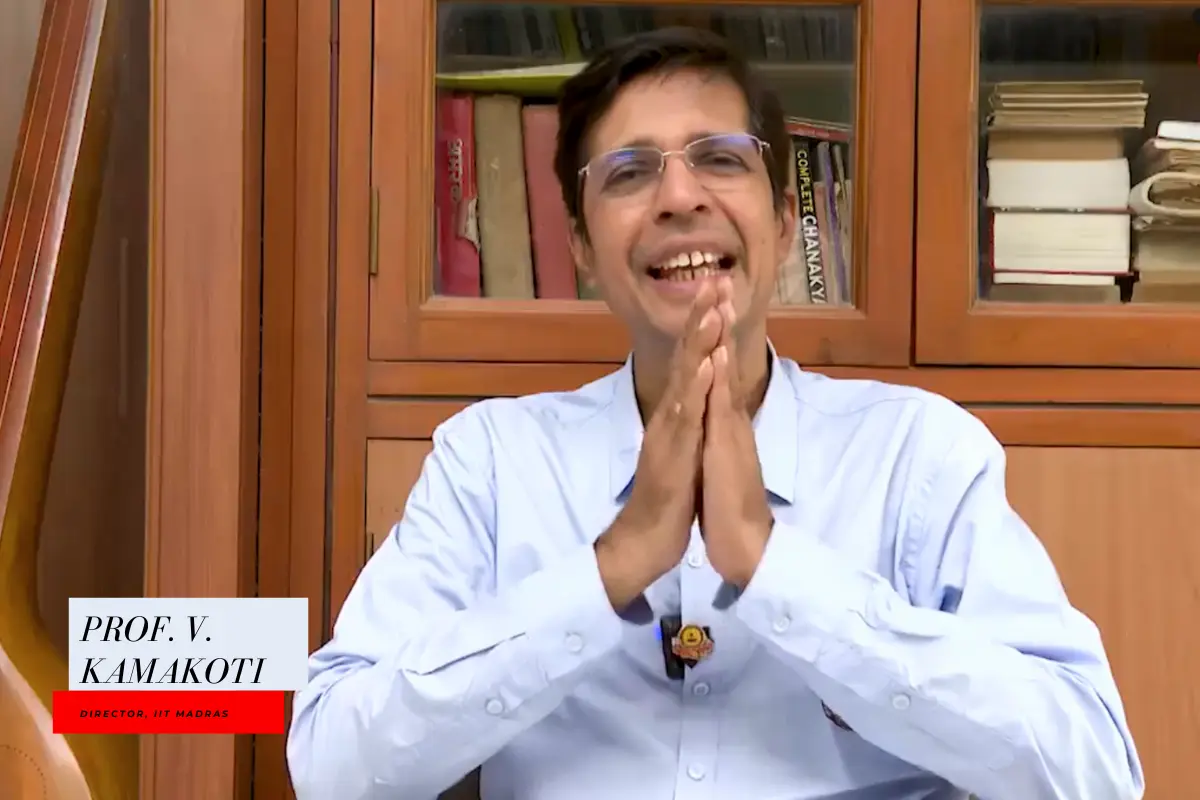






NEW DELHI: Prof. V. Kamakoti, Director of IIT Madras hailed Operation Sindoor as a landmark in India’s defence history and has delivered a stirring address on the broader significance of the operation.

Not just for national security, but as a model for leadership, innovation, and youth empowerment.
“Operation Sindoor is not just an assertion of national security — it is a powerful lesson in leadership, technological preparedness, strategic thinking, and national unity,” Prof. Kamakoti said, framing the mission as a milestone in India’s journey toward a self-reliant and secure future.
In a message that resonated deeply with students, academicians, and citizens alike, Prof. Kamakoti emphasized that the operation is a reminder that true strength lies not just in power, but in timely action, empathy, and collective effort.
A Salute to the Tri-Forces
Beginning his message with patriotism, Prof. Kamakoti stated:
“Namaste, Vande Mataram. Let us start by offering our humble pranams to the tri-forces which have safeguarded our country and successfully executed Operation Sindoor.”
“Operation Sindoor is not just an assertion of National Security — it is a powerful lesson in leadership, technological preparedness, strategic thinking, and national unity.”
In this inspiring message, Prof. V. Kamakoti, Director of @iitmadras, reflects on the significance of… pic.twitter.com/zWUXwyaAgZ
— IIT Madras (@iitmadras) May 19, 2025
He described the operation as a living classroom, rich with lessons for India’s youth — especially those who will lead the nation into Viksit Bharat 2047, the vision for a developed India.
Five Pillars of Operation Sindoor
Prof. Kamakoti outlined five core attributes that defined Operation Sindoor and contributed to its success:
- Automation
Automation played a central role in the precision and swiftness of the operation. Drawing from principles of mechanical engineering and robotics, India achieved operational excellence with minimal human intervention, showcasing the power of indigenous innovation. - Precision
Every strike was surgically accurate, thanks to the indigenous NAVIC satellite system, advanced on-board computing, and meticulously planned ammunition.
“This precision was made possible through the integration of multiple engineering disciplines,” he said, listing aerospace, chemical engineering, satellite communication, electronics, embedded systems, AI, and image processing as key contributors. - Speed
The rapid execution of the mission reflected superior planning, technology, and readiness, traits crucial for modern warfare and defence preparedness. - Risk Mitigation
Highlighting the importance of careful foresight and strategy, Prof. Kamakoti pointed to operations research and management science as essential domains that helped reduce uncertainties during the mission. - Strategic Innovation
“Our strategic edge came entirely from innovations and entrepreneurship,” he noted, crediting startups that developed advanced drone technology instrumental in the operation.
A Message for India’s Youth
At a time when students across the country are choosing their academic futures, Prof. Kamakoti’s message served as guidance:
“Let the student decide whichever discipline is interesting to them. As demonstrated by Operation Sindoor, every discipline offers an opportunity to serve the nation.”
He encouraged students and parents to embrace holistic education, as envisioned by the National Education Policy 2020, which emphasizes innovation, entrepreneurship, and interdisciplinary learning.
A Nation First Approach
Calling for continued commitment to nation-building, Prof. Kamakoti urged all citizens to channel the momentum of Operation Sindoor into long-term efforts.
“Friends, this is the time to rejoice, not to relax. Let us all work together. Let us develop multiple technologies that will be of great importance to our nation and her national security. Jai Hind.”

Operation Sindoor stands not just as a military success, but as a blueprint for how education, innovation, and patriotism can converge to build a stronger, self-reliant India — one mission at a time.