


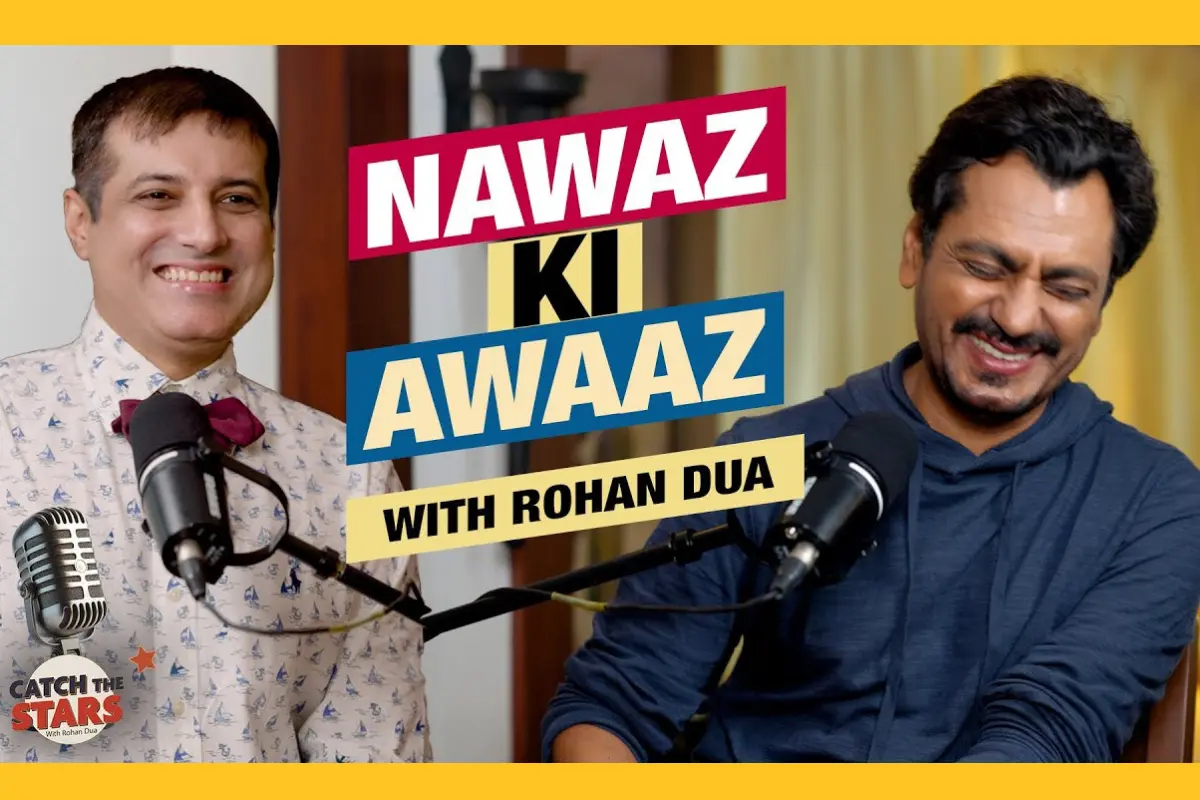






In a wide-ranging and deeply reflective episode of Catch The Stars with Rohan Dua on The New Indian, actor Nawazuddin Siddiqui speaks to Rohan Dua about fatherhood, his creative bond with Anurag Kashyap, the mental toll of intense roles like Raman Raghav 2.0, and how Sacred Games changed the meaning of stardom and storytelling for him.

Q: There is a chilling dialogue in Raman Raghav 2.0 about killing without feeling pain. How difficult was it for you to believe in such a character?
Nawazuddin Siddiqui:
It was extremely difficult. I am not like that person at all—I have never even slapped anyone in my life. When you get a role where killing is so casual, you cannot play it without preparation.
I went alone to the jungles for five to six days. I stayed by myself just to believe that I could play such a person. Acting is believing, and belief can turn a small thing into something very big.
Q: You were hospitalised during Raman Raghav. What exactly happened?
Nawazuddin Siddiqui:
I fell sick during the shoot and was hospitalised at Kokilaben Hospital. I was unconscious for some time. Later, people told me that I was repeatedly speaking Raman Raghav’s dialogues.
At that time, when the film released, we were very sad because it didn’t work much in theatres. But after three or four years, people started watching it and appreciating it. That made me realise that hard work never goes in vain—it’s just a matter of time.
Q: You’ve played several cops, gangsters, and criminals. Do you ever worry about repetition?
Nawazuddin Siddiqui:
We generalise characters based on clothes. If someone wears a uniform, we say he’s a cop. But the background, upbringing, thinking, and psychology are always different.
Raman Raghav, Ganesh Gaitonde, Faizal Khan—on the surface they may seem similar, but they are completely different people. Just like doctors wear the same coat but think differently.
Q: When Sacred Games was offered to you, did you realise how big it would become?
Nawazuddin Siddiqui:
Not at all. I didn’t even know what Netflix or OTT was. I actually refused the show initially. I told Vikram Motwane that I had come to films with so much struggle and now he wanted me to do a serial again.
He explained to me that this was not television, that it would be seen in 190 countries. I couldn’t believe it. Even Anurag Kashyap had to convince me. Only when the shoot began did I feel that this was something big.
Q: Ganesh Gaitonde is mentally exhausting. Did that role affect you differently compared to others?
Nawazuddin Siddiqui:
Yes. Sacred Games was mentally exhausting. Ganesh Gaitonde is always in conflict.
In Maa Ji, there was a lot of physical exhaustion. But Gaitonde tired me mentally. That constant tension, that internal struggle—it drains you completely.
Q: Your collaborations with Anurag Kashyap are legendary. What is that bond really like?
Nawazuddin Siddiqui:
It’s difficult to explain. When I first met Anurag, I felt he was looking at me from a very different perspective.
We don’t talk much, but when I work with him, I feel protected. With some directors, you are not acting—you are speaking your mind. With Anurag, I don’t play a character; I express myself through the character. No one in the world can create misunderstandings between us.
Q: You shared screen space with Shah Rukh Khan in Raees. How was that experience?
Nawazuddin Siddiqui:
It felt like working with a theatre actor. Shah Rukh has done theatre, and you can feel that discipline.
We rehearsed properly. There was no pressure. If a scene didn’t work, we would reshoot it. It was fun and very professional.
Q: Let’s talk about your daughter Shora. How is the father-daughter relationship?
Nawazuddin Siddiqui:
She doesn’t get awed by me at all. That’s the best thing. She never says, “My father is a great actor.”
She criticises me within two minutes and brings me down to the ground. I scold her a lot, I love her a lot. She studies in Dubai and had come home for vacation.
Q: Does she watch your films and comment on your performances?
Nawazuddin Siddiqui:
She hasn’t seen many of my films. Maybe Gangs of Wasseypur or a few others.
But yes, there are roles where she scolds me, and I’m not used to that. It’s very honest feedback.
Q: Has your intense focus on work ever affected your family life?
Nawazuddin Siddiqui:
Yes, of course. When you are deeply focused on creativity, the family side becomes weak.
This happens with me all the time. Some people can balance both perfectly, but some cannot. I think I fall in the second category.
Q: You seem drawn to stories about ordinary people rather than heroes. Why is that?
Nawazuddin Siddiqui:
We usually make films about special people—heroes, criminals, cops. But I like films about ordinary people who don’t look special and don’t have extraordinary talent.
There are millions of such people in the world. When cinema tells their stories, that thought itself is very advanced—and that excites me the most.