


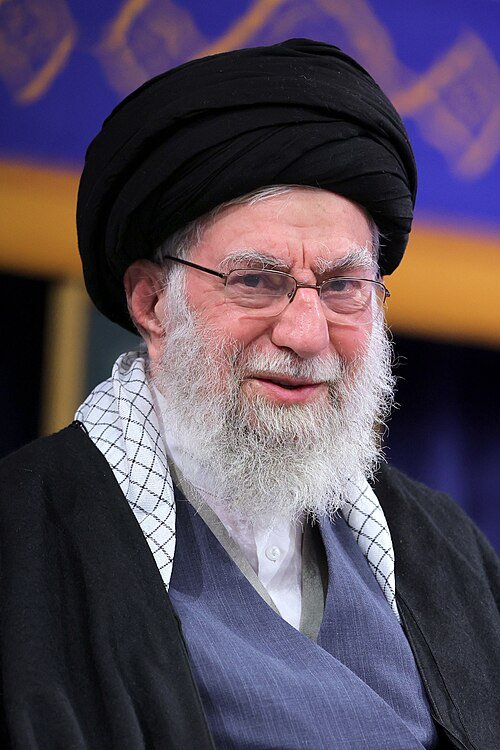






Ayatollah Ali Khamenei, Iran’s supreme leader for more than 36 years, was a defining figure in the Islamic Republic — a cleric whose authority shaped Tehran’s domestic order and its geopolitical posture across the Middle East.

On Saturday, Iranian state media confirmed that 86-year-old Khamenei had been killed in coordinated airstrikes by the United States and Israel, marking an unprecedented rupture in the Islamic Republic’s post-revolution history and leaving a nation and region suddenly in a phase of uncertainty.
Early Life and Rise
Born in 1939 in the eastern Iranian city of Mashhad, Khamenei was trained in Shiite religious seminaries and became an early opponent of Iran’s monarchy under Shah Mohammad Reza Pahlavi. As a cleric he was arrested multiple times in the 1960s and 1970s for his activism. After the 1979 revolution that toppled the Shah and brought Ayatollah Ruhollah Khomeini’s Islamic Republic to power, Khamenei emerged as a loyal revolutionary figure with growing influence.
In 1981, he survived an assassination attempt that left his right arm permanently injured. He subsequently served two terms as Iran’s president before being elevated to supreme leader in 1989, upon Khomeini’s death. Though not initially the most prominent cleric, Khamenei consolidated authority over Iran’s political, military and religious institutions.
The Supreme Leader’s Role
As supreme leader, Khamenei wielded ultimate power in Iran: control over the armed forces, judiciary, intelligence services and state media, and final say on foreign policy. He nurtured the Islamic Revolutionary Guard Corps (IRGC) as a pillar of regime security and regional policy. This force helped project Iranian influence through allied militias and political movements in Iraq, Syria, Lebanon and Yemen, positioning Iran as a central actor in conflicts across West Asia.
Khamenei’s foreign policy was driven by a persistent scepticism of the United States and its allies. He framed Western engagement as a threat to the Islamic Republic’s ideological foundations and strategic interests, though Tehran did participate in the 2015 nuclear deal — a brief warming of relations that dissolved after the U.S. withdrawal in 2018 under former President Donald Trump.
Domestic Challenges and Criticism
At home, Khamenei’s tenure saw significant unrest. Major protest movements erupted in 2009 over disputed elections, and again in later years over economic hardship and social restrictions — notably women’s rights protests in 2022 and nationwide demonstrations earlier in 2026. Authorities responded with force, and critics accused Khamenei of stifling dissent and entrenching an authoritarian system resistant to reform.
Supporters credited him with preserving Iranian sovereignty against external pressure and maintaining stability in a volatile region. Critics countered that his policies deepened Iran’s economic isolation, curtailed personal freedoms and alienated younger generations.
The 2026 Strikes and Death
On 28 February 2026, a massive air campaign by U.S. and Israeli forces targeted Tehran and other Iranian strategic sites, in an operation that President Trump and Israeli officials said aimed to degrade Iran’s leadership and nuclear capabilities. Iranian state media later confirmed his death and announced a national 40-day mourning period.
The strikes, described in some reporting as Operation Epic Fury, hit military and political targets and killed other senior officials alongside Khamenei, seriously escalating an already volatile conflict in the Middle East. Iranian retaliation after the attack included ballistic missile and drone launches targeting Israeli and U.S. bases across the region, raising fears of a broader confrontation.
Legacy and Succession Uncertainty
Khamenei’s death marks a historic turning point for Iran. His hold on power was unparalleled since 1989, and his absence creates an immediate leadership vacuum. Tehran could also face potential internal fracturing between hardline factions, pragmatists, and institutions like the IRGC, all while navigating intensified regional conflict.

Whether Khamenei will be remembered as a guardian of Iranian independence or as a polarising figure whose policies brought hardship and isolation, his death closes a defining chapter in Iran’s modern history, and opens one of the most consequential periods for the Islamic Republic in decades.